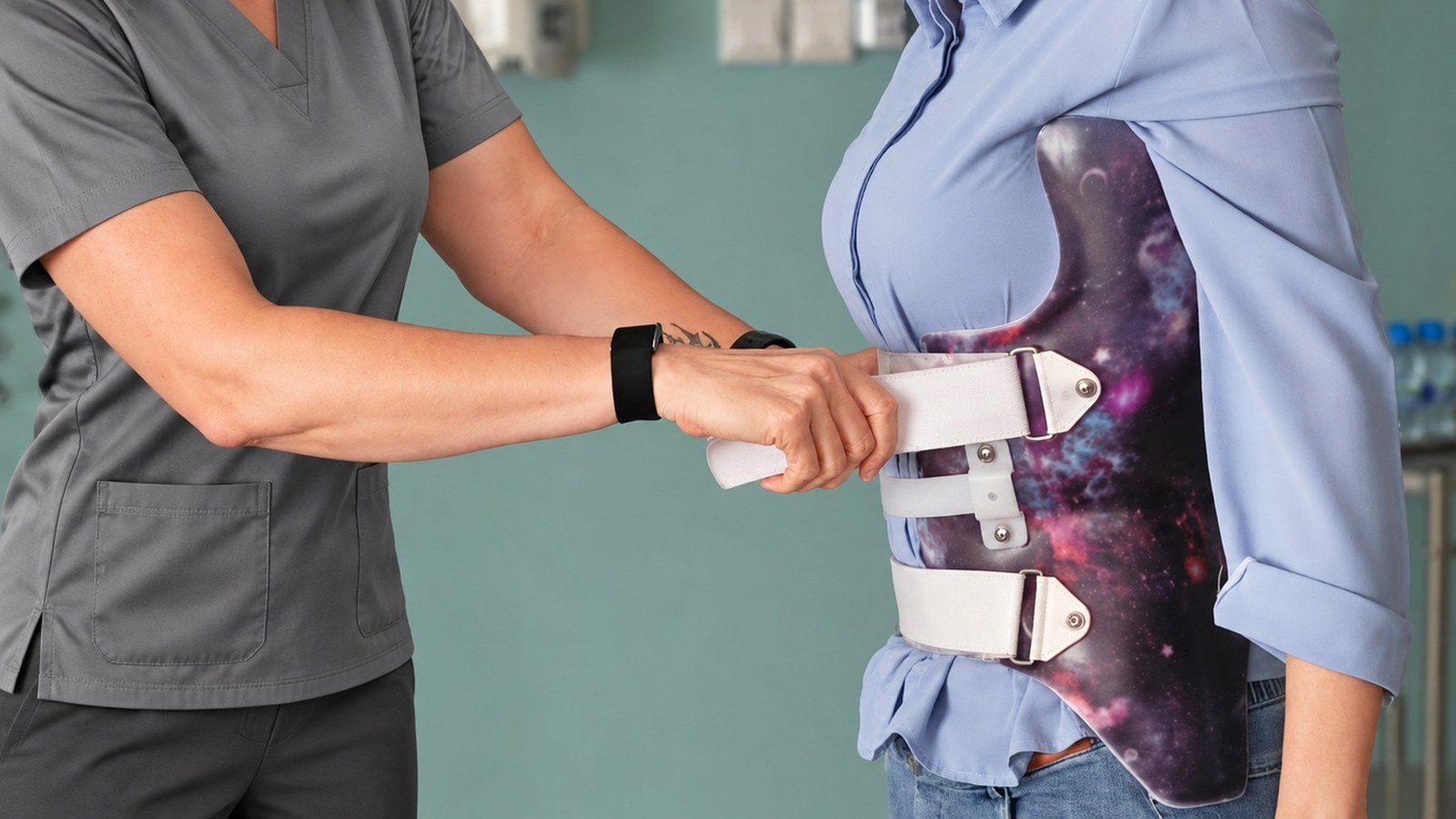
I have scoliosis. A school screening noticed something when I was a child, and then nothing happened. No follow-up, no measurement, no plan. I didn't see my own curves on an X-ray until I was in chiropractic college.
So I know what it's like when the word "scoliosis" lands. For most families, the word "brace" arrives in the same appointment. One minute your teenager is a normal, growing kid with one shoulder a little higher. The next, you're being asked about wear hours, fittings and follow-up films. It's a lot to take in at once.
This guide is for that moment. It covers who a scoliosis brace is for (and who it isn't for), what the research actually shows, and what the first months look like in real life: school, sport, sleep and the Muscat heat. Most importantly, it explains how you can tell whether the brace is working.
At CBP Precision Spine Center we are a certified ScoliBrace® provider, and we practise Chiropractic BioPhysics® (CBP), a structural approach to spine care. For bracing, that means two things: we measure before we recommend anything, and we re-measure to show whether it helped.
Does your teenager need a scoliosis brace at all?
Not every curve needs a brace. The usual teenage form, adolescent idiopathic scoliosis (idiopathic means no single known cause), is most often found during the growth spurt. Many small curves need monitoring and scoliosis-specific exercise, not a brace.
A brace comes into the conversation when a curve is large enough, or growing fast enough, that it may keep getting worse while the spine is still growing.
You can't make that call by looking at a back in a mirror. It starts with an examination and a pair of standing full-spine X-rays, front and side. We don't take X-rays at the clinic; we refer you to an imaging centre and analyse the films here. Then we weigh four things together:
| What we look at | Why it matters for bracing |
|---|---|
| Cobb angle (curve size) | Bracing is usually discussed for moderate curves in a growing teenager, not very small ones |
| Growth remaining | Curves change fastest during growth spurts. A brace works with growth, so timing is everything |
| Change between films | A curve that has grown since the last measurement carries more risk than one that has held steady |
| Curve pattern and posture | Where the curve sits, and how the spine looks from the side, shape the brace design and the exercise plan |
Daily life matters too. A plan your teenager can't live with is not a good plan, however good it looks on paper. We talk about school, sport and sleep before anything is ordered.
What the research says about bracing, honestly
The strongest evidence comes from a large trial called BrAIST, published in the New England Journal of Medicine in 2013. It followed teenagers whose curves were at high risk of getting worse. By the end of growth, 72% of those who were braced had stayed below the surgical threshold of 50°, compared with 48% of those who were only watched. The trial was stopped early because the difference was so clear. It also found that the more hours a day the brace was actually worn, the better the result (Weinstein et al., 2013).
Now, what that trial did not show. BrAIST tested traditional rigid braces, and its goal was to stop curves getting worse, not to straighten them.
Newer 3D-designed braces such as ScoliBrace® aim to guide the spine towards a more corrected position while they are worn. The evidence for them is still small. The largest independent study I know of followed 21 girls at a children's hospital in Singapore. Their curves stayed below the surgical threshold, more than half had reduced by at least 5° by the end of growth, and more hours of wear meant better results (Lim et al., 2024). That's encouraging, but it is a pilot study. Most other published reports on ScoliBrace® are small case series written by the brace's makers. Nothing the size of BrAIST has tested it yet.
My view: these braces are a real step forward in design and comfort. But the fair way to judge any brace, including the ones I fit, is on your teenager's own X-rays, measured the same way before, during and after.
International scoliosis guidelines (SOSORT, 2016) recommend scoliosis-specific exercise alongside bracing, not a brace on its own. That's how we work.
What a custom 3D brace is designed to do
Older braces were made to hold a curve still. A custom 3D brace is designed from your teenager's own standing X-ray measurements and a 3D scan of the torso. It is shaped to push and guide the trunk towards a more balanced, upright position. It's built for that one spine, not picked from a rack of standard sizes.
Because it's low-profile, most teenagers wear it under ordinary school clothes. You can read how it's made and fitted on our ScoliBrace® page, and what shapes the cost in our ScoliBrace® cost guide.
From first assessment to the first weeks of wear
- Assessment. Examination, posture measurements, history and growth questions. We refer you for standing X-rays if they're needed.
- Measurement and decision. We go through the films with you and your teenager, on screen, and explain whether bracing is recommended, and why or why not.
- Scan and design. A 3D torso scan and the X-ray measurements are used to design the brace.
- Fitting. We check the fit, show your teenager how to put it on and take it off, and go through skin care and clothing.
- In-brace X-ray. We refer for an X-ray taken while the brace is worn, so we can see how much it changes the curve straight away.
- Building up. Wear time increases gradually over the first weeks, a couple of hours at a time, until your teenager reaches the full 23 hours a day.
Some pressure in the first days is expected. That's the brace doing its job. Pain that doesn't settle, or red marks still there 30 minutes after the brace comes off, are not normal. Call us rather than quietly wearing it less.
Why the hours matter, and how to make them happen
We recommend wearing the brace 23 hours a day, every day. The bare minimum is 16 hours. This isn't something that changes with the season, the school term or the holidays. BrAIST made the reason very clear: the more hours the brace was worn, the better the result. The brace only works while it's on. A brace that lives in the wardrobe does nothing.
What helps in practice:
- A simple routine. The brace is on day and night. It comes off for about an hour a day, for showering, skin care and anything we've agreed with you, then goes straight back on.
- A thin, close-fitting cotton layer under the brace, changed daily.
- A wear log your teenager keeps themselves. It makes the follow-up conversation honest rather than awkward.
- Telling us early when the schedule isn't working. I would much rather adjust the fit or the plan now than find out at the next X-ray.
School, sport and the Muscat heat
School. Looser tops make the brace hard to notice. Agree with your teenager what, if anything, the school is told. Some want a teacher to know; others prefer nobody does. A heavy school bag is worth sorting out at the same time.
Sport. Most teenagers can keep playing. Whether the brace comes off for training depends on the sport and the plan, so ask rather than guess. Staying active is good for a scoliosis spine, but time out for sport still counts against the 23 hours.
Heat. From May to September, wearing a brace in Muscat is hot work, but the hours don't drop in summer. Keep the cotton layer thin and change it when it's damp, stay in air-conditioning where you can, and check the skin every evening. Our summer heat guide has more on looking after your back in the hot months.
Helping your teenager own the plan
A brace can change how a teenager feels about their body, even when nobody else notices it. The NHS notes that wearing a back brace can affect body image and self-esteem in children and teenagers (NHS, scoliosis). Listen before you reassure, and let your teenager decide who they tell.
Bring them into the appointment as the patient, not a passenger. They should see their own X-rays, ask their own questions and understand why the hours matter. Teenagers who understand the plan tend to stick with it.
How we know whether a scoliosis brace is working
Don't judge it by how the back looks in a mirror. The in-brace X-ray shows how much the brace corrects the curve while it's worn. After that, we re-examine and re-image at set points, taken the same way as the first films, and compare the Cobb angle and side-view curves with your teenager's own baseline.
A difference of a few degrees between films can be measurement error. So we read the trend, not one number.
Alongside the brace, a plan usually includes scoliosis-specific exercise and, where it suits the curve, corrective traction. The brace may need adjusting or remaking as your teenager grows. Bracing usually ends once growth has finished, and the step-down is planned on measurements, not on a date.
When it isn't a brace problem
Typical teenage scoliosis usually doesn't cause much pain. Back pain that wakes your teenager at night, pain with fever, new numbness or weakness in the legs, or any change in bladder or bowel control needs a doctor promptly. Don't wait for a brace fitting, and don't blame it on the curve.
If your teenager is younger and you're still at the "is it a curve?" stage, start with our guide to scoliosis screening in children. For the wider picture, see our scoliosis assessment page, and for questions to ask any provider, how to choose spine care in Muscat.
Frequently asked questions
Does every teenager with scoliosis need a brace?
No. Many small curves only need monitoring and scoliosis-specific exercise. A brace is usually considered when a curve is moderate, or has grown between measurements, and the teenager still has growth left. Your clinician should be able to show you, on the X-ray, why bracing is or isn't recommended.
Can a brace make my teenager's spine straight for good?
Be wary of anyone who says it will. The best evidence shows bracing reduces the chance of a curve progressing to the point where surgery is discussed. Newer 3D braces aim to improve the curve as well, and some teenagers do measure better at the end of care, but results vary. That's why we measure on X-ray at every stage instead of promising an outcome.
Is it normal for a new brace to feel uncomfortable?
Some pressure in the first days is normal, and wear time is built up gradually. Pain that doesn't settle, rubbing in the same spot, or red marks that remain 30 minutes after the brace comes off are not normal. Call us so we can check the fit, instead of wearing it less.
Can my teenager still play sport and do PE?
Usually, yes, and staying active is good for them. Whether the brace is worn or taken off for a particular sport depends on the sport and the plan, so ask us. The aim is to keep your teenager active while protecting the daily brace hours.
How many hours a day does a scoliosis brace need to be worn?
We recommend 23 hours a day, every day, with 16 hours as the bare minimum. The hours do not change with the season or the school holidays. The BrAIST trial found that the more hours a day the brace was worn, the better the result, so every hour counts.
What if my teenager won't wear the brace?
Tell us early. Refusal usually has a reason: discomfort, heat, embarrassment, or not seeing the point. We can check the fit, find out what's getting in the way, and walk your teenager through their own X-rays. The target stays 23 hours a day, and never less than 16. A brace only works while it is worn, so an honest conversation beats a quietly unworn brace.
When does bracing stop?
Bracing usually continues until growth has finished. Then the hours are reduced in planned steps, based on your teenager's growth markers and follow-up measurements, not a calendar date alone.
Your next step
If your teenager has been told they may need a brace, or you'd like a second look at their X-rays before deciding, book a scoliosis assessment at CBP Precision Spine Center, 336 18th November Street, Azaiba. Call 7277 7796 or book online.
Bring previous X-rays and reports if you have them, plus your questions.
أنا نفسي مصاب بالجنف. لاحظ فحص مدرسي شيئاً حين كنت طفلاً، ثم لم يحدث شيء. لا متابعة، ولا قياس، ولا خطة. ولم أرَ انحناءات عمودي الفقري على صورة أشعة إلا حين كنت أدرس الكيروبراكتيك في الجامعة.
لذلك أعرف وقع كلمة «جنف» حين تُقال لأول مرة. وعند معظم العائلات تأتي كلمة «دعامة» في الموعد نفسه. في لحظة يكون ابنك أو ابنتك مراهقاً عادياً في طور النمو، كتفه أعلى قليلاً من الأخرى، وفي اللحظة التالية تُسأل عن ساعات الارتداء ومواعيد التركيب وصور المتابعة. هذا كثير دفعة واحدة.
هذا الدليل لتلك اللحظة. يشرح لمن تُناسب دعامة الجنف للمراهقين، أو «حزام الجنف» و«مشدّ الجنف» كما يسمّيها كثيرون، ولمن لا تُناسب، وماذا تُظهر الأبحاث فعلاً، وكيف تبدو الأشهر الأولى في الحياة اليومية: المدرسة والرياضة والنوم وحرّ مسقط. والأهمّ من ذلك أنه يشرح كيف تعرف هل الدعامة تنجح.
في مركز الدقة للعمود الفقري نحن مقدّم معتمد لدعامة ScoliBrace®، ونمارس الكيروبراكتيك البيوفيزيائي Chiropractic BioPhysics® (CBP)، وهو منهج بنيوي في رعاية العمود الفقري. وهذا يعني أمرين في موضوع الدعامات: نقيس قبل أن نوصي بأيّ شيء، ونعيد القياس لنُظهر هل أفادت.
هل يحتاج ابنك المراهق إلى حزام أو دعامة للجنف أصلاً؟
ليس كلّ اعوجاج يحتاج إلى دعامة. النوع المعتاد عند المراهقين، الجنف مجهول السبب لدى المراهقين (أي لا يوجد سبب واحد معروف له)، يُكتشف غالباً في طفرة النمو. وكثير من الانحناءات الصغيرة تحتاج إلى متابعة وتمارين خاصّة بالجنف، لا إلى دعامة.
وتدخل الدعامة في النقاش حين يكون الانحناء كبيراً بما يكفي، أو يزداد بسرعة كافية، بحيث قد يستمرّ في التفاقم ما دام العمود الفقري ينمو.
ولا يمكن اتخاذ هذا القرار بالنظر إلى الظهر في المرآة. فهو يبدأ بالفحص وبصورتَي أشعة للعمود الفقري كاملاً واقفاً، من الأمام ومن الجانب. نحن لا نُجري صور الأشعة في المركز؛ بل نحوّلك إلى مركز تصوير ونحلّل الصور هنا. ثم نزن أربعة أمور معاً:
| ما ننظر إليه | لماذا يهمّ في قرار الدعامة |
|---|---|
| زاوية كوب (حجم الانحناء) | تُناقش الدعامة عادةً للانحناءات المتوسّطة عند المراهق الذي ما زال ينمو، لا للانحناءات الصغيرة جداً |
| النمو المتبقّي | يتغيّر الانحناء أسرع ما يكون في طفرات النمو. والدعامة تعمل مع النمو، لذا فالتوقيت هو كلّ شيء |
| التغيّر بين الصور | الانحناء الذي ازداد منذ القياس السابق أكثر خطورة من انحناء بقي ثابتاً |
| شكل الانحناء والقوام | موضع الانحناء، وشكل العمود الفقري من الجانب، يحدّدان تصميم الدعامة وخطة التمارين |
والحياة اليومية مهمّة أيضاً. فالخطة التي لا يستطيع المراهق التعايش معها ليست خطة جيّدة، مهما بدت جيّدة على الورق. لذلك نتحدّث عن المدرسة والرياضة والنوم قبل طلب أيّ شيء.
ماذا تقول الأبحاث عن الدعامات، بصدق
أقوى دليل يأتي من دراسة كبيرة اسمها BrAIST نُشرت في مجلة New England Journal of Medicine عام 2013. تابعت الدراسة مراهقين لديهم انحناءات معرّضة بدرجة عالية للتفاقم. وفي نهاية النمو، بقي 72% ممّن ارتدوا الدعامة دون الحدّ الجراحي البالغ 50°، مقابل 48% ممّن اكتُفي بمراقبتهم. وأُوقفت الدراسة مبكراً لأنّ الفرق كان واضحاً جداً. ووجدت أيضاً أنه كلّما زادت الساعات التي تُلبس فيها الدعامة فعلاً كلّ يوم، كانت النتيجة أفضل (Weinstein وزملاؤه، 2013).
أمّا ما لم تُثبته تلك الدراسة: فقد اختبرت BrAIST الدعامات الصلبة التقليدية، وكان هدفها منع تفاقم الانحناء لا تقويمه.
والدعامات الأحدث المصمّمة ثلاثياً مثل ScoliBrace® تهدف إلى توجيه العمود الفقري نحو وضع أكثر تصحيحاً أثناء ارتدائها. لكنّ الأدلة عليها ما زالت محدودة. أكبر دراسة مستقلة أعرفها تابعت 21 فتاة في مستشفى للأطفال في سنغافورة. بقيت انحناءاتهنّ دون الحدّ الجراحي، وتحسّن الانحناء بخمس درجات أو أكثر لدى أكثر من نصفهنّ عند اكتمال النمو، وكلّما زادت ساعات الارتداء كانت النتيجة أفضل (Lim وزملاؤه، 2024). هذا مشجّع، لكنها دراسة تجريبية. ومعظم التقارير المنشورة الأخرى عن ScoliBrace® سلاسل حالات صغيرة كتبها مصنّعو الدعامة أنفسهم. ولم تُختبر بعد في تجربة بحجم BrAIST.
رأيي: هذه الدعامات خطوة حقيقية إلى الأمام في التصميم والراحة. لكنّ الطريقة العادلة للحكم على أيّ دعامة، بما فيها الدعامات التي أركّبها بنفسي، هي صور أشعة ابنك نفسه، مقيسة بالطريقة نفسها قبل الدعامة وأثناءها وبعدها.
وتوصي الإرشادات الدولية للجنف (SOSORT، 2016) بتمارين خاصّة بالجنف إلى جانب الدعامة، لا بالدعامة وحدها. وهكذا نعمل.
ما الذي صُمّمت الدعامة المخصّصة ثلاثية الأبعاد لتفعله؟
صُنعت الدعامات القديمة لتُثبّت الانحناء في مكانه. أمّا الدعامة المخصّصة ثلاثية الأبعاد فتُصمَّم من قياسات صور الأشعة واقفاً لابنك نفسه ومن مسح ثلاثي الأبعاد للجذع، ثم تُشكَّل لتدفع الجذع وتوجّهه نحو وضع أكثر توازناً واستقامة. إنها تُبنى لذلك العمود الفقري وحده، لا تُختار من رفّ مقاسات جاهزة.
ولأنها رفيعة وقليلة البروز، يرتديها معظم المراهقين تحت ملابس المدرسة العادية. يمكنك أن تقرأ عن طريقة صنعها وتركيبها في صفحة ScoliBrace®، وعمّا يحدّد تكلفتها في دليل تكلفة ScoliBrace®.
من التقييم الأول إلى الأسابيع الأولى من الارتداء
- التقييم. فحص، وقياسات للقوام، وتاريخ مرضي، وأسئلة عن النمو. ونحوّلك لصور أشعة واقفاً إذا احتجنا إليها.
- القياس والقرار. نراجع الصور معك ومع ابنك على الشاشة، ونشرح هل نوصي بالدعامة، ولماذا أو لماذا لا.
- المسح والتصميم. يُستخدم مسح ثلاثي الأبعاد للجذع مع قياسات الأشعة لتصميم الدعامة.
- التركيب. نتحقّق من الملاءمة، ونُري ابنك كيف يلبسها ويخلعها، ونشرح العناية بالجلد والملابس.
- صورة الأشعة بالدعامة. نحوّلك لصورة أشعة تُؤخذ والدعامة ملبوسة، لنرى مقدار تغييرها للانحناء مباشرة.
- التدرّج. تزداد ساعات الارتداء تدريجياً خلال الأسابيع الأولى، بضع ساعات في كلّ مرة، حتى يصل ابنك إلى 23 ساعة كاملة في اليوم.
بعض الضغط في الأيام الأولى متوقَّع. فهذا عمل الدعامة. أمّا الألم الذي لا يهدأ، أو الاحمرار الذي يبقى بعد 30 دقيقة من خلع الدعامة، فليس طبيعياً. اتصل بنا بدلاً من تقليل ساعات الارتداء بصمت.
لماذا تهمّ ساعات الارتداء، وكيف تجعلها ممكنة
نوصي بارتداء الدعامة 23 ساعة في اليوم، كلّ يوم. والحدّ الأدنى 16 ساعة. وهذا لا يتغيّر مع الفصول ولا مع الدراسة أو العطلات. وقد أوضحت دراسة BrAIST السبب بجلاء: كلّما زادت ساعات الارتداء كانت النتيجة أفضل. فالدعامة لا تعمل إلا وهي ملبوسة، والدعامة التي تبقى في الخزانة لا تفعل شيئاً.
ما يساعد عملياً:
- روتين بسيط. الدعامة ملبوسة ليلاً ونهاراً. تُخلع نحو ساعة في اليوم للاستحمام والعناية بالجلد وما نتّفق عليه معكم، ثم تعود فوراً.
- طبقة قطنية رقيقة ملاصقة تحت الدعامة، تُغيَّر يومياً.
- سجلّ ارتداء يكتبه المراهق بنفسه. فيصبح حديث المتابعة صريحاً لا محرجاً.
- إخبارنا مبكراً حين لا ينجح الجدول. أفضّل كثيراً أن أعدّل الملاءمة أو الخطة الآن على أن أكتشف الأمر في صورة الأشعة القادمة.
المدرسة والرياضة وحرّ مسقط
المدرسة. الملابس الأوسع تجعل الدعامة غير ملحوظة تقريباً. اتّفق مع ابنك على ما يُقال للمدرسة، إن قيل شيء. فبعض المراهقين يريدون أن يعرف معلّم واحد، وآخرون يفضّلون ألّا يعرف أحد. ومن المفيد أيضاً معالجة الحقيبة المدرسية الثقيلة في الوقت نفسه.
الرياضة. يستطيع معظم المراهقين الاستمرار في اللعب. أمّا هل تُخلع الدعامة أثناء التمرين فيعتمد على الرياضة وعلى الخطة، فاسأل بدلاً من التخمين. فالنشاط مفيد للعمود الفقري المصاب بالجنف، لكنّ وقت خلعها للرياضة يُحسب من الـ23 ساعة.
الحرّ. من مايو إلى سبتمبر، ارتداء الدعامة في مسقط عمل حارّ، لكنّ الساعات لا تقلّ في الصيف. اجعل الطبقة القطنية رقيقة وغيّرها حين تبتلّ، وابقَ في المكيّف قدر الإمكان، وافحص الجلد كلّ مساء. وفي دليلنا عن حرّ الصيف المزيد عن العناية بالظهر في الأشهر الحارّة.
كيف تساعد ابنك على أن يتبنّى الخطة
قد تغيّر الدعامة نظرة المراهق إلى جسمه، حتى حين لا يلاحظها أحد غيره. وتشير هيئة الخدمات الصحية البريطانية NHS إلى أنّ ارتداء دعامة الظهر قد يؤثّر في صورة الجسم والثقة بالنفس عند الأطفال والمراهقين (NHS، الجنف). استمع قبل أن تطمئن، ودع ابنك يقرّر من يُخبر.
وأشركه في الموعد بصفته المريض لا المرافق. أن يرى صور أشعته بنفسه، ويطرح أسئلته بنفسه، ويفهم لماذا تهمّ الساعات. فالمراهق الذي يفهم الخطة يميل إلى الالتزام بها.
كيف نعرف أنّ دعامة الجنف تنجح؟
لا تحكم عليها من شكل الظهر في المرآة. صورة الأشعة بالدعامة تُظهر مقدار تصحيح الدعامة للانحناء أثناء ارتدائها. وبعد ذلك نعيد الفحص والتصوير في مواعيد محدّدة، بالطريقة نفسها التي أُخذت بها الصور الأولى، ونقارن زاوية كوب والانحناءات الجانبية بخطّ الأساس الخاصّ بابنك.
والفرق ببضع درجات بين صورة وأخرى قد يكون خطأ قياس. لذلك نقرأ الاتجاه العام، لا رقماً واحداً.
وإلى جانب الدعامة، تشمل الخطة عادةً تمارين خاصّة بالجنف، والشدّ التصحيحي حين يناسب الانحناء. وقد تحتاج الدعامة إلى تعديل أو إعادة صنع مع نموّ ابنك. وينتهي ارتداء الدعامة عادةً بعد اكتمال النمو، ويُخطَّط للتخفيف التدريجي بناءً على القياسات لا على تاريخ محدّد.
حين لا تكون المشكلة في الدعامة
الجنف المعتاد عند المراهقين لا يسبّب في الغالب ألماً كبيراً. أمّا ألم الظهر الذي يوقظ ابنك من النوم، أو الألم المصحوب بحمّى، أو تنميل أو ضعف جديد في الساقين، أو أيّ تغيّر في التحكّم بالمثانة أو الأمعاء، فيحتاج إلى طبيب على وجه السرعة. لا تنتظر موعد تركيب الدعامة، ولا تنسب الأمر إلى الانحناء.
وإذا كان طفلك أصغر سناً وما زلتم في مرحلة «هل هذا انحناء؟»، فابدأ بدليلنا عن فحص الجنف عند الأطفال. وللصورة الأشمل، راجع صفحة تقييم الجنف، وللأسئلة التي تطرحها على أيّ مقدّم رعاية، اقرأ كيف تختار رعاية العمود الفقري في مسقط.
الأسئلة الشائعة
هل يحتاج كلّ مراهق مصاب بجنف العمود الفقري إلى حزام أو دعامة؟
لا. كثير من الانحناءات الصغيرة تحتاج فقط إلى متابعة وتمارين خاصّة بالجنف. وتُدرس الدعامة عادةً حين يكون الانحناء متوسّط الحجم، أو ازداد بين قياسين، وما زال أمام المراهق نموّ متبقٍّ. وينبغي أن يستطيع المعالج أن يُريك على صورة الأشعة لماذا يوصي بالدعامة أو لا يوصي بها.
هل تجعل الدعامة العمود الفقري لابني مستقيماً إلى الأبد؟
احذر ممّن يقول ذلك. أفضل الأدلة تُظهر أنّ الدعامة تقلّل احتمال تفاقم الانحناء إلى الحدّ الذي تُناقش عنده الجراحة. وتهدف الدعامات ثلاثية الأبعاد الأحدث إلى تحسين الانحناء أيضاً، وبعض المراهقين تتحسّن قياساتهم فعلاً في نهاية الرعاية، لكنّ النتائج تختلف. ولهذا نقيس على الأشعة في كلّ مرحلة بدلاً من أن نعِد بنتيجة.
هل من الطبيعي أن تكون الدعامة الجديدة غير مريحة؟
بعض الضغط في الأيام الأولى طبيعي، وتُزاد ساعات الارتداء تدريجياً. أمّا الألم الذي لا يهدأ، أو الاحتكاك في الموضع نفسه، أو الاحمرار الذي يبقى بعد 30 دقيقة من خلع الدعامة، فليس طبيعياً. اتصل بنا لنتحقّق من الملاءمة بدلاً من تقليل الارتداء.
هل يستطيع ابني المراهق ممارسة الرياضة وحصّة التربية البدنية؟
غالباً نعم، والنشاط مفيد له. أمّا هل تُلبس الدعامة أو تُخلع في رياضة معيّنة فيعتمد على الرياضة وعلى الخطة، فاسألنا. والهدف أن يبقى ابنك نشيطاً مع حماية ساعات الدعامة اليومية.
كم ساعة في اليوم يجب ارتداء دعامة الجنف؟
نوصي بـ23 ساعة في اليوم، كلّ يوم، و16 ساعة حدّاً أدنى. ولا تتغيّر الساعات مع الفصول أو العطلات المدرسية. وقد وجدت دراسة BrAIST أنه كلّما زادت ساعات ارتداء الدعامة يومياً كانت النتيجة أفضل، فكلّ ساعة لها قيمتها.
ماذا لو رفض ابني المراهق ارتداء الدعامة؟
أخبرنا مبكراً. للرفض سبب في العادة: عدم الراحة، أو الحرّ، أو الإحراج، أو عدم اقتناعه بالفائدة. يمكننا التحقّق من الملاءمة، ومعرفة ما يعيقه، وشرح صور أشعته له. ويبقى الهدف 23 ساعة في اليوم، ولا أقلّ من 16 أبداً. فالدعامة لا تعمل إلا وهي ملبوسة، والحديث الصريح أفضل من دعامة لا تُلبس بصمت.
متى يتوقّف ارتداء الدعامة؟
يستمرّ ارتداء الدعامة عادةً حتى يكتمل النمو، ثم تُخفَّض الساعات على مراحل مخطّطة. ونقرّر متى وكيف نخفّف بناءً على مؤشّرات نموّ ابنك وقياسات المتابعة، لا على تاريخ في التقويم وحده.
خطوتك التالية
إذا قيل لابنك المراهق إنه قد يحتاج إلى دعامة، أو أردت رأياً ثانياً في صور أشعته قبل أن تقرّر، احجز تقييماً للجنف في مركز الدقة للعمود الفقري، 336 شارع 18 نوفمبر، العذيبة. اتصل على 7277 7796 أو احجز عبر الإنترنت.
أحضر صور الأشعة والتقارير السابقة إن وُجدت، وأسئلتك أيضاً.