Inside shockwave therapy at CBP Precision Spine Center
At CBP Precision Spine Center, your care is measured, corrective and guided by your clinician — never guesswork. Here is a closer look at the care behind the treatment.
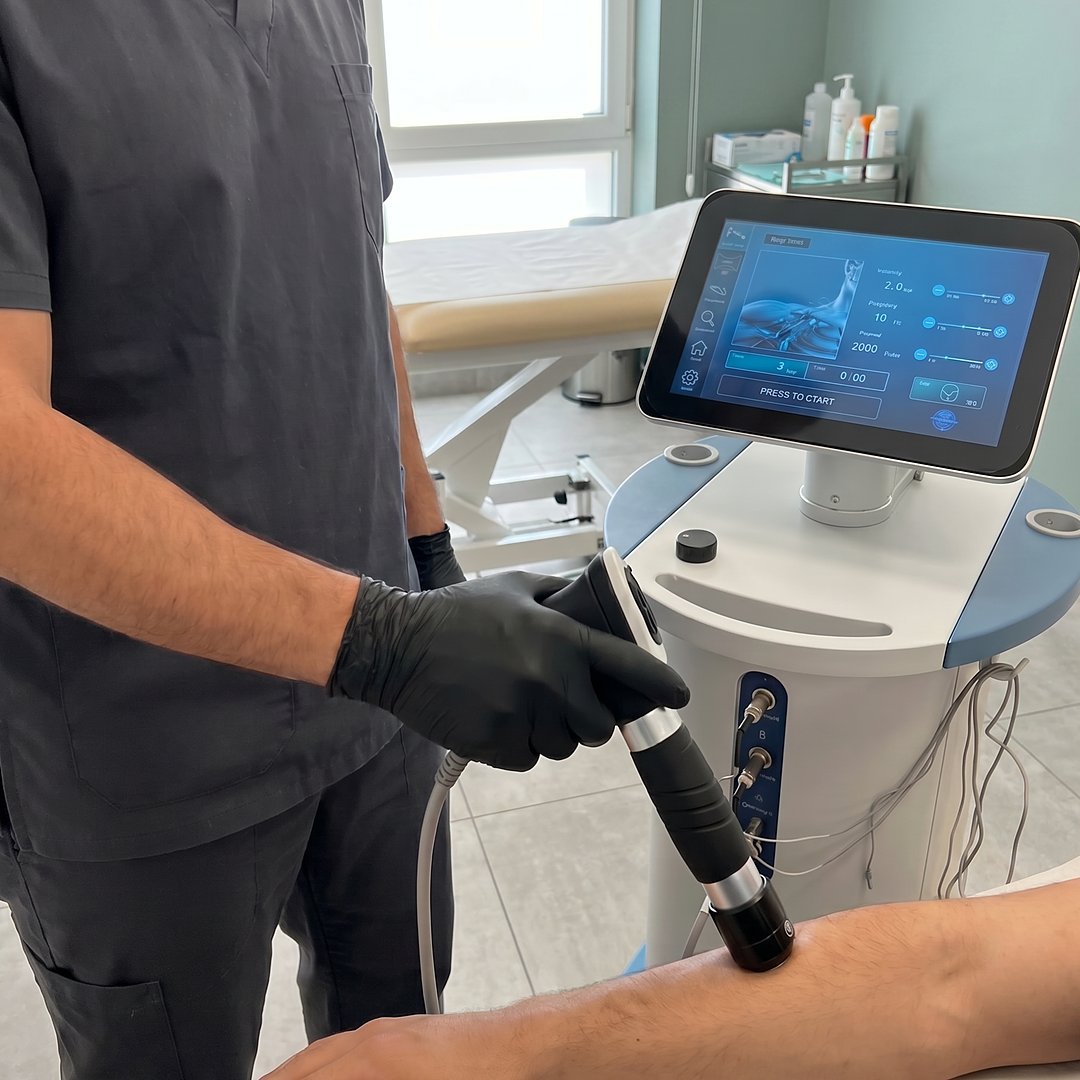
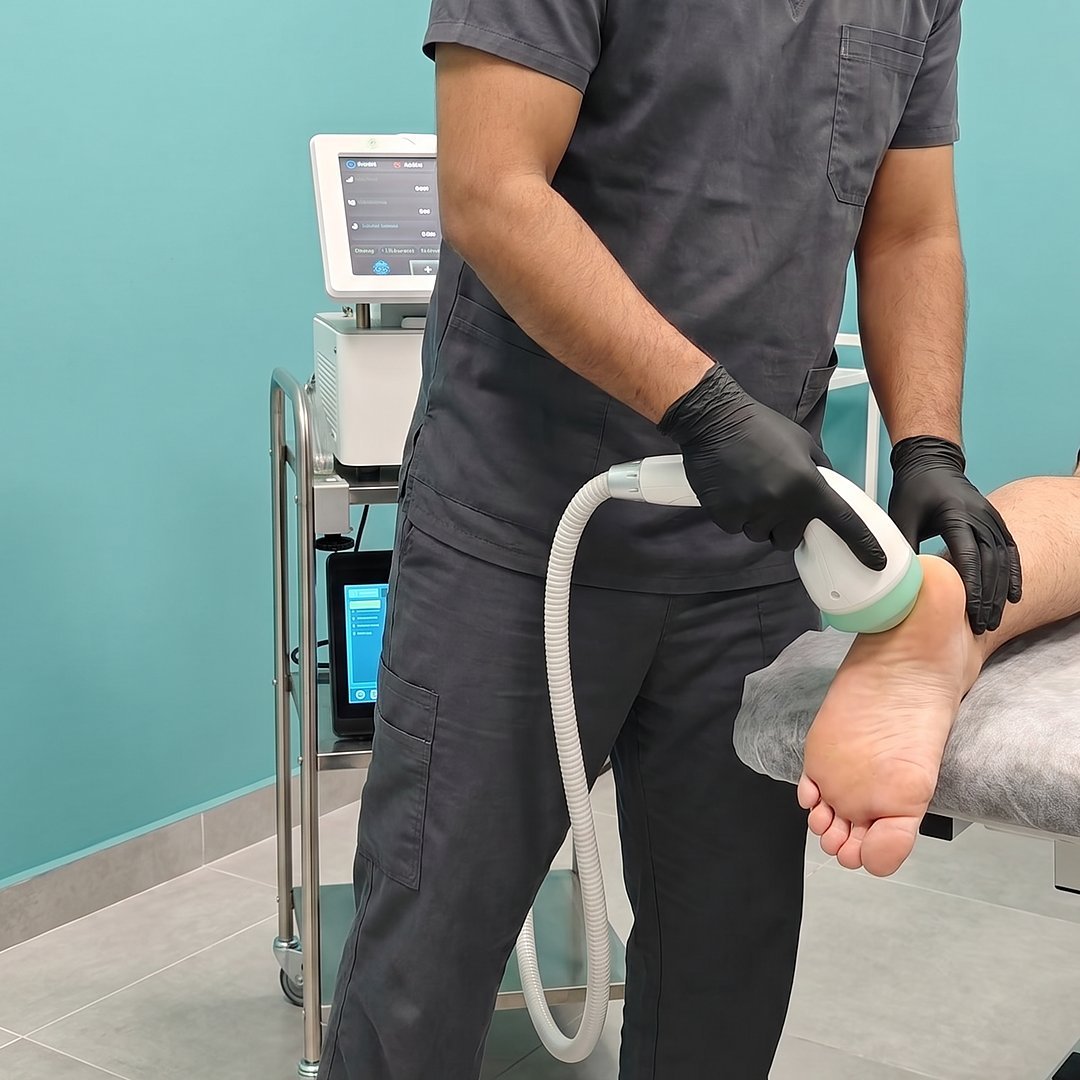
Focused acoustic waves that kick-start healing in stubborn tendon and soft-tissue injuries — a non-invasive option for pain that hasn't settled with rest alone.
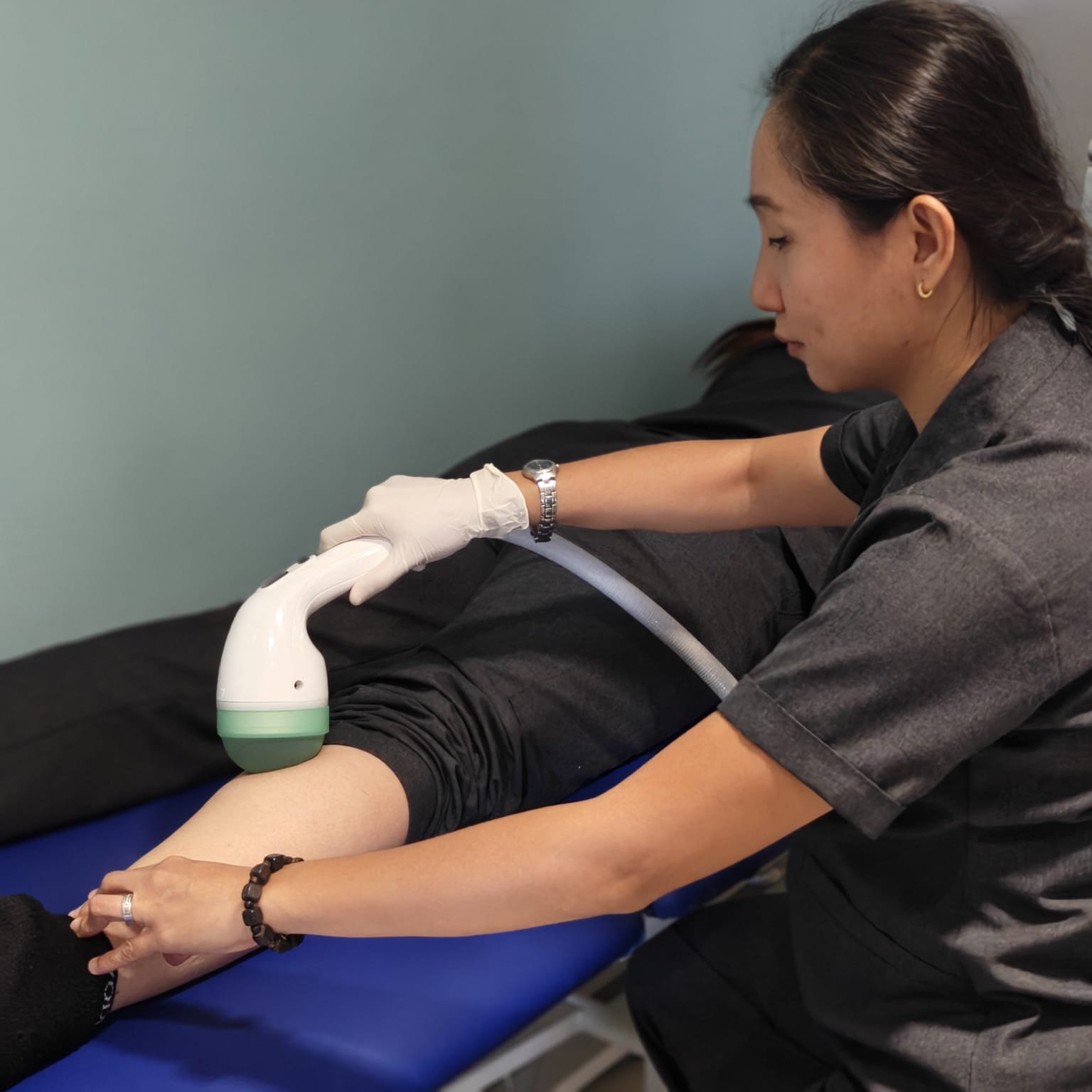
A handpiece delivers controlled acoustic pulses into the affected tissue. These stimulate blood flow, reactivate the body's natural repair response and help break down chronic inflammation in tendons and soft tissue — encouraging healing in areas that have become 'stuck'.
Two forms of extracorporeal shockwave (ESWT)
Shockwave therapy is often used for:
At CBP Precision Spine Center, your care is measured, corrective and guided by your clinician — never guesswork. Here is a closer look at the care behind the treatment.

Sessions are short, and most people feel only mild discomfort during treatment. A typical course runs over several weekly sessions, and shockwave is often combined with rehabilitation exercise to strengthen the area and protect against recurrence.
Treatments are recommended only after assessment and tailored to the individual. Suitability and expected outcomes are discussed with your clinician.
For the stubborn soft-tissue and tendon conditions it is used for, shockwave therapy has strong published results, though the exact response varies by condition and how long it has been present. We use it as part of a wider plan rather than in isolation, and we tell you at assessment whether it is likely to help your specific problem.
Most people feel a strong tapping or pulsing sensation that can be briefly uncomfortable over the tender area, but it is well tolerated and the intensity is adjusted to you. Sessions are short, and any mild soreness afterward usually settles within a day.
A typical course runs over several weekly sessions, but the exact number depends on the condition and how it responds. After assessing you we give a clear plan with review points, so you are not committing to an open-ended course.
Shockwave therapy is not suitable during pregnancy, over certain implants, or for people with specific clotting or circulation conditions, among others. This is exactly why we screen every patient with a proper assessment before recommending it, so it is only used where it is safe and appropriate for you.
It is most established for tendon and soft-tissue complaints, and it can play a supporting role in some spinal cases alongside corrective care rather than as a standalone spine treatment. At assessment we decide whether it fits your plan or whether another approach suits you better.
Book online in under a minute, or talk to a staff member now on WhatsApp — we'll help you find out whether this is right for you.