
Inside whole body vibration therapy at CBP Precision Spine Center
At CBP Precision Spine Center, your care is measured, corrective and guided by your clinician — never guesswork. Here is a closer look at the care behind the treatment.
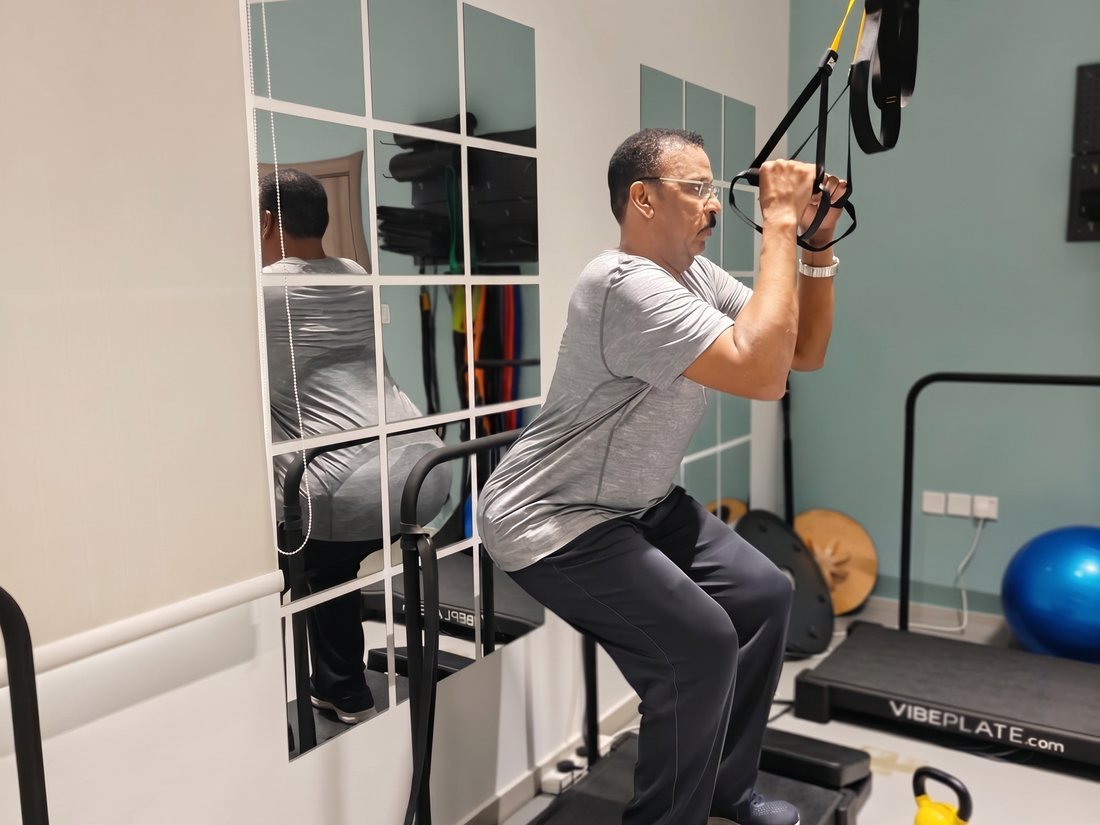
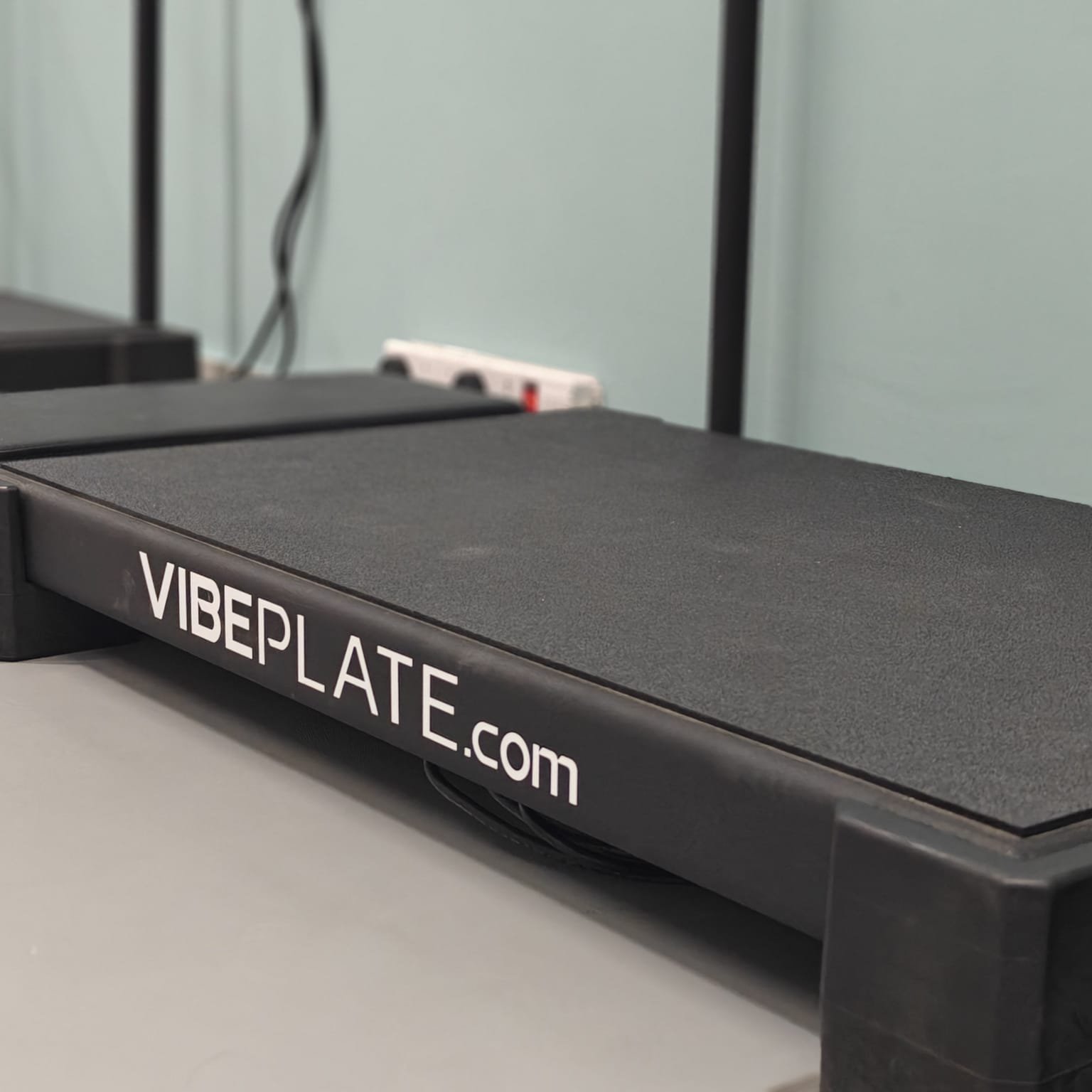
Controlled vibration that activates muscles and stimulates the nervous system — a low-impact way to support strength, balance and circulation alongside your care.
Standing or exercising on a vibration platform causes rapid, gentle muscle contractions many times per second. This stimulates the neuromuscular system, encourages circulation and can make rehabilitation exercises more effective — useful for patients building strength, stability or bone health.
At CBP Precision Spine Center, your care is measured, corrective and guided by your clinician — never guesswork. Here is a closer look at the care behind the treatment.
As part of a guided programme, whole body vibration may help to:

Whole body vibration is gentle and adaptable, making it suitable for many ages and fitness levels. Settings and exercises are matched to your assessment, and it is used as one supportive part of a wider corrective and rehabilitation plan.
Treatments are recommended only after assessment and tailored to the individual. Suitability and expected outcomes are discussed with your clinician.
You stand or exercise on a platform that vibrates at controlled frequencies, causing your muscles to contract reflexively many times per second. This amplifies the effect of simple exercises, stimulates bone and muscle, and improves circulation and balance — making it a time-efficient way to build strength and stability, especially for those who struggle with conventional loading.
Research supports benefits for muscle strength and activation, bone density stimulation, balance and fall-risk reduction in older adults, circulation, and recovery. In our clinic it is used to reinforce spinal correction — activating the postural muscles that hold your new alignment — and to accelerate rehabilitation where conventional exercise is limited by pain or deconditioning.
Yes, when dosed properly on clinical-grade equipment. Sessions are short and parameters — frequency, amplitude, duration — are set to your condition. It is avoided in pregnancy, with pacemakers, recent surgery, acute disc herniation, advanced osteoporosis with fracture risk, and certain other conditions, which is why we screen before prescribing it.
Studies show whole body vibration can stimulate bone-building activity and help maintain density, particularly in postmenopausal women, with effects comparable to some forms of impact exercise but gentler on the joints. It works best as part of a program that also includes resistance exercise, adequate protein, vitamin D, and calcium — not as a standalone fix.
Typically just 10–15 minutes, often built into your rehabilitation visit rather than booked separately. Because the reflexive contractions do much of the work, short frequent sessions outperform occasional long ones. Most programs run two to three sessions weekly, progressed as your strength and tolerance improve.
Book online in under a minute, or talk to a staff member now on WhatsApp — we'll help you find out whether this is right for you.