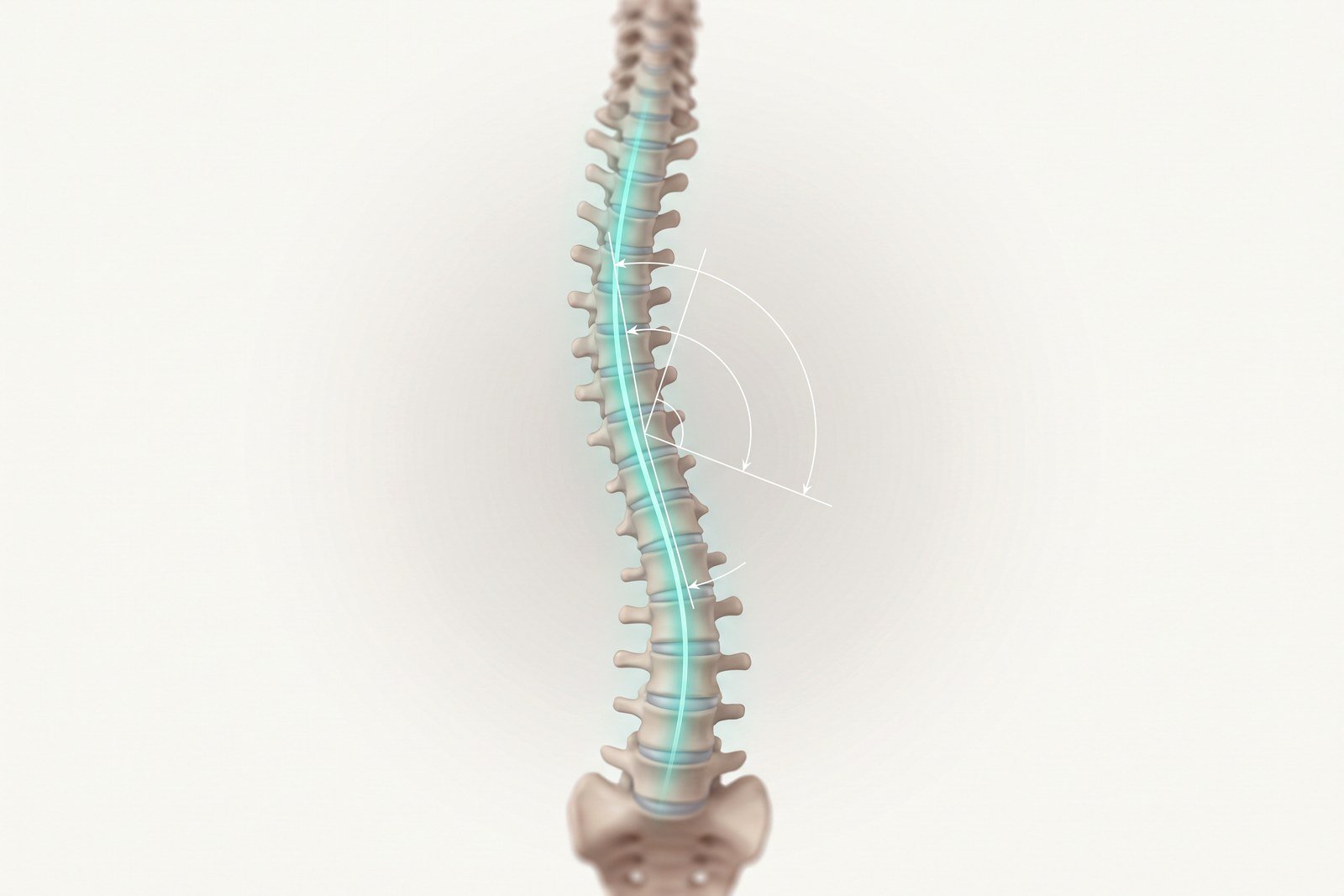
If you or your child has just been told there's a curve in the spine, the first question is almost always the same: do we really need surgery? For most people in Oman and across the Gulf, the honest answer is no — not if the curve is caught and managed correctly.
Short answer: Most cases of scoliosis can be managed without surgery. The three evidence-based non-surgical options are structured monitoring, scoliosis-specific corrective exercises, and modern corrective bracing (such as ScoliBrace®). Surgery is generally reserved for severe curves — typically above 45–50 degrees — that continue to progress. The single biggest factor in avoiding surgery is starting treatment early, while the curve is still small.
This guide explains, in plain language, how scoliosis is measured, when it needs treatment, and which non-surgical methods actually have evidence behind them. It's written by the team at CBP Precision Spine Center in Muscat — the first Advanced Certified Chiropractic BioPhysics® practice and certified ScoliBrace® provider in the region — but the medical information here applies wherever you are.
What is scoliosis, exactly?
Scoliosis is a sideways, three-dimensional curvature of the spine. Instead of running straight down the middle of the back, the spine curves into a "C" or "S" shape and often rotates at the same time. It's measured on an X-ray using the Cobb angle — the number of degrees the spine deviates from straight.
A spine is only considered scoliotic once the Cobb angle reaches 10 degrees or more. Most cases in adolescents are "idiopathic," meaning there's no single identifiable cause, though genetics play a role. In adults, scoliosis is often "degenerative" — the curve develops later in life as spinal discs and joints wear unevenly.
When does scoliosis actually need treatment?
Not every curve needs active treatment, and not every curve needs surgery. Doctors internationally group scoliosis by severity, and the Cobb angle largely decides the path. This is the framework used by scoliosis specialists worldwide, including the SOSORT (international scoliosis conservative-care) guidelines:
| Cobb angle | Severity | Typical approach |
|---|---|---|
| 10°–20° | Mild | Monitoring + scoliosis-specific exercises to prevent progression |
| 20°–40° | Moderate | Corrective bracing (especially in growing children) + exercises |
| 40°–45°+ | Severe | Bracing may still help; surgery is considered if the curve keeps progressing |
Two things matter as much as the raw number: how much growing the patient has left (a curve in a 12-year-old is far more likely to worsen than the same curve in a 40-year-old) and whether the curve is progressing over time. This is exactly why measurement — not guesswork — sits at the centre of good scoliosis care.
The non-surgical treatments that actually work
"Non-surgical" covers a lot of ground, and not all of it is equal. Here are the three approaches with genuine clinical evidence behind them.
1. Scoliosis-specific corrective exercises
These are not generic gym or yoga routines. Methods such as the Schroth Method and Chiropractic BioPhysics® (CBP®) mirror-image rehabilitation use targeted, curve-specific movements, breathing, and postural training to actively de-rotate the spine and strengthen the muscles that hold it in a corrected position. Done consistently, scoliosis-specific exercises can slow or halt progression and, in some cases, reduce the curve — particularly when combined with bracing.
2. Corrective bracing (ScoliBrace®)
A modern brace does more than the rigid braces of the past. Older braces (like the Boston brace) were designed simply to stop a curve getting worse. Newer 3D-designed, over-corrective braces such as ScoliBrace® are custom-built from a scan of the patient's body and are designed to guide the spine toward a more corrected position while it's worn. For growing children and adolescents with moderate curves, bracing is one of the most effective non-surgical tools available for preventing progression to surgery.
3. Chiropractic BioPhysics® structural correction
Chiropractic BioPhysics is a measurement-led, research-based approach to correcting spinal alignment. It combines specific adjustments, mirror-image postural exercises, and traction to address the structure of the spine rather than just the symptoms. Because it is built around before-and-after X-ray measurement, progress is tracked objectively rather than by how the patient happens to feel on a given day.
Why measurement matters more than marketing. Any clinic can say a patient "feels better." Real scoliosis care is judged on the X-ray: a documented change in the Cobb angle. Ask any provider — anywhere — to show you objective before-and-after measurements, not just testimonials.
Can scoliosis be corrected without surgery?
Yes, in many cases — but "corrected" needs an honest definition. In growing children and adolescents, the realistic and well-evidenced goal is to prevent the curve from progressing to the point of needing surgery, and modern bracing combined with scoliosis-specific exercise can often achieve genuine curve reduction. In adults, the spine is no longer growing, so the aim shifts toward stabilising the curve, reducing pain, improving posture and function, and stopping further progression.
What non-surgical care generally cannot do is make a significant structural curve vanish completely, and any provider promising a guaranteed "cure" should be treated with caution. The right goal is measurable improvement and avoiding surgery — and for the majority of curves caught early, that is a realistic outcome.
Can scoliosis go back to normal on its own?
No. Scoliosis does not self-correct, and a structural curve will not straighten out without intervention. Left unmanaged, curves tend to stay the same or — especially during growth spurts, and in some adults over time — get worse. This is why early detection is so valuable: a 15-degree curve is far easier to manage than the same curve left to progress to 40 degrees.
How do I stop scoliosis from progressing?
Progression is the real enemy in scoliosis, and stopping it comes down to a few things working together:
- Get an accurate baseline. A standing X-ray and Cobb angle measurement tell you exactly what you're dealing with.
- Act during growth, if possible. The years around puberty are when curves change fastest — and when bracing and exercise have the biggest impact.
- Use the right combination. For most moderate curves, that means corrective bracing plus scoliosis-specific exercises, not one in isolation.
- Re-measure regularly. Monitoring every few months catches progression early, while there's still time to adjust the plan.
What about scoliosis in adults?
Adult scoliosis is common and often under-treated. Some adults have curves left over from adolescence; others develop degenerative scoliosis as the spine ages. Because adults aren't growing, treatment focuses on pain relief, posture, mobility, and preventing the curve from worsening. Scoliosis-specific exercise, flexible or corrective bracing for symptom relief, and structural rehabilitation can all play a role — and for most adults, surgery is neither necessary nor the first option.
Scoliosis exercises to avoid
Some popular movements can aggravate a rotated, curved spine or reinforce the very asymmetry you're trying to correct. As a general rule, be cautious with high-impact, end-range, or one-sided loading such as: heavy overhead pressing, deep backbends, repetitive spinal twisting under load, and high-impact activities that jar the spine. This doesn't mean a person with scoliosis shouldn't exercise — movement is essential — but exercises should be selected and, ideally, supervised based on your specific curve pattern. What helps one curve can worsen another.
Why an early, measurement-led assessment is worth it
The recurring theme in every section above is the same: the earlier and the more precisely a curve is measured, the more options you have to avoid surgery. A proper scoliosis assessment includes a full postural analysis, standing X-rays, and a Cobb angle measurement — the objective baseline every treatment decision depends on.
Scoliosis assessment in Muscat — serving Oman and the Gulf
CBP Precision Spine Center is the region's first Advanced Certified Chiropractic BioPhysics® practice and a certified ScoliBrace® provider. We measure first, then build a corrective plan around your specific curve — for children, adolescents, and adults.
Frequently asked questions
Can scoliosis be corrected without surgery?
In many cases, yes. For growing children and adolescents, corrective bracing combined with scoliosis-specific exercises can prevent progression and often reduce the curve. In adults, non-surgical care focuses on stabilising the curve, reducing pain, and improving posture. Surgery is usually reserved for severe curves (typically above 45–50 degrees) that keep progressing.
Can scoliosis go back to normal?
Scoliosis does not correct itself and a structural curve won't straighten on its own. Without treatment, curves tend to stay the same or worsen, especially during growth. Early, active management gives the best chance of meaningful improvement.
What are the newest treatments for scoliosis?
The biggest advance in non-surgical care is 3D-designed, over-corrective custom bracing (such as ScoliBrace®), which aims to guide the spine toward a corrected position rather than simply holding it in place. Paired with scoliosis-specific exercise methods, it represents the current standard in conservative scoliosis care.
How do I stop my scoliosis from getting worse?
Get an accurate Cobb angle baseline from a standing X-ray, begin treatment early (especially during growth), use a combination of corrective bracing and scoliosis-specific exercises for moderate curves, and re-measure regularly so any progression is caught early.
Is scoliosis treatment available in Oman?
Yes. CBP Precision Spine Center in Azaiba, Muscat offers non-surgical scoliosis assessment and treatment, including ScoliBrace® corrective bracing and Chiropractic BioPhysics® structural correction, for patients in Oman and across the Gulf region.
At what age should scoliosis be treated?
Scoliosis can be assessed and treated at any age, but the years around puberty are the most important for monitoring, because curves change fastest during growth spurts. If you notice uneven shoulders, a prominent shoulder blade, or an uneven waistline in a child, get it assessed promptly.
This article is for general educational purposes only and is not a substitute for a professional medical assessment, diagnosis, or treatment. Scoliosis outcomes vary from person to person depending on curve type, severity, age, and skeletal maturity. Please consult a qualified scoliosis practitioner for advice specific to your situation.
إذا قيل لك أو لطفلك للتوّ إنّ هناك انحناءً في العمود الفقري، فإنّ السؤال الأول يكون دائماً تقريباً هو نفسه: هل نحتاج فعلاً إلى جراحة؟ بالنسبة لمعظم الناس في عُمان وأنحاء الخليج، الإجابة الصادقة هي لا — ليس إن اكتُشف الانحناء وأُدير بشكلٍ صحيح.
الإجابة المختصرة: يمكن التعامل مع معظم حالات الجنف دون جراحة. والخيارات الثلاثة غير الجراحية المدعومة بالأدلة هي: المتابعة المنظّمة، وتمارين التصحيح المتخصّصة للجنف، والدعامات التصحيحية الحديثة (مثل ScoliBrace®). وتُخصّص الجراحة عموماً للانحناءات الشديدة — التي تتجاوز عادةً 45 إلى 50 درجة — والتي تستمرّ في التفاقم. وأكبر عامل منفرد في تجنّب الجراحة هو البدء بالعلاج مبكراً، بينما لا يزال الانحناء صغيراً.
يشرح هذا الدليل، بلغةٍ بسيطة، كيف يُقاس الجنف، ومتى يحتاج إلى علاج، وأيّ الطرق غير الجراحية تستند فعلاً إلى أدلة. وقد كتبه فريق مركز الدقة للعمود الفقري في مسقط — أول ممارسة معتمدة متقدّمة في الكيروبراكتيك البيوفيزيائي (Chiropractic BioPhysics®) ومزوّد معتمد لدعامة ScoliBrace® في المنطقة — لكنّ المعلومات الطبية الواردة هنا تنطبق أينما كنت.
ما هو الجنف بالضبط؟
الجنف هو انحناء جانبي ثلاثي الأبعاد في العمود الفقري. فبدلاً من أن يمتدّ مستقيماً في منتصف الظهر، ينحني العمود الفقري على شكل حرف "C" أو "S" ويدور في الوقت نفسه غالباً. ويُقاس على صورة الأشعة السينية باستخدام زاوية Cobb — أي عدد الدرجات التي ينحرف بها العمود الفقري عن الاستقامة.
ولا يُعدّ العمود الفقري مصاباً بالجنف إلّا حين تبلغ زاوية Cobb 10 درجات أو أكثر. ومعظم الحالات لدى المراهقين "مجهولة السبب"، أي لا يوجد سبب واحد يمكن تحديده، وإن كانت الوراثة تؤدّي دوراً. أمّا لدى البالغين، فالجنف غالباً "تنكّسي" — إذ ينشأ الانحناء في مرحلة لاحقة من العمر مع تآكل أقراص العمود الفقري ومفاصله بشكلٍ غير متساوٍ.
متى يحتاج الجنف فعلاً إلى علاج؟
ليس كلّ انحناء يحتاج إلى علاجٍ نشط، وليس كلّ انحناء يحتاج إلى جراحة. يصنّف الأطبّاء حول العالم الجنف بحسب شدّته، وزاوية Cobb هي التي تحدّد المسار إلى حدٍّ كبير. وهذا هو الإطار الذي يعتمده أخصّائيو الجنف عالمياً، بما في ذلك إرشادات SOSORT (الجمعية الدولية للرعاية التحفّظية للجنف):
| زاوية Cobb | الشدّة | النهج المعتاد |
|---|---|---|
| 10°–20° | خفيف | المتابعة + تمارين متخصّصة للجنف لمنع التفاقم |
| 20°–40° | متوسّط | الدعامات التصحيحية (خصوصاً لدى الأطفال في مرحلة النموّ) + التمارين |
| 40°–45°+ | شديد | قد تظلّ الدعامة مفيدة؛ ويُنظر في الجراحة إن استمرّ الانحناء في التفاقم |
وثمّة أمران لا يقلّان أهميةً عن الرقم المجرّد: كم تبقّى للمريض من مرحلة النموّ (فانحناء لدى طفلٍ في الثانية عشرة أكثر عرضةً للتفاقم بكثير من الانحناء نفسه لدى شخصٍ في الأربعين)، وما إذا كان الانحناء يتفاقم بمرور الوقت. ولهذا السبب بالذات يقع القياس — لا التخمين — في صميم الرعاية الجيّدة للجنف.
العلاجات غير الجراحية التي تنجح فعلاً
عبارة "غير جراحي" تشمل مجالاً واسعاً، وليست كلّ عناصره متساوية. وإليك المقاربات الثلاث التي تستند إلى أدلة سريرية حقيقية.
1. تمارين التصحيح المتخصّصة للجنف
هذه ليست تمارين صالة رياضية أو يوغا عامة. فطرق مثل طريقة Schroth وإعادة التأهيل بتقنية mirror-image ضمن الكيروبراكتيك البيوفيزيائي (CBP®) تستخدم حركاتٍ مُوجَّهةً خاصةً بالانحناء، وتمارين تنفّس، وتدريباً على القوام، لإزالة دوران العمود الفقري بشكلٍ فعّال وتقوية العضلات التي تُبقيه في وضعٍ مُصحَّح. وبالمواظبة، يمكن لتمارين الجنف المتخصّصة أن تُبطئ التفاقم أو توقفه، وأن تُقلّل الانحناء في بعض الحالات — خصوصاً عند دمجها مع الدعامة.
2. الدعامات التصحيحية (ScoliBrace®)
الدعامة الحديثة تفعل أكثر ممّا كانت تفعله الدعامات الصلبة في الماضي. فالدعامات الأقدم (مثل دعامة Boston) صُمّمت ببساطة لـإيقاف تفاقم الانحناء. أمّا الدعامات الأحدث المصمّمة ثلاثية الأبعاد وفائقة التصحيح مثل ScoliBrace® فتُصنَّع خصّيصاً من مسحٍ لجسم المريض، وصُمّمت لتوجيه العمود الفقري نحو وضعٍ أكثر تصحيحاً أثناء ارتدائها. وبالنسبة للأطفال والمراهقين في مرحلة النموّ الذين لديهم انحناءات متوسّطة، تُعدّ الدعامة واحدة من أكثر الأدوات غير الجراحية فعاليةً لمنع التفاقم إلى مرحلة الجراحة.
3. التصحيح البنيوي بالكيروبراكتيك البيوفيزيائي (Chiropractic BioPhysics®)
الكيروبراكتيك البيوفيزيائي مقاربةٌ قائمة على القياس ومستندة إلى الأبحاث لتصحيح محاذاة العمود الفقري. وهي تجمع بين تعديلاتٍ محدّدة، وتمارين قوام بتقنية mirror-image، والشدّ، لمعالجة بنية العمود الفقري لا الأعراض فحسب. ولأنّها مبنيّة حول قياس الأشعة السينية قبل وبعد، يُتابَع التقدّم بشكلٍ موضوعي لا بحسب شعور المريض في يومٍ بعينه.
لماذا القياس أهمّ من التسويق. أيّ عيادة تستطيع أن تقول إنّ المريض "يشعر بتحسّن". أمّا رعاية الجنف الحقيقية فيُحكم عليها من صورة الأشعة: تغيّرٌ موثّق في زاوية Cobb. اطلب من أيّ مزوّد رعاية — في أيّ مكان — أن يُريك قياساتٍ موضوعيةً قبل وبعد، لا مجرّد شهادات مرضى.
هل يمكن تصحيح الجنف بدون جراحة؟
نعم، في كثير من الحالات — لكنّ كلمة "تصحيح" تحتاج إلى تعريفٍ صادق. فلدى الأطفال والمراهقين في مرحلة النموّ، الهدف الواقعي والمدعوم بالأدلة هو منع الانحناء من التفاقم إلى الحدّ الذي يستدعي الجراحة، ويمكن للدعامة الحديثة مقترنةً بتمارين الجنف المتخصّصة أن تُحقّق تقليلاً حقيقياً للانحناء في كثير من الأحيان. أمّا لدى البالغين، فالعمود الفقري لم يعد ينمو، ولذلك يتحوّل الهدف نحو تثبيت الانحناء، وتخفيف الألم، وتحسين القوام والوظيفة، وإيقاف المزيد من التفاقم.
وما لا تستطيع الرعاية غير الجراحية فعله عموماً هو جعل انحناءٍ بنيويٍّ كبير يختفي تماماً، وأيّ مزوّد رعاية يَعِد بـ"شفاءٍ" مضمون ينبغي التعامل معه بحذر. فالهدف الصحيح هو تحسّنٌ قابل للقياس وتجنّب الجراحة — وبالنسبة لغالبية الانحناءات المكتشفة مبكراً، فهذه نتيجة واقعية.
هل يعود الجنف إلى طبيعته من تلقاء نفسه؟
لا. فالجنف لا يصحّح نفسه، والانحناء البنيوي لن يستقيم دون تدخّل. وإن تُرك دون إدارة، تميل الانحناءات إلى البقاء كما هي أو — خصوصاً خلال طفرات النموّ، ولدى بعض البالغين مع الوقت — إلى التفاقم. ولهذا فإنّ الاكتشاف المبكّر بالغ القيمة: فانحناءٌ بمقدار 15 درجة أسهل بكثير في إدارته من الانحناء نفسه إن تُرك ليتفاقم إلى 40 درجة.
كيف أوقف تفاقم الجنف؟
التفاقم هو العدوّ الحقيقي في الجنف، وإيقافه يعتمد على عدّة أمور تعمل معاً:
- احصل على قياسٍ أساسيٍّ دقيق. صورة أشعة سينية بوضعية الوقوف وقياس زاوية Cobb يخبرانك بالضبط بما تتعامل معه.
- تصرّف خلال مرحلة النموّ إن أمكن. فالسنوات المحيطة بالبلوغ هي الأسرع تغيّراً للانحناءات — وهي الفترة التي يكون فيها للدعامة والتمارين أكبر أثر.
- استخدم التركيبة الصحيحة. بالنسبة لمعظم الانحناءات المتوسّطة، يعني ذلك الدعامة التصحيحية بالإضافة إلى تمارين الجنف المتخصّصة، لا أحدهما بمعزلٍ عن الآخر.
- أعِد القياس بانتظام. فالمتابعة كلّ بضعة أشهر تكشف التفاقم مبكراً، بينما لا يزال هناك وقتٌ لتعديل الخطة.
ماذا عن الجنف لدى البالغين؟
الجنف لدى البالغين شائعٌ وكثيراً ما يكون غير مُعالَج بشكلٍ كافٍ. فبعض البالغين لديهم انحناءات متبقّية من مرحلة المراهقة؛ وآخرون يُصابون بجنفٍ تنكّسي مع تقدّم العمود الفقري في العمر. ولأنّ البالغين لا ينمون، يركّز العلاج على تخفيف الألم، والقوام، والحركة، ومنع الانحناء من التفاقم. ويمكن لتمارين الجنف المتخصّصة، والدعامات المرنة أو التصحيحية لتخفيف الأعراض، وإعادة التأهيل البنيوي أن تؤدّي دوراً جميعاً — وبالنسبة لمعظم البالغين، فالجراحة ليست ضروريةً ولا هي الخيار الأول.
تمارين ينبغي تجنّبها مع الجنف
بعض الحركات الشائعة قد تُفاقم عموداً فقرياً منحنياً ومُلتوياً، أو تُرسّخ اللاتماثل ذاته الذي تحاول تصحيحه. وكقاعدة عامة، كن حذراً مع التحميل عالي الشدّة أو في أقصى المدى الحركي أو من جانبٍ واحد، مثل: الضغط الثقيل فوق الرأس، والانحناءات الخلفية العميقة، والالتواء المتكرّر للعمود الفقري تحت الحِمل، والأنشطة عالية الارتطام التي تهزّ العمود الفقري. وهذا لا يعني أنّ المصاب بالجنف ينبغي ألّا يمارس الرياضة — فالحركة ضرورية — لكن ينبغي اختيار التمارين، ويُفضَّل الإشراف عليها، بناءً على نمط انحنائك أنت تحديداً. فما ينفع انحناءً قد يُفاقم آخر.
لماذا يستحقّ التقييم المبكّر القائم على القياس عناءه
الفكرة المتكرّرة في كلّ قسمٍ أعلاه واحدة: كلّما كان قياس الانحناء أبكر وأدقّ، اتّسعت خياراتك لتجنّب الجراحة. والتقييم السليم للجنف يشمل تحليلاً كاملاً للقوام، وصوراً بالأشعة السينية بوضعية الوقوف، وقياساً لزاوية Cobb — وهو الأساس الموضوعي الذي يعتمد عليه كلّ قرارٍ علاجي.
تقييم الجنف في مسقط — لخدمة عُمان والخليج
مركز الدقة للعمود الفقري هو أول ممارسة في المنطقة معتمدة بشكلٍ متقدّم في Chiropractic BioPhysics® ومزوّد معتمد لدعامة ScoliBrace®. نحن نقيس أولاً، ثم نبني خطةً تصحيحيةً حول انحنائك تحديداً — للأطفال والمراهقين والبالغين.
الأسئلة الشائعة
هل يمكن تصحيح الجنف بدون جراحة؟
في كثير من الحالات، نعم. فلدى الأطفال والمراهقين في مرحلة النموّ، يمكن للدعامة التصحيحية مقترنةً بتمارين الجنف المتخصّصة أن تمنع التفاقم وأن تُقلّل الانحناء في كثير من الأحيان. أمّا لدى البالغين، فتركّز الرعاية غير الجراحية على تثبيت الانحناء وتخفيف الألم وتحسين القوام. وتُخصّص الجراحة عادةً للانحناءات الشديدة (التي تتجاوز عادةً 45–50 درجة) والتي تستمرّ في التفاقم.
هل يعود الجنف إلى طبيعته؟
الجنف لا يصحّح نفسه، والانحناء البنيوي لن يستقيم من تلقاء نفسه. فمن دون علاج، تميل الانحناءات إلى البقاء كما هي أو إلى التفاقم، خصوصاً خلال مرحلة النموّ. والإدارة المبكّرة النشطة تمنح أفضل فرصة لتحسّنٍ ذي معنى.
ما أحدث علاجات الجنف؟
أكبر تقدّم في الرعاية غير الجراحية هو الدعامات المخصّصة المصمّمة ثلاثية الأبعاد وفائقة التصحيح (مثل ScoliBrace®)، والتي تهدف إلى توجيه العمود الفقري نحو وضعٍ مُصحَّح بدلاً من مجرّد تثبيته في مكانه. وباقترانها بطرق التمارين المتخصّصة للجنف، فهي تمثّل المعيار الحالي في الرعاية التحفّظية للجنف.
كيف أمنع تفاقم الجنف لديّ؟
احصل على قياسٍ أساسيٍّ دقيق لزاوية Cobb من صورة أشعة بوضعية الوقوف، وابدأ العلاج مبكراً (خصوصاً خلال مرحلة النموّ)، واستخدم مزيجاً من الدعامة التصحيحية وتمارين الجنف المتخصّصة للانحناءات المتوسّطة، وأعِد القياس بانتظام حتى يُكتشف أيّ تفاقم مبكراً.
هل علاج الجنف متوفّر في عُمان؟
نعم. يقدّم مركز الدقة للعمود الفقري في العذيبة بمسقط تقييماً وعلاجاً غير جراحيَّين للجنف، بما في ذلك الدعامة التصحيحية ScoliBrace® والتصحيح البنيوي بالكيروبراكتيك البيوفيزيائي (Chiropractic BioPhysics®)، للمرضى في عُمان وأنحاء منطقة الخليج.
في أيّ عمر ينبغي علاج الجنف؟
يمكن تقييم الجنف وعلاجه في أيّ عمر، لكنّ السنوات المحيطة بالبلوغ هي الأهمّ للمتابعة، لأنّ الانحناءات تتغيّر بأسرع وتيرة خلال طفرات النموّ. وإن لاحظت عدم تساوٍ في الكتفين، أو بروزاً في لوح الكتف، أو عدم تساوٍ في الخصر لدى طفل، فاطلب تقييماً فوراً.
هذا المقال لأغراض تثقيفية عامة فقط وليس بديلاً عن التقييم أو التشخيص أو العلاج الطبي المتخصّص. وتتفاوت نتائج الجنف من شخصٍ لآخر بحسب نوع الانحناء وشدّته وعمر المريض ونضج الهيكل العظمي. يُرجى استشارة ممارس جنف مؤهّل للحصول على نصيحة تخصّ حالتك تحديداً.