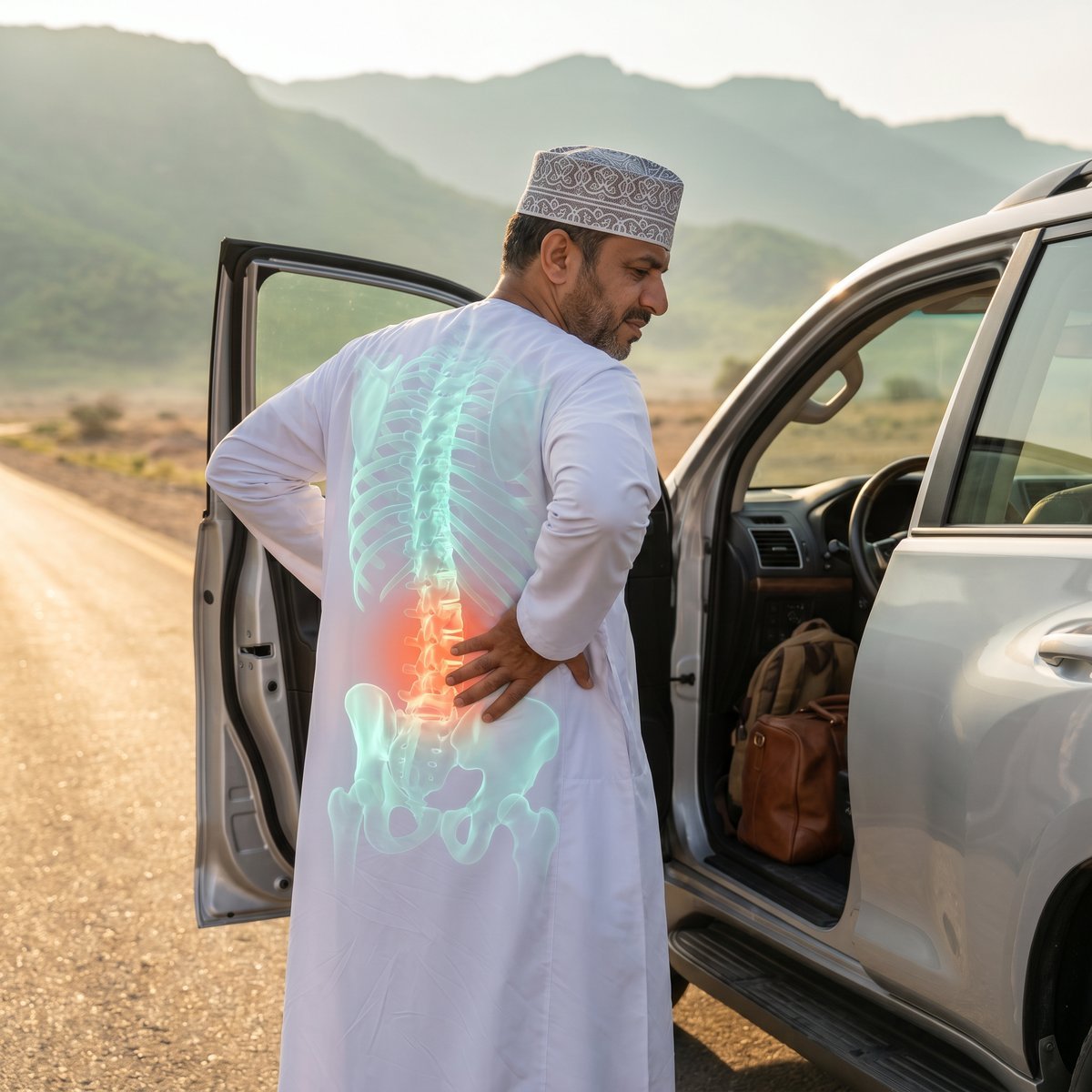
Why does your back hurt after a long drive? Because sitting for hours compresses your spinal discs by up to 30%, tightens your hip flexors, and pulls your head forward of your shoulders — a combination that overloads the lower back long before you reach your destination.
Every July and August, thousands of families make the 1,000-kilometre drive from Muscat to Salalah for Khareef season. It is one of the most beautiful road trips in the Gulf — and one of the most punishing journeys your spine takes all year. Add summer flights, airport luggage, and unfamiliar hotel beds, and it is no surprise that back pain while driving and travelling is one of the most common complaints we see at our clinic in Azaiba, Muscat, every summer.
The good news: most travel-related back pain is preventable. Here is exactly how.
Why Long Drives Cause Lower Back Pain
Your spinal discs are around 80% water and rely on movement to stay hydrated — they have no direct blood supply, so they absorb nutrients like a sponge each time you move. Sit motionless for hours and three things happen:
- Disc compression. Seated pressure on the lumbar discs is significantly higher than standing. Over a 10-hour drive to Salalah, discs gradually lose height and shock absorption.
- Hip flexor shortening. The muscles at the front of your hips adapt to the seated position. When you finally stand, they pull your pelvis forward and force your lower back to over-arch.
- Forward head posture. Fatigue draws your head toward the windscreen. Every 2.5 cm of forward head position adds roughly 4–5 kg of load to your neck and upper back.
Road vibration makes all three worse — which is why the same person who sits at a desk all day often feels dramatically worse after a long drive. If you already deal with chronic back pain or sciatica, a long journey is often the trigger that turns a quiet problem loud.
How to Set Up Your Car Seat Before a Long Drive
The best sitting position for lower back pain while driving takes two minutes to set up:
- Seat back at 100–110 degrees — slightly reclined, not upright at 90° and never lounging back.
- Lumbar support in the curve of your lower back. If your car has no adjustable lumbar support, a small rolled towel works just as well. This single change is the highest-value fix on this list.
- Headrest touching the back of your head — not hovering behind it. This both protects your neck posture and dramatically reduces whiplash injury in a collision.
- Hips level with or slightly higher than knees. Raise the seat if needed.
- Steering wheel close enough that your elbows stay gently bent — reaching pulls your shoulders and head forward.
The 90-Minute Rule
However good your seat setup, your discs still need movement. Stop every 90 minutes, even for just three minutes. Walk around the car, reach overhead, and gently arch backward five times. This re-hydrates the discs, resets your hip flexors, and restores blood flow.
On the Muscat–Salalah route, that means roughly six short stops — plan them around fuel stations and you will lose less than 30 minutes across the whole journey and arrive feeling years younger.
Flying This Summer? The Same Rules Apply at 35,000 Feet
Aircraft seats are worse than car seats: economy seatbacks flatten your natural lumbar curve entirely. For flights over three hours:
- Stand and move every hour, even if it is just to the galley and back.
- Bring a travel lumbar cushion — or use the airline pillow behind your lower back.
- Lift luggage in two stages: floor → seat → overhead locker. The single most common travel injury we treat is a disc flare-up from lifting a suitcase into the overhead bin in one twisting motion. If you have had a herniated disc before, treat this rule as law.
- Stay hydrated. Cabin air and Oman's summer heat both dehydrate spinal discs — the same reason we wrote about summer heat and your spine.
When Travel Back Pain Does Not Go Away
Mild stiffness after a long journey should settle within a few days. But if lower back pain persists beyond one to two weeks after returning home — or if you notice pain radiating into the leg, numbness, or tingling — the journey did not cause a new problem. It exposed an existing structural one.
This is where a proper assessment matters. At CBP Precision Spine Center in Azaiba, Muscat, Dr. Richard Marchetti — the only Advanced Certified Chiropractic BioPhysics® (CBP®) practitioner in the Middle East — uses structural X-ray analysis to measure exactly how your spine's alignment deviates from normal, then builds a corrective plan rather than simply relieving symptoms. For disc-related travel pain, options such as non-surgical spinal decompression address the cause directly.
Sitting is part of modern life — whether it is the office desk or the highway to Salalah. The difference between travellers who arrive in pain and those who do not is rarely luck. It is structure, setup, and movement.
Travel Back Pain FAQ: Your Most Common Questions, Answered
Why does my lower back hurt after driving?
Prolonged sitting compresses the lumbar discs, shortens the hip flexors, and encourages forward head posture. Combined with road vibration, this overloads the lower back — especially if an underlying alignment problem already exists.
What is the best sitting position for lower back pain while driving?
Seat back reclined to 100–110 degrees, lumbar support or a rolled towel in the curve of the lower back, headrest touching the back of your head, hips level with or slightly above your knees, and the steering wheel close enough to keep elbows bent.
Does lumbar support really help with back pain?
Yes. A lumbar support maintains the spine's natural inward curve while seated, which reduces disc pressure and muscle fatigue. It is the single most effective low-cost change for back pain while driving.
Is back pain after a flight normal?
Mild stiffness for a day or two is common. Pain lasting more than one to two weeks, or pain radiating into the leg with numbness or tingling, is not normal and warrants a structural assessment.
How often should I stop on the drive from Muscat to Salalah?
Every 90 minutes. Three minutes of walking and gentle backward bending at each stop keeps the spinal discs hydrated and the hip flexors from shortening — around six brief stops across the full journey.
When should I see a chiropractor for travel-related back pain?
If pain persists beyond two weeks after returning, keeps returning after every trip, or includes leg symptoms such as numbness or tingling. Recurring travel pain usually signals a measurable structural cause rather than simple muscle fatigue.
Book Your Spine Assessment in Muscat
Ready to travel pain-free? CBP Precision Spine Center in Azaiba, Muscat combines precise structural X-ray assessment with corrective Chiropractic BioPhysics® care, so your spine is measured — not guessed. Book your assessment before your next long journey.
لماذا يؤلمك ظهرك بعد القيادة الطويلة؟ لأن الجلوس لساعات يضغط على غضاريف العمود الفقري بنسبة تصل إلى ٣٠٪، ويُقصّر عضلات مقدمة الورك، ويدفع الرأس إلى الأمام — وهي عوامل تُرهق أسفل الظهر قبل الوصول إلى وجهتك بوقت طويل.
في كل يوليو وأغسطس، تقطع آلاف العائلات مسافة ١٠٠٠ كيلومتر من مسقط إلى صلالة لموسم الخريف. إنها من أجمل الرحلات البرية في الخليج — ومن أقساها على عمودك الفقري طوال العام. أضف إليها رحلات الطيران الصيفية وحمل الحقائب وأسرّة الفنادق غير المألوفة، فلا عجب أن ألم الظهر أثناء القيادة والسفر من أكثر الشكاوى التي نستقبلها في عيادتنا في العذيبة، مسقط، كل صيف.
الخبر الجيد: معظم آلام الظهر المرتبطة بالسفر يمكن الوقاية منها. وإليكم الطريقة بالتفصيل.
لماذا تسبب القيادة الطويلة ألم أسفل الظهر؟
تتكون غضاريف العمود الفقري من الماء بنسبة ٨٠٪ تقريباً، وتعتمد على الحركة للبقاء رطبة — فهي بلا تروية دموية مباشرة، وتمتص الغذاء كالإسفنجة مع كل حركة. اجلس بلا حراك لساعات وستحدث ثلاثة أمور:
- انضغاط الغضاريف. الضغط على غضاريف القطنية أثناء الجلوس أعلى بكثير منه أثناء الوقوف. وخلال ١٠ ساعات من القيادة إلى صلالة، تفقد الغضاريف ارتفاعها وقدرتها على امتصاص الصدمات تدريجياً.
- تقصّر عضلات الورك. تتكيف عضلات مقدمة الورك مع وضعية الجلوس، وعند الوقوف أخيراً تشدّ الحوض إلى الأمام وتجبر أسفل الظهر على التقوّس الزائد.
- تقدّم الرأس إلى الأمام. يجذب التعب رأسك نحو الزجاج الأمامي، وكل ٢٫٥ سم من تقدّم الرأس تضيف نحو ٤–٥ كجم من الحمل على الرقبة وأعلى الظهر.
اهتزازات الطريق تزيد العوامل الثلاثة سوءاً. وإذا كنت تعاني أصلاً من ألم الظهر المزمن أو عرق النسا، فغالباً ما تكون الرحلة الطويلة هي الشرارة التي تحوّل مشكلة صامتة إلى ألم واضح.
كيف تضبط مقعد السيارة قبل رحلة طويلة؟
أفضل وضعية جلوس لتجنب ألم أسفل الظهر أثناء القيادة تحتاج دقيقتين فقط:
- ظهر المقعد بزاوية ١٠٠–١١٠ درجات — مائل قليلاً، لا عمودياً تماماً ولا مستلقياً.
- دعامة قطنية في انحناء أسفل الظهر. إن لم تتوفر دعامة قابلة للتعديل في سيارتك، فمنشفة صغيرة ملفوفة تؤدي الغرض تماماً. هذا التعديل هو الأعلى قيمة في القائمة كلها.
- مسند الرأس يلامس مؤخرة رأسك — لا أن يبقى خلفه. فهذا يحمي وضعية رقبتك ويقلل كثيراً من إصابة الارتداد الرقبي عند أي تصادم.
- الوركان بمستوى الركبتين أو أعلى قليلاً. ارفع المقعد عند الحاجة.
- المقود قريب بما يكفي لتبقى المرفقان منثنيين برفق — فمدّ الذراعين يجرّ الكتفين والرأس إلى الأمام.
قاعدة الـ٩٠ دقيقة
مهما كان ضبط مقعدك مثالياً، تبقى غضاريفك بحاجة إلى الحركة. توقف كل ٩٠ دقيقة، ولو لثلاث دقائق فقط. امشِ حول السيارة، ومدّ ذراعيك للأعلى، وانحنِ للخلف برفق خمس مرات. هذا يعيد الترطيب للغضاريف، ويُرخي عضلات الورك، ويستعيد تدفق الدم.
على طريق مسقط–صلالة، يعني ذلك نحو ست وقفات قصيرة — خطط لها عند محطات الوقود، فلن تخسر أكثر من ٣٠ دقيقة في الرحلة كلها، وستصل وكأنك أصغر بسنوات.
مسافرون بالطائرة هذا الصيف؟ القواعد نفسها على ارتفاع ٣٥ ألف قدم
مقاعد الطائرة أسوأ من مقاعد السيارة: فمساند الدرجة السياحية تُفقد أسفل الظهر انحناءه الطبيعي تماماً. في الرحلات التي تتجاوز ثلاث ساعات:
- قم وتحرك كل ساعة، ولو ذهاباً وإياباً في الممر.
- خذ معك وسادة قطنية للسفر — أو ضع وسادة الطائرة خلف أسفل ظهرك.
- ارفع الحقائب على مرحلتين: من الأرض إلى المقعد، ثم إلى الرف العلوي. أكثر إصابات السفر التي نعالجها شيوعاً هي نوبة ألم غضروفي بسبب رفع حقيبة إلى الرف العلوي بحركة واحدة مع التفاف الجسم. وإذا سبق أن عانيت من الانزلاق الغضروفي، فاعتبر هذه القاعدة قانوناً.
- حافظ على شرب الماء. هواء الطائرة الجاف وحرارة صيف عمان كلاهما يجفف غضاريف العمود الفقري — وهو ما فصّلناه في مقالنا عن حرارة الصيف وعمودك الفقري.
متى لا يزول ألم الظهر بعد السفر؟
التيبّس الخفيف بعد رحلة طويلة يُفترض أن يزول خلال أيام. أما إذا استمر ألم أسفل الظهر لأكثر من أسبوع إلى أسبوعين بعد العودة — أو لاحظت ألماً يمتد إلى الساق أو خدراً أو وخزاً — فالرحلة لم تُحدث مشكلة جديدة، بل كشفت مشكلة هيكلية قائمة.
وهنا تكمن أهمية التقييم الدقيق. في CBP Precision Spine Center في العذيبة، مسقط، يستخدم الدكتور ريتشارد ماركيتي — الممارس الوحيد الحاصل على الشهادة المتقدمة في Chiropractic BioPhysics® (CBP®) في الشرق الأوسط — تحليل الأشعة السينية الهيكلية لقياس انحراف استقامة عمودك الفقري عن الوضع الطبيعي بدقة، ثم يضع خطة تصحيحية بدلاً من الاكتفاء بتخفيف الأعراض. ولآلام الغضاريف المرتبطة بالسفر، تعالج خيارات مثل علاج تخفيف الضغط عن العمود الفقري بدون جراحة السبب مباشرةً.
الجلوس جزء من حياتنا الحديثة — سواء على مكتب العمل أو على الطريق إلى صلالة. والفرق بين مسافرٍ يصل متألماً وآخر يصل بخير نادراً ما يكون حظاً. إنه البنية الهيكلية، والإعداد الصحيح، والحركة.
الأسئلة الشائعة حول ألم الظهر والسفر
لماذا يؤلمني أسفل ظهري بعد القيادة؟
الجلوس الطويل يضغط على غضاريف القطنية، ويُقصّر عضلات الورك، ويشجع تقدّم الرأس إلى الأمام. ومع اهتزازات الطريق، يُرهق ذلك أسفل الظهر — خصوصاً إذا وُجدت مشكلة استقامة كامنة.
ما أفضل وضعية جلوس لألم أسفل الظهر أثناء القيادة؟
ظهر المقعد بزاوية ١٠٠–١١٠ درجات، ودعامة قطنية (أو منشفة ملفوفة) في انحناء أسفل الظهر، ومسند الرأس ملامساً لمؤخرة الرأس، والوركان بمستوى الركبتين أو أعلى قليلاً، والمقود قريباً بما يُبقي المرفقين منثنيين.
هل تفيد الدعامة القطنية فعلاً في ألم الظهر؟
نعم. تحافظ الدعامة القطنية على الانحناء الداخلي الطبيعي للعمود الفقري أثناء الجلوس، مما يقلل الضغط على الغضاريف وإجهاد العضلات. وهي أكثر تعديل منخفض التكلفة فاعليةً لألم الظهر أثناء القيادة.
هل ألم الظهر بعد رحلة الطيران طبيعي؟
تيبّس خفيف ليوم أو يومين أمر شائع. أما ألم يستمر أكثر من أسبوع إلى أسبوعين، أو يمتد إلى الساق مع خدر أو وخز، فليس طبيعياً ويستدعي تقييماً هيكلياً.
كم مرة يجب التوقف في الطريق من مسقط إلى صلالة؟
كل ٩٠ دقيقة. ثلاث دقائق من المشي والانحناء الخفيف للخلف عند كل توقف تحافظ على ترطيب الغضاريف وتمنع تقصّر عضلات الورك — أي نحو ست وقفات قصيرة في الرحلة كاملة.
متى أراجع أخصائي كيروبراكتيك لألم الظهر المرتبط بالسفر؟
إذا استمر الألم أكثر من أسبوعين بعد العودة، أو تكرر بعد كل رحلة، أو صاحبته أعراض في الساق. الألم المتكرر مع السفر يشير عادةً إلى سبب هيكلي قابل للقياس، لا مجرد إجهاد عضلي.
احجز تقييم عمودك الفقري في مسقط
هل أنتم مستعدون لسفر بلا ألم؟ يجمع CBP Precision Spine Center في العذيبة، مسقط بين التقييم الهيكلي الدقيق بالأشعة السينية والرعاية التصحيحية بتقنية Chiropractic BioPhysics® — ليُقاس عمودك الفقري لا أن يُخمَّن. احجزوا تقييمكم قبل رحلتكم الطويلة القادمة.