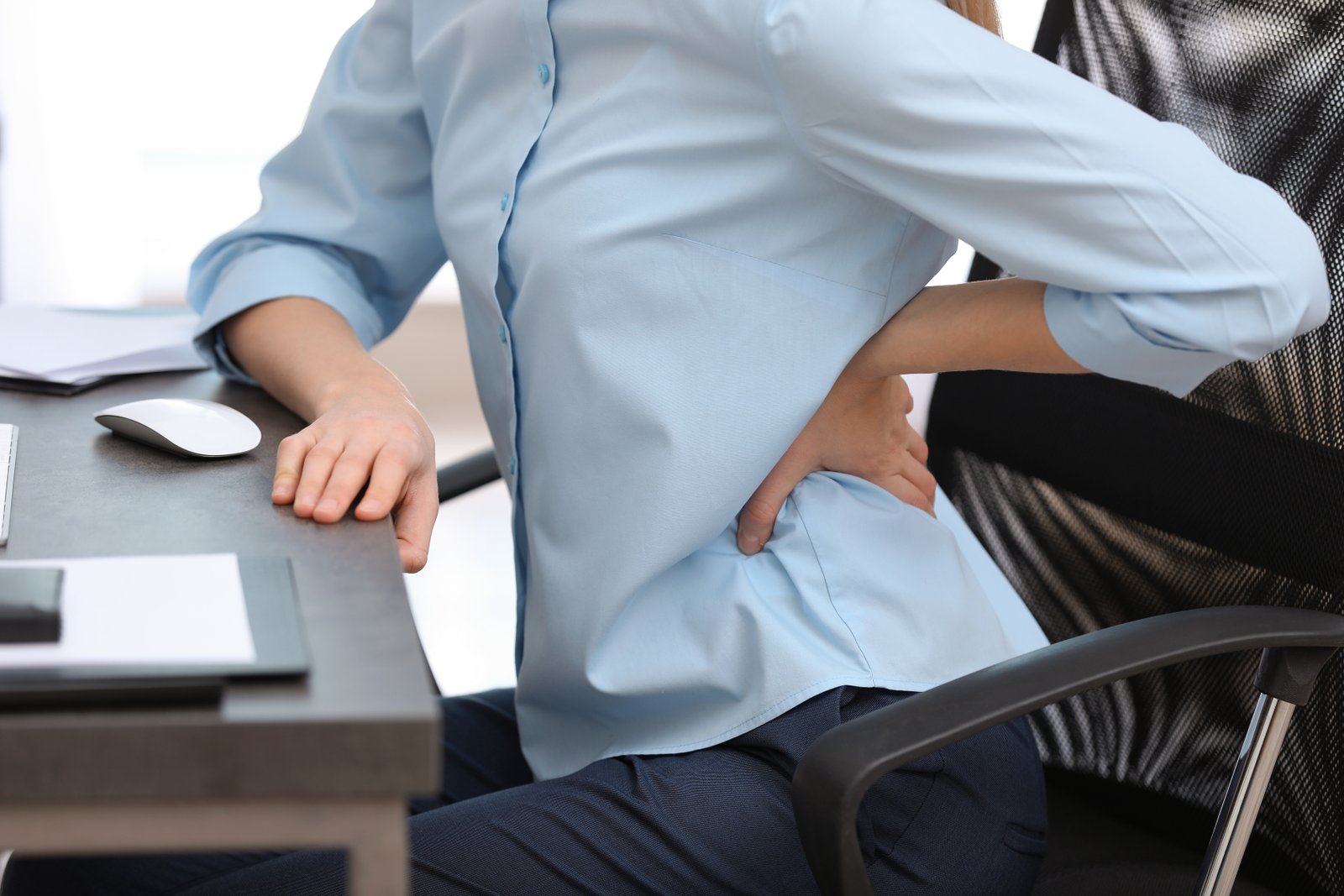
Lower back pain from sitting at work? Discover why 60% of GCC office workers suffer — and how CBP precision care in Muscat delivers lasting relief.
The Most Common Pain in Muscat's Office Towers
Walk through any office building in Al Khuwair, MQ, the CBD, or Knowledge Oasis Muscat at 4 PM and you'll see the same thing on dozens of faces: that small grimace as someone stands up from their desk, one hand instinctively pressed to the lower back. They roll their shoulders. Stretch. Sit back down. By tomorrow morning they'll do it all again.
It's so normalized in the GCC corporate world that we barely register it. But it shouldn't be normal — and the data backs that up.
A 2023 study of office workers in Saudi Arabia found that 59.9% experience work-related lower back pain. Another, larger study published the same year found that 84.5% of office workers reported musculoskeletal pain in the past year, with the lower back the most affected region (54.5%). These aren't fringe statistics. They describe the lived reality of nearly every desk worker in the Gulf.
If you're reading this from your office in Muscat — whether you work in oil and gas, banking, government, hospitality management, IT, or any other desk-bound profession — there's a six-in-ten chance your back hurts right now. And there's a very high chance that what you're doing about it isn't working.
This article explains why your chair is quietly damaging your spine, what most people get wrong about treating it, and what actually delivers lasting relief.
Why Sitting Is So Hard on Your Lower Back
Most people assume sitting is "resting." It isn't. From your spine's point of view, sitting is one of the most demanding positions you can put it in.
Here's what's actually happening when you sit at your desk for eight hours a day:
1. Disc pressure increases dramatically. Research has consistently shown that pressure on your lumbar discs is significantly higher when you're sitting than when you're standing — and even higher when you're sitting and slouching forward toward a screen. Over years, that elevated pressure accelerates disc wear and increases the risk of bulging or herniation.
2. Your hip flexors shorten. Sit for eight hours and your hip flexor muscles literally adapt to that shortened length. When you finally stand up, those tightened muscles pull on your pelvis and tilt it forward, which exaggerates the natural curve in your lower back and creates a constant, low-grade strain.
3. Your glutes switch off. Long periods of sitting cause your gluteal muscles — the most important muscles for supporting your lower back during movement — to become weak and inactive. Doctors call this "gluteal amnesia." When your glutes can't do their job, your lower back muscles take over, and they exhaust themselves trying.
4. Your core deactivates. Your deep stabilizing core muscles (the transverse abdominis, multifidus) only switch on when your spine is in proper alignment. Slouched in an office chair, those muscles go quiet. Without them, every movement you make is unsupported.
5. Postural collapse becomes structural. This is the most important point. After enough years, your spine doesn't just "hurt when you sit" — it physically remodels. The vertebrae shift. Curves flatten. Discs wedge. What started as discomfort becomes a permanent change in how your spine is shaped.
Why GCC Office Workers Are Especially Vulnerable
The pattern of lower back pain in the Gulf is not identical to what we see in Western office populations. Several factors specific to life in Muscat and the GCC make it worse:
Long working hours. A significant proportion of GCC office workers spend eight or more hours a day seated at a desk — often longer in oil and gas, finance, and government roles where extended hours are normalized.
Long commutes by car. Driving from Mawaleh, Al Mouj, or Bausher into central Muscat at peak hours can add another 60–90 minutes of seated time on each end of your day. Driving posture is even harder on your spine than office sitting because your arms are extended forward, often gripping the wheel tightly.
Climate-driven inactivity. For much of the year, outdoor walking and recreation in Oman are uncomfortable due to heat. This eliminates the natural movement that office workers in cooler climates get from walking commutes, lunchtime walks, and weekend activity outdoors.
High prevalence of related risk factors. The GCC has some of the highest rates of obesity, diabetes, and vitamin D deficiency in the world — all of which independently worsen lower back pain. The Saudi office worker study identified being overweight, sleep disturbance, history of back trauma, and frequent work stress as independent risk factors. Most GCC professionals carry at least one of these.
Cultural factors around seeking help. Only about 30% of office workers experiencing musculoskeletal pain in the regional studies sought medical advice. Most people simply live with it, hoping it improves on its own. It rarely does.
What Most People Try First — and Why It Doesn't Work
When lower back pain from sitting starts, most people in Muscat try the same sequence:
Stage 1: Painkillers. Paracetamol, ibuprofen, or stronger anti-inflammatories from the pharmacy. These mask pain by reducing inflammation. They do nothing to address why your spine is inflamed in the first place. The pain returns the moment the medication wears off — and long-term use carries real risks for your stomach, kidneys, and liver.
Stage 2: A "better" chair. Office workers often invest in expensive ergonomic chairs hoping the new chair will fix the problem. A good chair helps, but if your spine has already lost its proper curvature, no chair on Earth can sit you in a position your spine no longer holds naturally.
Stage 3: Stretching and YouTube exercises. Generic back exercises sometimes provide temporary relief, but they're often the wrong exercises for your specific spinal pattern. Stretches that help one person can actively worsen another person's condition.
Stage 4: Massage or generic physiotherapy. Massage feels good and reduces muscle tension temporarily. But if the underlying problem is structural — your spine is mechanically misaligned — soft tissue work alone cannot correct it.
Stage 5: Resignation. Most people eventually decide back pain is "just part of getting older" or "part of working a desk job." This is the most damaging stage of all, because untreated structural problems progressively worsen.
The pattern is consistent: people treat the symptom (pain) over and over, while the cause (a structural change in spinal alignment) continues to deteriorate.
The Difference Between Pain Relief and Spinal Correction
This is the single most important distinction in spinal healthcare, and it's the difference that defines our work at مركز الدقة للعمود الفقري.
Pain relief addresses how your back feels right now. Painkillers, massage, basic adjustments, and heat therapy all do this well. They are valid and useful — but they are not corrective.
Spinal correction addresses how your spine is shaped. Through precise diagnostic imaging, calibrated traction, mirror-image adjustments, and targeted corrective exercises, the goal is to physically restore your spine to its biomechanically ideal alignment — so that the underlying cause of your pain stops generating pain in the first place.
This is the foundational principle of الكيروبراكتيك البيوفيزيائي (Chiropractic BioPhysics®) (CBP), the methodology our clinic specializes in. CBP is the most heavily researched chiropractic technique in the world, with over 200 peer-reviewed studies supporting its protocols. It is fundamentally different from traditional chiropractic, which focuses on short-term symptom relief through manual adjustments.
For office workers with chronic lower back pain, the difference matters enormously. After years of sitting, your spine is not in its original position. Adjustments and stretches alone cannot move it back. What works is a structured, measured, multi-month corrective program based on objective imaging — and that is what CBP provides.
What Treatment Actually Looks Like
When an office worker comes to our clinic in Azaiba with chronic lower back pain, the assessment and treatment process has a clear structure. We're transparent about it because there should be no surprises.
Step 1 — Comprehensive postural and structural assessment. This includes detailed history, postural analysis, and where indicated, digital X-ray imaging. We measure exactly how much your spine has shifted from its ideal alignment. Without this measurement, treatment is guesswork.
Step 2 — Personalized care plan. Based on the assessment, we build a plan that typically combines mirror-image adjustments, calibrated cervical and lumbar traction, and corrective exercises specific to your spinal pattern. Where appropriate, we may also incorporate Class 4 laser therapy for inflammation or extracorporeal shockwave therapy for chronic soft tissue issues.
Step 3 — Active correction phase. The first three to six months focus on actively correcting your spinal alignment. This is when most patients see their pain reduce significantly — but the goal is not just pain reduction. The goal is measurable structural change.
Step 4 — Stabilization and maintenance. Once corrections are achieved, the focus shifts to keeping them. This includes home exercises, ergonomic guidance for your specific workstation, and periodic check-ins.
Five Things You Can Do at Your Desk Starting Tomorrow
While structural correction requires professional care, there are five evidence-based habits that genuinely help — both as prevention and as support for ongoing treatment:
1. Stand up every 30 minutes. Set a timer if you have to. Just standing for 60 seconds resets disc pressure, reactivates your glutes, and breaks the postural collapse cycle. This single habit, done consistently, has more impact than any chair upgrade.
2. Adjust your monitor to eye level. If you're looking down at a laptop, you're forcing your neck and upper back into a position that cascades down into lower back strain. A laptop stand and external keyboard cost less than a single physiotherapy session.
3. Sit all the way back in your chair. The lumbar curve in a good office chair only works if your back is actually touching it. Most people sit forward, hunched toward the screen, with empty space behind their lower back.
4. Walk during phone calls. If your job involves frequent calls, take them standing or walking when possible. Even pacing around your office for 5 minutes per call adds up to significant movement over a workday.
5. Strengthen your glutes. Weak glutes are the single biggest hidden cause of office back pain. Even basic exercises like glute bridges, done daily for 5 minutes, can dramatically reduce the load on your lower back.
These habits are helpful — but they are not a substitute for treatment if you already have chronic pain. If your back has hurt for more than a few months, behavioral changes alone will not fix what has become a structural problem.
When Should You Actually See a Specialist?
Most office workers wait far too long. Here are the specific signs that mean you should book a consultation rather than continue managing it yourself:
- Lower back pain that has lasted more than 6 weeks
- Pain that radiates down one or both legs (this may be sciatica, which we treat extensively)
- Numbness, tingling, or weakness in your legs or feet
- Morning stiffness that takes more than 15 minutes to ease
- Pain that wakes you up at night
- Pain that is gradually getting worse despite rest, stretching, or pain medication
- A noticeable change in your posture, gait, or ability to stand straight
- Difficulty sitting through meetings, drives, or flights without pain
Any one of these warrants professional assessment. Two or more is a clear signal that what you have is structural, not muscular — and structural problems do not resolve themselves.
Why مركز الدقة للعمود الفقري
There are several clinics in Muscat that treat back pain. What distinguishes our approach:
- We are the first certified Chiropractic BioPhysics® (CBP) clinic in the region.
- الدكتور ريتشارد مارشيتي، دكتور في العلاج بتقويم العمود الفقري has over 16 years of international experience and has been based in Muscat for more than a decade.
- Our diagnostic process is objective and measurable. We don't guess at your spine's condition — we image it, measure it, and track measurable change over time.
- We treat lower back pain as one component of your overall spinal posture, not as an isolated symptom.
- Our care plans combine multiple evidence-based modalities (CBP adjustments, traction, laser, shockwave, corrective exercise, nutrition support) under one roof.
Take the First Step
If you've been managing office back pain for months or years — cycling through painkillers, chair upgrades, generic stretches, and resignation — there is a different path. One that addresses why your spine hurts, not just how it feels.
Lower back pain from sitting is not an inevitable cost of working a desk job. It is a structural problem with a structural solution. The earlier you address it, the easier and shorter the corrective process.
هل تُعاني من آلامٍ في أسفل الظهر بسبب الجلوس في العمل؟ اكتشف لماذا يُعاني 60% من موظفي المكاتب في الخليج — وكيف تُقدّم رعاية CBP الدقيقة في مسقط راحةً دائمة.
أكثر الآلام شيوعاً في أبراج مكاتب مسقط
تجوّل في أيّ مبنى مكاتب في الخوير، أو مدينة السلطان قابوس، أو منطقة الأعمال المركزية، أو واحة المعرفة في مسقط الساعةَ الرابعةَ عصراً، وسترى المشهد ذاته على وجوه العشرات: تلك التكشيرة الصغيرة عند النهوض من المكتب، ويدٌ تتجه غريزياً نحو أسفل الظهر. يُحرّك كتفيه. يتمطّى. يجلس مجدداً. وفي الصباح التالي يُكرّر الأمر برمّته.
لقد أصبح هذا المشهد مألوفاً جداً في عالم المكاتب الخليجي، حتى إننا بالكاد نُلاحظه. لكنّه لا ينبغي أن يكون مألوفاً — والبيانات تُؤكّد ذلك.
في دراسةٍ أُجريت عام 2023 على موظفي المكاتب في المملكة العربية السعودية، تبيّن أنّ 59.9% منهم يُعانون من آلام أسفل الظهر المرتبطة بالعمل. وكشفت دراسةٌ أخرى أكبر نُشرت في العام ذاته أنّ 84.5% من موظفي المكاتب أبلغوا عن آلامٍ في الجهاز العضلي الهيكلي خلال العام الماضي، وكان أسفل الظهر المنطقةَ الأكثر تأثراً (54.5%). هذه ليست أرقاماً هامشية. إنّها تصف الواقع اليومي لكلّ موظف مكتب تقريباً في الخليج.
إذا كنتَ تقرأ هذا المقال من مكتبك في مسقط — سواء أكنتَ تعمل في النفط والغاز، أو القطاع المصرفي، أو الحكومة، أو إدارة الضيافة، أو تكنولوجيا المعلومات، أو أيّ مهنةٍ مكتبيةٍ أخرى — فثمّة احتمالٌ بنسبة 6 من 10 أنّ ظهرك يُؤلمك في هذه اللحظة. واحتمالٌ كبيرٌ جداً أنّ ما تفعله للتعامل مع الألم لا يُجدي نفعاً.
تُوضّح هذه المقالة لماذا يُلحق كرسيك ضرراً صامتاً بعمودك الفقري، وما الذي يُخطئ فيه معظم الناس عند علاج هذا الألم، وما الذي يُحقّق فعلاً راحةً دائمة.
لماذا يُرهق الجلوس أسفل ظهرك إلى هذا الحدّ؟
يفترض معظم الناس أنّ الجلوس "راحة". إنّه ليس كذلك. فمن منظور عمودك الفقري، يُعدّ الجلوس من أكثر الوضعيات إجهاداً لجسمك.
إليك ما يحدث فعلياً حين تجلس على مكتبك ثماني ساعات يومياً:
1. يرتفع الضغط على الأقراص الفقرية ارتفاعاً كبيراً. أظهرت الأبحاث باستمرار أنّ الضغط على الأقراص القطنية أعلى بكثير في وضعية الجلوس منه في وضعية الوقوف — ويرتفع أكثر حين تجلس مُنحنياً نحو الشاشة. ومع مرور السنوات، يُسرّع هذا الضغط المتزايد تآكلَ الأقراص ويرفع خطر الانتفاخ أو الانزلاق الغضروفي.
2. تتقلّص عضلات ثنّاية الورك. بعد ثماني ساعات من الجلوس، تتكيّف عضلات ثنّاية الورك حرفياً مع هذا الطول المُتقلّص. وحين تنهض أخيراً، تشدّ هذه العضلات المُتقلّصة على الحوض وتُميله إلى الأمام، فيتضخّم الانحناء الطبيعي في أسفل ظهرك ويُولّد إجهاداً منخفضَ الشدة لكنّه دائم.
3. تتعطّل عضلات الأرداف. يُؤدّي الجلوس لفتراتٍ طويلة إلى ضعف عضلات الأرداف وخمولها — وهي العضلات الأهم لدعم أسفل الظهر أثناء الحركة. يُسمّي الأطباء هذه الحالة "النسيان العضلي للأرداف" (Gluteal Amnesia). وحين لا تستطيع عضلات الأرداف أداء وظيفتها، تتولّى عضلات أسفل الظهر المهمّة — فتُنهك نفسها في المحاولة.
4. تتعطّل عضلات الجذع المركزية. لا تنشط عضلات الجذع العميقة المُثبِّتة (العضلة المستعرضة البطنية، والعضلة المتعدّدة الفلقات) إلّا حين يكون عمودك الفقري في وضعه الصحيح. أمّا حين تنحني على كرسيك المكتبي، فإنّ هذه العضلات تخمد. وبدونها، تُصبح كلّ حركةٍ تقوم بها بلا دعم.
5. يتحوّل الانهيار الوضعي إلى تغيّرٍ بنيوي دائم. هذه أهمّ نقطة. فبعد سنواتٍ كافية، لا يعود عمودك الفقري "يؤلمك حين تجلس فحسب" — بل يُعيد تشكيل نفسه فيزيائياً. تنزاح الفقرات. تتسطّح الانحناءات. تأخذ الأقراص شكلاً إسفينياً. ما بدأ مُجرّدَ انزعاجٍ يتحوّل إلى تغيّرٍ دائمٍ في شكل عمودك الفقري.
لماذا يكون موظفو المكاتب في الخليج عُرضةً أكثر من غيرهم؟
نمط آلام أسفل الظهر في الخليج ليس مطابقاً لما نراه لدى موظفي المكاتب في المجتمعات الغربية. ثمّة عدّة عواملَ خاصةٍ بالحياة في مسقط ودول الخليج تجعل الأمر أسوأ:
ساعات عمل طويلة. تقضي نسبةٌ كبيرةٌ من موظفي المكاتب في الخليج ثماني ساعاتٍ أو أكثر يومياً جالسين إلى مكاتبهم — وغالباً أطول من ذلك في وظائف النفط والغاز والقطاع المالي والحكومي، حيث تُعدّ ساعات العمل الممتدّة أمراً معتاداً.
تنقّلٌ طويلٌ بالسيارة. قد تُضيف القيادة من المعبيلة أو الموج أو بوشر إلى وسط مسقط في ساعات الذروة من 60 إلى 90 دقيقةً إضافيةً من الجلوس في كلّ طرفٍ من يومك. بل إنّ وضعية القيادة أشقّ على عمودك الفقري من الجلوس المكتبي، لأنّ ذراعيك ممدودتان إلى الأمام وتقبضان على المقود بإحكامٍ في الغالب.
خمولٌ يفرضه المناخ. خلال جزءٍ كبيرٍ من العام، يكون المشي والترفيه في الهواء الطلق في عُمان غيرَ مريحٍ بسبب الحرارة. وهذا يُلغي الحركة الطبيعية التي يحصل عليها موظفو المكاتب في المناخات الأبرد من التنقّل سيراً، ونزهات الغداء، والنشاط في عطلة نهاية الأسبوع خارج المنزل.
انتشارٌ مرتفعٌ لعوامل الخطر المرتبطة. تسجّل دول الخليج بعضاً من أعلى معدّلات السمنة والسكري ونقص فيتامين د في العالم — وكلّها تُفاقم آلام أسفل الظهر بشكلٍ مستقلّ. وقد حدّدت دراسة موظفي المكاتب السعوديين زيادةَ الوزن، واضطرابَ النوم، وتاريخَ الإصابة بالظهر، وتكرارَ ضغوط العمل كعوامل خطرٍ مستقلّة. ومعظم المهنيين في الخليج يحملون واحداً منها على الأقلّ.
عوامل ثقافية تتعلّق بطلب المساعدة. نحو 30% فقط من موظفي المكاتب الذين يُعانون من آلام الجهاز العضلي الهيكلي في الدراسات الإقليمية طلبوا استشارةً طبية. أمّا معظم الناس فيتعايشون مع الألم ببساطة، آملين أن يتحسّن من تلقاء نفسه. وهو نادراً ما يفعل.
ما الذي يجرّبه معظم الناس أولاً — ولماذا لا يُجدي نفعاً؟
حين تبدأ آلام أسفل الظهر الناتجة عن الجلوس، يجرّب معظم الناس في مسقط التسلسل ذاته:
المرحلة 1: المسكّنات. الباراسيتامول، أو الإيبوبروفين، أو مضادات الالتهاب الأقوى من الصيدلية. هذه تُخفي الألم عبر تقليل الالتهاب، لكنّها لا تفعل شيئاً لمعالجة سبب التهاب عمودك الفقري من الأساس. فيعود الألم لحظةَ زوال مفعول الدواء — كما أنّ الاستخدام طويل الأمد يحمل مخاطر حقيقية على معدتك وكليتيك وكبدك.
المرحلة 2: كرسيٌّ "أفضل". كثيراً ما يستثمر موظفو المكاتب في كراسيَّ مريحةٍ باهظةِ الثمن على أمل أن يحلّ الكرسي الجديد المشكلة. الكرسي الجيّد يُساعد فعلاً، لكن إن كان عمودك الفقري قد فقد انحناءه السليم أصلاً، فلا يوجد كرسيٌّ على وجه الأرض قادرٌ على إجلاسك في وضعيةٍ لم يعد عمودك الفقري يحتفظ بها طبيعياً.
المرحلة 3: تمارين الإطالة وفيديوهات يوتيوب. تُوفّر تمارين الظهر العامة راحةً مؤقتةً أحياناً، لكنّها غالباً ما تكون التمارين الخاطئة لنمط عمودك الفقري تحديداً. فالإطالات التي تنفع شخصاً قد تُفاقم حالة شخصٍ آخر فعلياً.
المرحلة 4: التدليك أو العلاج الطبيعي العامّ. التدليك مريحٌ ويُخفّف شدّ العضلات مؤقتاً. لكن إن كانت المشكلة الكامنة بنيوية — أي أنّ عمودك الفقري منحرفٌ ميكانيكياً — فإنّ العمل على الأنسجة الرخوة وحده لا يستطيع تصحيحها.
المرحلة 5: الاستسلام. ينتهي الأمر بمعظم الناس إلى الاقتناع بأنّ آلام الظهر "جزءٌ من التقدّم في العمر" أو "جزءٌ من العمل المكتبي". وهذه أكثر المراحل ضرراً على الإطلاق، لأنّ المشكلات البنيوية غير المُعالَجة تسوء تدريجياً.
النمط ثابتٌ دائماً: يُعالج الناس العَرَض (الألم) مرّةً بعد مرّة، بينما يستمرّ السبب (تغيّرٌ بنيويٌّ في محاذاة العمود الفقري) في التدهور.
الفرق بين تسكين الألم وتصحيح العمود الفقري
هذا هو أهمّ تمييزٍ منفردٍ في رعاية العمود الفقري، وهو الفرق الذي يُحدّد طبيعة عملنا في مركز الدقة للعمود الفقري.
تسكين الألم يُعالج شعورَ ظهرك في اللحظة الراهنة. والمسكّنات، والتدليك، والتعديلات الأساسية، والعلاج الحراري كلّها تؤدّي هذا الدور جيداً. وهي وسائل صحيحة ومفيدة — لكنّها ليست تصحيحية.
أمّا تصحيح العمود الفقري فيُعالج شكلَ عمودك الفقري. فمن خلال التصوير التشخيصي الدقيق، والشدّ المُعايَر، وتعديلات mirror-image، والتمارين التصحيحية المُوجَّهة، يكون الهدف هو الاستعادة الفيزيائية لعمودك الفقري إلى محاذاته المثالية حيوياً وميكانيكياً — بحيث يتوقّف السبب الكامن وراء ألمك عن توليد الألم من الأساس.
هذا هو المبدأ التأسيسي لـ الكيروبراكتيك البيوفيزيائي (Chiropractic BioPhysics®) (CBP)، وهي المنهجية التي تتخصّص فيها عيادتنا. و CBP هي تقنية الكيروبراكتيك الأكثر بحثاً في العالم، مدعومةً بأكثر من 200 دراسةٍ محكّمة تُسند بروتوكولاتها. وهي تختلف اختلافاً جوهرياً عن الكيروبراكتيك التقليدي الذي يُركّز على تسكين الأعراض قصير الأمد عبر التعديلات اليدوية.
وبالنسبة لموظفي المكاتب الذين يُعانون من آلام مزمنة في أسفل الظهر، يُشكّل هذا الفرق أهميةً بالغة. فبعد سنواتٍ من الجلوس، لم يعد عمودك الفقري في موضعه الأصلي. والتعديلات وتمارين الإطالة وحدها لا تستطيع إعادته. ما ينفع فعلاً هو برنامجٌ تصحيحيٌّ مُنظَّمٌ ومُقاسٌ يمتدّ عدّة أشهر ويستند إلى تصويرٍ موضوعي — وهذا بالضبط ما يُقدّمه CBP.
كيف يبدو العلاج فعلياً
حين يأتي موظف مكتبٍ إلى عيادتنا في العذيبة يشكو من ألمٍ مزمنٍ في أسفل الظهر، تكون عملية التقييم والعلاج ذات بنيةٍ واضحة. ونحن نُوضّحها بشفافية لأنّه لا ينبغي أن تكون هناك مفاجآت.
الخطوة 1 — تقييمٌ شاملٌ للقوام والبنية. ويشمل تاريخاً مرضياً مفصّلاً، وتحليلاً للقوام، وعند الحاجة، تصويراً رقمياً بالأشعة السينية. نقيس بدقّة مقدار انزياح عمودك الفقري عن محاذاته المثالية. فمن دون هذا القياس، يتحوّل العلاج إلى تخمين.
الخطوة 2 — خطة رعايةٍ مخصّصة. بناءً على التقييم، نضع خطةً تجمع عادةً بين تعديلات mirror-image، والشدّ المُعايَر للفقرات العنقية والقطنية، وتمارين تصحيحية خاصّة بنمط عمودك الفقري. وعند الاقتضاء، قد نُدرج أيضاً العلاج بالليزر من الفئة الرابعة للالتهاب، أو العلاج بالموجات التصادمية خارج الجسم لمشكلات الأنسجة الرخوة المزمنة.
الخطوة 3 — مرحلة التصحيح النشط. تُركّز الأشهر الثلاثة إلى الستة الأولى على التصحيح الفعّال لمحاذاة عمودك الفقري. وهنا يلاحظ معظم المرضى انخفاضاً كبيراً في الألم — لكنّ الهدف ليس تخفيف الألم فحسب، بل إحداث تغيّرٍ بنيويٍّ قابلٍ للقياس.
الخطوة 4 — التثبيت والمحافظة. بمجرّد تحقيق التصحيحات، يتحوّل التركيز إلى الحفاظ عليها. ويشمل ذلك تمارين منزلية، وإرشاداً مريحاً خاصاً بمحطة عملك تحديداً، ومتابعاتٍ دورية.
خمسة أمورٍ يمكنك البدء بها على مكتبك غداً
مع أنّ التصحيح البنيوي يتطلّب رعايةً متخصّصة، هناك خمس عاداتٍ مدعومةٍ بالأدلة تُساعد فعلاً — سواءً كوقايةٍ أو كدعمٍ للعلاج الجاري:
1. انهض كلّ 30 دقيقة. اضبط منبّهاً إن اضطررت. فمجرّد الوقوف لمدّة 60 ثانية يُعيد ضبط الضغط على الأقراص، ويُعيد تنشيط عضلات الأرداف، ويكسر دورة الانهيار الوضعي. وهذه العادة الواحدة، إن مُورست بانتظام، أكثر تأثيراً من أيّ ترقيةٍ للكرسي.
2. اضبط شاشتك على مستوى العين. إن كنت تنظر إلى الأسفل نحو حاسوبٍ محمول، فأنت تُجبر رقبتك وأعلى ظهرك على وضعيةٍ تتسلسل آثارها نزولاً إلى إجهاد أسفل الظهر. وحاملُ الحاسوب المحمول ولوحةُ المفاتيح الخارجية يُكلّفان أقلّ من جلسة علاجٍ طبيعيٍّ واحدة.
3. اجلس إلى الخلف تماماً في كرسيك. فالانحناء القطني في الكرسي المكتبي الجيّد لا يعمل إلّا إذا كان ظهرك ملامساً له فعلاً. ومعظم الناس يجلسون إلى الأمام منحنين نحو الشاشة، تاركين فراغاً خلف أسفل ظهورهم.
4. امشِ أثناء المكالمات الهاتفية. إن كانت وظيفتك تتضمّن مكالماتٍ متكرّرة، فتلقَّها واقفاً أو ماشياً كلّما أمكن. فحتى التجوّل في مكتبك 5 دقائق لكلّ مكالمة يتراكم ليُشكّل حركةً معتبرةً على مدار يوم العمل.
5. قوِّ عضلات أردافك. ضعف عضلات الأرداف هو السبب الخفيّ الأكبر منفرداً لآلام الظهر المكتبية. وحتى التمارين الأساسية مثل جسر الأرداف، إن مُورست يومياً لمدّة 5 دقائق، يمكنها تقليل الحِمل على أسفل ظهرك بشكلٍ كبير.
هذه العادات مفيدة — لكنّها ليست بديلاً عن العلاج إن كنت تُعاني أصلاً من ألمٍ مزمن. فإن كان ظهرك يؤلمك منذ أكثر من بضعة أشهر، فلن تُصلح التغييرات السلوكية وحدها ما تحوّل إلى مشكلةٍ بنيوية.
متى ينبغي أن تُراجع أخصّائياً فعلاً؟
ينتظر معظم موظفي المكاتب وقتاً أطول ممّا ينبغي بكثير. وإليك العلامات المحدّدة التي تعني أنّ عليك حجز موعدٍ للاستشارة بدلاً من الاستمرار في التعامل مع الأمر بنفسك:
- ألمٌ في أسفل الظهر استمرّ أكثر من 6 أسابيع
- ألمٌ ينتشر نزولاً إلى إحدى الساقين أو كلتيهما (قد يكون هذا عرق النسا، وهو ما نُعالجه على نطاقٍ واسع)
- خدرٌ أو وخزٌ أو ضعفٌ في ساقيك أو قدميك
- تيبّسٌ صباحيٌّ يستغرق أكثر من 15 دقيقةً ليخفّ
- ألمٌ يوقظك من نومك ليلاً
- ألمٌ يزداد سوءاً تدريجياً رغم الراحة أو الإطالة أو مسكّنات الألم
- تغيّرٌ ملحوظٌ في قوامك أو مشيتك أو قدرتك على الوقوف منتصباً
- صعوبةٌ في الجلوس خلال الاجتماعات أو القيادة أو الرحلات الجوية دون ألم
أيٌّ من هذه العلامات يستدعي تقييماً متخصّصاً. ووجود اثنتين أو أكثر منها إشارةٌ واضحةٌ إلى أنّ ما تُعانيه بنيويٌّ لا عضلي — والمشكلات البنيوية لا تُحلّ من تلقاء نفسها.
لماذا مركز الدقة للعمود الفقري
توجد عدّة عياداتٍ في مسقط تُعالج آلام الظهر. وإليك ما يُميّز نهجنا:
- نحن أول عيادةٍ معتمدةٍ في Chiropractic BioPhysics® (CBP) في المنطقة.
- الدكتور ريتشارد مارشيتي، دكتور في العلاج بتقويم العمود الفقري، يتمتّع بخبرةٍ دوليةٍ تتجاوز 16 عاماً، ومقيمٌ في مسقط منذ أكثر من عقد.
- عمليتنا التشخيصية موضوعيةٌ وقابلةٌ للقياس. نحن لا نُخمّن حالة عمودك الفقري — بل نُصوّره، ونقيسه، ونتتبّع التغيّر القابل للقياس عبر الزمن.
- نتعامل مع ألم أسفل الظهر باعتباره أحد مكوّنات قوامك الفقري العامّ، لا كعَرَضٍ منعزل.
- تجمع خطط رعايتنا بين وسائل متعدّدة مدعومةٍ بالأدلة (تعديلات CBP، والشدّ، والليزر، والموجات التصادمية، والتمارين التصحيحية، والدعم الغذائي) تحت سقفٍ واحد.
اتّخذ الخطوة الأولى
إن كنت تتعامل مع آلام الظهر المكتبية منذ شهورٍ أو سنوات — متنقّلاً بين المسكّنات، وترقيات الكراسي، وتمارين الإطالة العامة، ثم الاستسلام — فثمّة مسارٌ مختلف. مسارٌ يُعالج سببَ ألم عمودك الفقري، لا مجرّد شعورك به.
آلام أسفل الظهر الناتجة عن الجلوس ليست ثمناً حتمياً للعمل المكتبي. إنّها مشكلةٌ بنيويةٌ لها حلٌّ بنيوي. وكلّما بادرت إلى معالجتها مبكراً، كانت عملية التصحيح أسهل وأقصر.