Sleep position affecting your spine health in Muscat? Discover how proper sleep ergonomics support CBP spinal correction and recovery at night.
You Spend 8 Hours a Night in One Position — Is It Helping or Hurting Your Spine?
Every night, without thinking about it, you place your spine in a single position for roughly one-third of your life. For the average person in Muscat, that's around 2,920 hours per year — more time than you'll spend at your desk, in your car, or in any other single position.
Sleep is supposed to be recovery time. Your spine should be decompressing, your muscles relaxing, your nervous system resetting for the day ahead. But the wrong sleeping position can add 8 hours of sustained stress to an already compromised spine, undoing much of the progress made during the day.
If you've ever woken up in Muscat with a stiff neck, an aching lower back, or that peculiar sensation that you feel more tired than when you went to bed, your sleep position may be working against you. And if you're undergoing Chiropractic BioPhysics® (CBP) treatment for spinal correction, your sleep setup becomes even more critical — because structural healing requires consistent support 24 hours a day, not just during clinic visits.
This article explains what different sleep positions actually do to your spine, why the "best" position depends on your individual spinal pattern, and how to create a sleep environment that supports — rather than sabotages — your spinal health.
What Your Sleep Position Is Really Doing to Your Spine
Most people think of sleep as passive recovery. But from a biomechanical standpoint, your sleeping position is an 8-hour postural hold — and like any sustained posture, it can either support optimal spinal alignment or create problems over time.
Here's what the research shows about the three primary sleep positions:
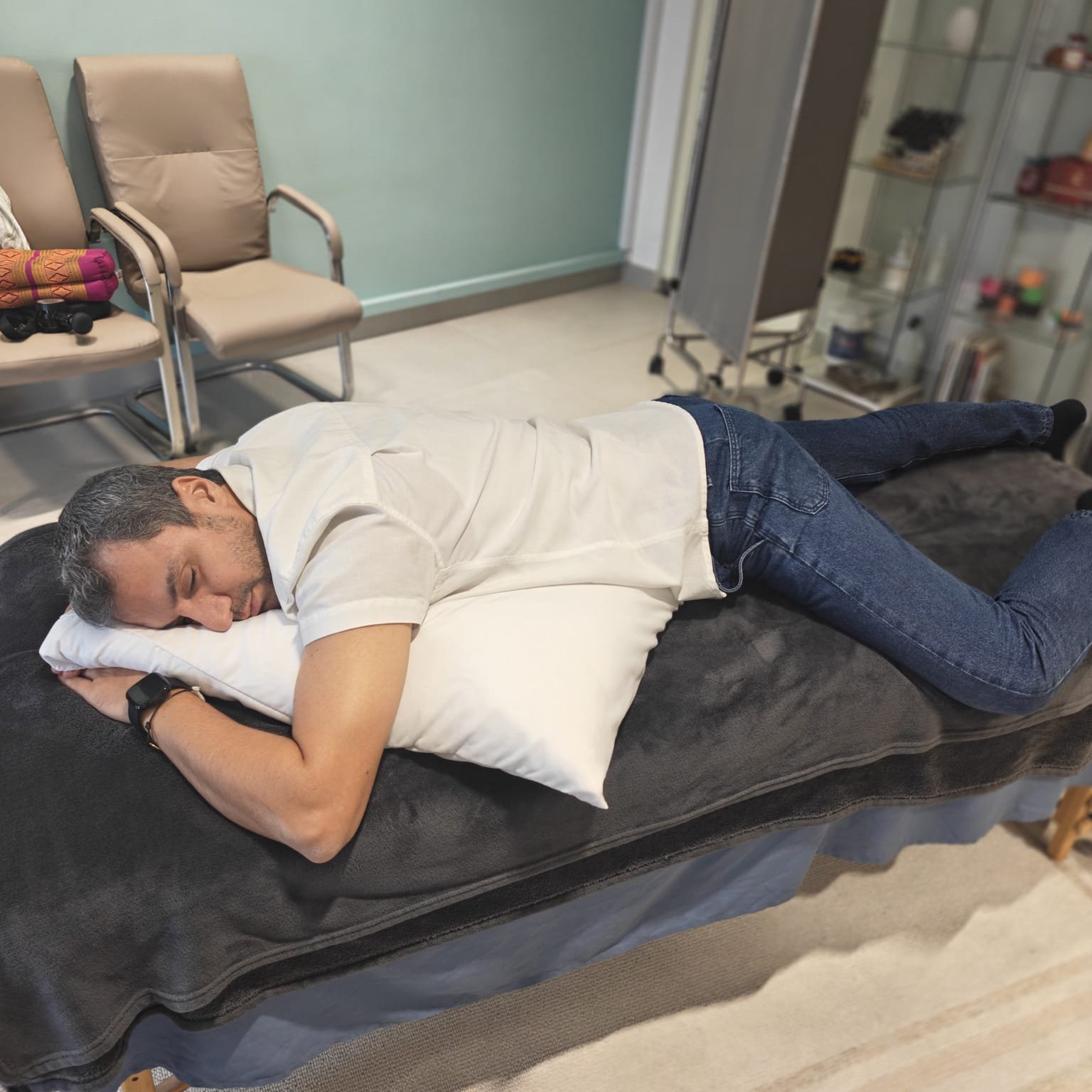
Stomach Sleeping — The Worst Choice for Most Spines
Sleeping on your stomach forces two problematic positions simultaneously:
Forced cervical rotation. To breathe while lying face-down, you must turn your head to one side for the entire night. This places your cervical spine in sustained rotation — often 45 to 90 degrees — for hours at a time. Over months and years, this asymmetrical stress can contribute to cervical disc problems, muscle imbalances, and postural asymmetry.
Flattened lumbar curve. Lying face-down tends to flatten the natural inward curve of your lower back (the lumbar lordosis), especially if you use a thick pillow that pushes your head up and forces your lower back into extension compensation. This position can increase pressure on the lumbar discs and strain the ligaments that maintain your spine's natural curves.
Exception: Some people with significant lumbar extension problems (excessive lower back arch) may find stomach sleeping temporarily comfortable because it reduces their lumbar curve. However, this is typically a short-term comfort that creates long-term cervical problems. If stomach sleeping is the only position where your back doesn't hurt, that's actually important information about your spinal alignment that should be evaluated professionally.
Side Sleeping — Good, But Only With Proper Support
Side sleeping can be excellent for spinal health — but only if your pillow and mattress are properly matched to your body dimensions and spinal pattern.
The pillow problem. If your pillow is too flat, your head drops toward the mattress and your cervical spine tilts laterally for the entire night. If it's too thick, your head is pushed up and your neck tilts the opposite direction. Either position can contribute to cervical misalignment, muscle tension, and morning stiffness.
The hip and shoulder issue. Side sleeping places your full body weight on one hip and shoulder for hours. If your mattress is too soft, these contact points sink in, creating spinal rotation. If it's too firm, pressure points can cause you to shift frequently during the night, disrupting sleep quality.
Hip alignment matters. Many side sleepers benefit from a pillow or support between their knees to keep the hips level and prevent the top leg from pulling the pelvis and lower spine out of alignment.
Which side is better? For most people, either side is fine as long as support is adequate. However, people with scoliosis or significant postural asymmetries may have one side that's more comfortable than the other. This preference often provides valuable diagnostic information about their spinal pattern.
Back Sleeping — Generally the Best for Spinal Alignment
Sleeping on your back allows gravity to work with your spine's natural curves rather than against them, provided your pillows and mattress support is appropriate.
Cervical support. A properly sized pillow should maintain the natural inward curve of your neck without pushing your head too far forward or allowing it to drop back. The ideal pillow height for back sleepers is usually lower than what side sleepers need.
Lumbar support. Many back sleepers benefit from a small pillow or rolled towel under their knees. This position allows the hip flexors to relax and helps maintain the natural lumbar curve without forcing excessive arch.
The snoring consideration. Back sleeping can worsen snoring or sleep apnea in some people. If your sleep partner reports that you snore significantly more on your back, or if you wake up feeling unrested despite adequate sleep hours, this may not be the right position for you regardless of its spinal benefits.
Why Sleep Position Matters More During Spinal Correction
If you're undergoing CBP treatment for postural correction, disc problems, or scoliosis management, your sleep position becomes critically important for a specific reason: structural change requires consistent mechanical input.
During CBP care, your daytime treatment sessions — mirror-image adjustments, cervical traction, corrective exercises — apply precise forces to move your spine toward its ideal alignment. But if you then spend 8 hours each night in a position that applies opposing forces, you're essentially fighting against your own treatment.
Think of it this way: if we're working to restore the natural inward curve to your neck during your clinic visits, but you're sleeping in a position that flattens or reverses that curve for 8 hours every night, the progress becomes unnecessarily slow and difficult.
This doesn't mean you need to sleep in an uncomfortable position. It means we need to find a sleep setup that works with your corrective care plan, not against it. And the "best" position may change as your spinal structure improves over the course of treatment.
The Pillow Prescription: How to Choose Support That Matches Your Spine
There is no universal "best pillow." The right pillow for you depends on your preferred sleep position, your current spinal alignment, and whether you're undergoing corrective care. Here's how to think about it:
For Back Sleepers
Goal: Maintain the natural inward curve of your neck without pushing your head forward.
Pillow characteristics: Medium height, medium firmness, with good shape retention. Memory foam that contours but doesn't sink too deep often works well.
Test: Lying on your back with the pillow, your neck should feel supported in its natural position. If someone were looking at you from the side, your ear should be roughly over your shoulder, not pushed forward toward your chest.
For Side Sleepers
Goal: Keep your cervical spine parallel to the mattress — neither tilted up nor down.
Pillow characteristics: Height that fills the space between your shoulder and your head. Broader shoulders require thicker pillows; narrower shoulders need thinner ones.
Test: Have someone check from behind while you're lying on your side. Your spine should form a straight line from your tailbone to the back of your head, with no lateral curves in your neck.
For Stomach Sleepers (If You Must)
Goal: Minimize cervical rotation and lumbar flattening.
Pillow characteristics: Very thin, or no pillow at all. Some stomach sleepers do better with a thin pillow under their pelvis to support lumbar curve.
Transition strategy: If you're a committed stomach sleeper but want to change, try transitioning gradually. Start by falling asleep on your side and don't worry if you wake up on your stomach. Over time, many people naturally adapt to a new position.
Special Cases: Cervical Traction Pillows
For patients with significant cervical curve loss or forward head posture, specialized cervical traction pillows can provide gentle corrective positioning during sleep. These pillows have a specific shape that encourages cervical extension (backward bending) to help restore the natural neck curve.
Important: These should only be used under professional guidance and as part of a comprehensive corrective program. The wrong traction pillow, or using one incorrectly, can actually worsen certain spinal conditions.
Mattress Matters: The Foundation of Good Sleep Posture
Your mattress is the foundation of your sleep posture, and a poor mattress can undermine even the best pillow setup. But "firmness" isn't the whole story — support is what matters.
The Goldilocks Principle
Too soft: Your spine sags into the mattress, especially at the heavier parts of your body (pelvis, shoulders). This creates spinal curves that aren't natural and can cause morning stiffness.
Too firm: Your spine can't follow its natural curves and instead forms a straight line with pressure points at the hips and shoulders. This often leads to tossing and turning during the night.
Just right: The mattress contours enough to support your spine's natural curves while providing enough resistance to prevent sagging.
Sleep Position and Mattress Choice
Side sleepers generally need a softer surface than back sleepers to allow the hips and shoulders to sink slightly while supporting the waist.
Back sleepers usually do well with medium to medium-firm mattresses that support the lumbar curve without creating pressure points.
Stomach sleepers typically need firmer support to prevent the pelvis from sinking and creating excessive lumbar arch.
When to Replace Your Mattress
If your mattress is more than 8 years old, shows visible sagging, or you consistently wake up more tired than when you went to bed, it may be time for replacement. A good mattress should support consistent, restorative sleep and maintain its shape over time.
Sleep Ergonomics for the GCC Climate
Life in Muscat and the broader GCC presents unique sleep challenges that can affect spinal health:
Air Conditioning and Muscle Tension
Many people in the region sleep with air conditioning set quite cold to combat the heat. While this can improve sleep quality, excessively cold temperatures can cause muscle tension and stiffness, especially in the neck and shoulders.
Tip: Use a light blanket or adjust your AC to maintain a cool but not cold environment. Your muscles should be relaxed during sleep, not contracted against the cold.
Dehydration and Sleep Quality
The dry air from air conditioning, combined with the region's naturally low humidity, can lead to dehydration that affects sleep quality and muscle function. Dehydration can cause muscle cramps, stiffness, and restless sleep.
Tip: Keep a water bottle by your bed and ensure you're well-hydrated before sleep. However, balance this with practical considerations — you don't want to wake up multiple times for bathroom trips.
Cultural and Social Sleep Patterns
Late social dinners, extended family gatherings, and cultural preferences for staying up late can create sleep schedules that don't align with optimal recovery. Insufficient sleep affects your body's ability to repair tissues and can increase inflammation, both of which can worsen spinal problems.
Tip: If social obligations often keep you up late, try to maintain consistency in your wake time and make up for lost sleep with a brief afternoon nap rather than sleeping in, which can disrupt your circadian rhythm.
Red Flags: When Your Sleep Position Is Making Things Worse
Sometimes your sleep position is actually contributing to your spinal problems. Watch for these warning signs:
- Morning stiffness that takes more than 15 minutes to ease
- Waking up with headaches, especially at the base of the skull
- Numbness or tingling in your arms or hands upon waking
- Lower back pain that's worse in the morning than at bedtime
- Feeling more tired when you wake up than when you went to bed
- Your sleep partner reports that you move restlessly throughout the night
If you experience any of these regularly, your sleep position may be working against your spinal health. This is especially important information if you're undergoing corrective spinal care.
Creating Your Personal Sleep Ergonomics Plan
At CBP Precision Spine Center, we include sleep ergonomics guidance as part of every patient's corrective care plan because we know that structural healing requires 24-hour support. Here's how we approach it:
Assessment: We evaluate your current sleep position, pillow support, and mattress setup as part of your comprehensive spinal examination.
Individual recommendation: Based on your specific spinal pattern — whether you have forward head posture, lumbar curve loss, scoliosis, or other structural issues — we provide specific guidance on optimal sleep position and support.
Progressive adjustment: As your spinal structure improves during CBP treatment, your ideal sleep setup may change. We reassess and adjust recommendations throughout your care.
Product guidance: When appropriate, we can recommend specific types of pillows, mattress firmness levels, or ergonomic sleep aids that support your particular needs.
The 30-Day Sleep Position Challenge
If you want to optimize your sleep position for spinal health, try this structured approach:
Week 1: Focus only on pillow adjustment. Experiment with pillow height and firmness in your current preferred position. Note how you feel each morning.
Week 2: If you're a stomach sleeper, begin transitioning to side sleeping. Use extra pillows for comfort and don't worry about perfection.
Week 3: If you're ready, try back sleeping for at least part of the night. Use a pillow under your knees for lumbar support.
Week 4: Evaluate which changes made the biggest difference in how you feel upon waking. Maintain what works and adjust what doesn't.
Remember: the best sleep position is one that allows you to wake up feeling rested and comfortable, supports your spinal health goals, and doesn't create new problems.
When to Seek Professional Guidance
If you've tried optimizing your sleep setup and still experience morning pain, stiffness, or fatigue, it may be time for professional spinal assessment. Here are specific situations where we'd recommend evaluation:
- Chronic morning stiffness despite good sleep hygiene
- Sleep position requirements that seem to be getting more restrictive over time (you can only sleep in one very specific position)
- Sleep disruption from spine-related discomfort
- Morning symptoms that seem to be getting worse despite addressing pillows and mattress
Sleep problems related to spinal alignment often improve significantly once the underlying structural issues are addressed through proper corrective care.
Your Spine Doesn't Sleep — It Recovers
Every night, as you settle into bed in Muscat, your spine enters what should be its most restorative period of the 24-hour cycle. Gravity's downward pull lessens. Muscle tension should release. The discs should rehydrate. The nervous system should reset.
But these recovery processes can only happen if your sleep position supports them rather than working against them.
Whether you're currently experiencing spinal problems or you want to prevent them, whether you're undergoing corrective care or simply want to optimize your health, your sleep setup is one of the most important — and most controllable — factors in your spinal wellbeing.
At CBP Precision Spine Center, we understand that true spinal correction requires attention to every aspect of how you live, move, and rest. Your sleep position is not a small detail — it's 8 hours of potential healing or harm, every single night.
Ask us about optimizing your sleep setup during your next visit — because your spine's recovery happens 24 hours a day, not just during treatment sessions.
هل تؤثر وضعية نومك على صحة عمودك الفقري في مسقط؟ اكتشف كيف تدعم ارغونومية النوم الصحيحة تصحيح العمود الفقري وفق منهج CBP والتعافي أثناء الليل.
تقضي 8 ساعات يومياً في وضعية واحدة — هل تفيد عمودك الفقري أم تضره؟
في كل ليلة، دون أن تفكر في ذلك، تضع عمودك الفقري في وضعية ثابتة لما يقارب ثلث حياتك. بالنسبة للشخص العادي في مسقط، هذا يعني نحو 2,920 ساعة في السنة — وهو وقت أكثر مما تقضيه أمام مكتبك، أو في سيارتك، أو في أي وضعية أخرى.
النوم يُفترض أن يكون وقت تعافٍ. يجب أن يتمدد عمودك الفقري، وترتاح عضلاتك، ويعيد جهازك العصبي ضبط نفسه استعداداً لليوم التالي. لكن وضعية النوم الخاطئة يمكن أن تضيف 8 ساعات من الضغط المتواصل على عمود فقري مُرهَق أصلاً، مما يُلغي كثيراً من التقدم الذي تحقق خلال النهار.
إذا كنت تستيقظ في مسقط وتشعر بتيبس في رقبتك، أو آلام في أسفل ظهرك، أو ذلك الإحساس الغريب بأنك أكثر إرهاقاً مما كنت حين نمت، فوضعية نومك ربما تعمل ضدك. وإذا كنت تخضع لعلاج Chiropractic BioPhysics® (CBP) لتصحيح العمود الفقري، فإن إعداد بيئة النوم يصبح أمراً بالغ الأهمية — لأن التعافي الهيكلي يتطلب دعماً متواصلاً على مدار 24 ساعة، وليس فقط خلال جلسات العيادة.
تشرح هذه المقالة ما تفعله وضعيات النوم المختلفة لعمودك الفقري فعلياً، ولماذا تعتمد الوضعية "الأفضل" على نمط عمودك الفقري الفردي، وكيفية تهيئة بيئة نوم تدعم صحة عمودك الفقري بدلاً من تقويضها.
ما الذي تفعله وضعية نومك لعمودك الفقري حقاً؟
يعتقد معظم الناس أن النوم مجرد تعافٍ سلبي. لكن من الناحية الميكانيكية الحيوية، وضعية نومك هي ثبات وضعي لمدة 8 ساعات — وكأي وضعية مستدامة، يمكنها إما دعم المحاذاة المثلى للعمود الفقري أو التسبب في مشكلات بمرور الوقت.
إليك ما تُظهره الأبحاث حول وضعيات النوم الرئيسية الثلاث:
النوم على البطن — الخيار الأسوأ لمعظم الأعمدة الفقرية
النوم على البطن يُجبر الجسم على وضعيتين إشكاليتين في آنٍ واحد:
دوران عنقي قسري. للتنفس أثناء الاستلقاء على وجهك، يجب أن تدير رأسك إلى جانب واحد طوال الليل. هذا يضع عمودك الفقري العنقي في دوران مستمر — غالباً من 45 إلى 90 درجة — لساعات متواصلة. وعلى مدى الأشهر والسنوات، يمكن أن يُسهم هذا الضغط غير المتماثل في مشكلات بالأقراص الفقرية العنقية، واختلال توازن العضلات، وعدم التماثل الوضعي.
تسطيح الانحناء القطني. الاستلقاء على البطن يميل إلى تسطيح الانحناء الطبيعي للداخل في أسفل الظهر (القعس القطني)، خاصةً إذا كنت تستخدم وسادة سميكة ترفع رأسك وتُجبر أسفل ظهرك على التعويض بالتمديد. يمكن أن تزيد هذه الوضعية من الضغط على الأقراص القطنية وتُجهد الأربطة التي تحافظ على انحناءات العمود الفقري الطبيعية.
استثناء: بعض الأشخاص الذين يعانون من مشكلات تمديد قطني كبيرة (تقوس مفرط في أسفل الظهر) قد يجدون النوم على البطن مريحاً مؤقتاً لأنه يقلل من الانحناء القطني. غير أن هذا عادةً راحة قصيرة المدى تُفضي إلى مشكلات عنقية طويلة المدى. إذا كان النوم على البطن هو الوضعية الوحيدة التي لا يؤلمك فيها ظهرك، فهذه معلومة مهمة جداً عن محاذاة عمودك الفقري ينبغي تقييمها بشكل احترافي.
النوم على الجانب — جيد، لكن فقط مع الدعم المناسب
النوم على الجانب يمكن أن يكون ممتازاً لصحة العمود الفقري — لكن فقط إذا كانت وسادتك ومرتبتك متوافقتين مع أبعاد جسمك ونمط عمودك الفقري.
مشكلة الوسادة. إذا كانت وسادتك منخفضة جداً، ينخفض رأسك نحو المرتبة ويميل عمودك الفقري العنقي جانبياً طوال الليل. وإذا كانت سميكة جداً، يُدفع رأسك للأعلى ويميل العنق في الاتجاه المعاكس. كلا الوضعيتين يمكن أن تُسهما في اختلال المحاذاة العنقية، وتوتر العضلات، وتيبس الصباح.
مشكلة الورك والكتف. ينقل النوم على الجانب الثقل الكامل على أحد الوركين والكتف لساعات. إذا كانت مرتبتك طرية جداً، تغوص نقاط التلامس هذه مُحدثةً دوراناً في العمود الفقري. وإذا كانت صلبة جداً، فقد تسبب نقاط ضغط تجعلك تتقلب كثيراً خلال الليل مما يُخل بجودة النوم.
محاذاة الورك مهمة. يستفيد كثير من النائمين على الجانب من وضع وسادة أو دعامة بين ركبتيهم لإبقاء الوركين في مستوى واحد ومنع الساق العلوية من سحب الحوض وأسفل العمود الفقري خارج المحاذاة.
أي جانب أفضل؟ بالنسبة لمعظم الناس، كلا الجانبين جيد طالما كان الدعم كافياً. غير أن الأشخاص المصابين بـ**الجنف (scoliosis)** أو الذين لديهم عدم تماثل وضعي ملحوظ قد يجدون جانباً أكثر راحة من الآخر. وهذا التفضيل يُقدم في الغالب معلومات تشخيصية قيّمة حول نمط عمودهم الفقري.
النوم على الظهر — الأفضل عموماً لمحاذاة العمود الفقري
يتيح النوم على الظهر للجاذبية أن تعمل مع الانحناءات الطبيعية للعمود الفقري بدلاً من العمل ضدها، شريطة أن توفر الوسادة والمرتبة الدعم المناسب.
دعم عنقي. يجب أن تحافظ الوسادة المناسبة الحجم على الانحناء الطبيعي الداخلي لرقبتك دون أن تدفع رأسك للأمام أو تتركه ينكسر للخلف. الارتفاع المثالي للوسادة لمن ينامون على ظهورهم يكون عادةً أقل مما يحتاجه النائمون على الجانب.
دعم قطني. يستفيد كثير من النائمين على ظهورهم من وضع وسادة صغيرة أو منشفة مطوية تحت ركبتيهم. تتيح هذه الوضعية للعضلات المثنية للورك أن ترتاح، وتساعد على الحفاظ على الانحناء القطني الطبيعي دون إجبار قوس مفرط.
اعتبار الشخير. قد يُفاقم النوم على الظهر الشخير أو انقطاع النفس أثناء النوم لدى بعض الأشخاص. إذا أخبرك شريكك في النوم بأنك تشخر بشكل ملحوظ أكثر على ظهرك، أو إذا كنت تستيقظ مرهقاً رغم ساعات النوم الكافية، فقد لا تكون هذه الوضعية مناسبة لك بصرف النظر عن فوائدها للعمود الفقري.
لماذا تزداد أهمية وضعية النوم أثناء تصحيح العمود الفقري؟
إذا كنت تخضع لعلاج CBP لتصحيح الوضعية، أو مشكلات الأقراص الفقرية، أو إدارة الجنف، فإن وضعية نومك تصبح بالغة الأهمية لسبب محدد: التغيير الهيكلي يتطلب مدخلات ميكانيكية متسقة.
خلال رعاية CBP، تُطبق جلسات العلاج النهارية — تعديلات mirror-image، وشد عنقي (cervical traction)، وتمارين تصحيحية — قوى دقيقة لتحريك عمودك الفقري نحو محاذاته المثالية. لكن إذا أمضيت بعد ذلك 8 ساعات كل ليلة في وضعية تُطبق قوى معاكسة، فأنت في الأساس تحارب علاجك.
فكّر في الأمر هكذا: إذا كنا نعمل على استعادة الانحناء الداخلي الطبيعي لرقبتك خلال زيارات العيادة، لكنك تنام في وضعية تُسطّح هذا الانحناء أو تعكسه لمدة 8 ساعات كل ليلة، فإن التقدم يصبح بطيئاً وصعباً بلا داعٍ.
هذا لا يعني أنك تحتاج إلى النوم في وضعية غير مريحة. بل يعني أننا بحاجة إلى إيجاد إعداد نوم يتوافق مع خطة رعايتك التصحيحية لا يعارضها. وقد تتغير الوضعية "الأفضل" مع تحسن بنية عمودك الفقري على مدار فترة العلاج.
وصفة الوسادة: كيف تختار دعامة تناسب عمودك الفقري
لا توجد وسادة "أفضل" شاملة. الوسادة المناسبة لك تعتمد على وضعية نومك المفضلة، ومحاذاة عمودك الفقري الحالية، وما إذا كنت تخضع لرعاية تصحيحية. إليك كيفية التفكير في ذلك:
للنائمين على الظهر
الهدف: الحفاظ على الانحناء الطبيعي الداخلي لرقبتك دون دفع رأسك للأمام.
خصائص الوسادة: ارتفاع متوسط، صلابة متوسطة، مع قدرة جيدة على الاحتفاظ بالشكل. كثيراً ما تعمل الرغوة الذاكرة التي تتشكل دون أن تغوص عميقاً بشكل جيد.
الاختبار: عند الاستلقاء على ظهرك مع الوسادة، يجب أن تشعر رقبتك بالدعم في وضعيتها الطبيعية. لو نظر أحدهم إليك من الجانب، ينبغي أن تكون أذنك فوق كتفك تقريباً، وليس مدفوعة للأمام نحو صدرك.
للنائمين على الجانب
الهدف: إبقاء عمودك الفقري العنقي موازياً للمرتبة — دون ميل للأعلى أو للأسفل.
خصائص الوسادة: ارتفاع يملأ المسافة بين كتفك ورأسك. الكتفان العريضتان تتطلبان وسادة أسمك، والكتفان الضيقتان تحتاجان وسادة أرفع.
الاختبار: اطلب من شخص أن يتحقق من خلفك أثناء استلقائك على جانبك. يجب أن يكوّن عمودك الفقري خطاً مستقيماً من عظم الذيل إلى مؤخرة رأسك دون انحناءات جانبية في رقبتك.
للنائمين على البطن (إذا اضطررت لذلك)
الهدف: تقليل الدوران العنقي وتسطيح القطني.
خصائص الوسادة: رفيعة جداً، أو بدون وسادة على الإطلاق. يستفيد بعض النائمين على البطن من وسادة رفيعة أسفل حوضهم لدعم الانحناء القطني.
استراتيجية الانتقال: إذا كنت نائماً على بطنك بشكل معتاد لكنك تريد التغيير، جرب الانتقال تدريجياً. ابدأ بالنوم على جانبك ولا تقلق إذا استيقظت على بطنك. مع الوقت، يتكيف كثير من الناس بشكل طبيعي مع وضعية جديدة.
حالات خاصة: وسائد الشد العنقي (Cervical Traction Pillows)
بالنسبة للمرضى الذين يعانون من فقدان ملحوظ في انحناء العنق (cervical curve loss) أو وضعية الرأس إلى الأمام (forward head posture)، يمكن لوسائد cervical traction المتخصصة أن توفر تمركزاً تصحيحياً لطيفاً أثناء النوم. تتميز هذه الوسائد بشكل محدد يشجع على تمديد العنق للخلف للمساعدة في استعادة الانحناء الطبيعي للرقبة.
ملاحظة مهمة: يجب استخدامها فقط تحت إشراف متخصص وكجزء من برنامج تصحيحي شامل. الوسادة الخاطئة أو استخدامها بشكل غير صحيح يمكن أن تُفاقم بعض حالات العمود الفقري.
المرتبة مهمة: أساس وضعية النوم الجيدة
مرتبتك هي أساس وضعية نومك، والمرتبة الرديئة يمكن أن تُضعف حتى أفضل إعداد للوسادة. لكن "الصلابة" ليست القصة كلها — الدعم هو ما يهم.
مبدأ ذهبية الشعر
لينة جداً: يغوص عمودك الفقري في المرتبة، خاصةً عند الأجزاء الأثقل من جسمك (الحوض، الكتفان). هذا يخلق انحناءات في العمود الفقري غير طبيعية ويمكن أن يسبب تيبس الصباح.
صلبة جداً: لا يستطيع عمودك الفقري اتباع انحناءاته الطبيعية ويتخذ شكلاً مستقيماً مع نقاط ضغط على الوركين والكتفين. هذا يؤدي غالباً إلى التقلب كثيراً خلال الليل.
مناسبة تماماً: تتشكل المرتبة بما يكفي لدعم انحناءات عمودك الفقري الطبيعية مع توفير مقاومة كافية لمنع الغوص.
وضعية النوم واختيار المرتبة
النائمون على الجانب يحتاجون عموماً سطحاً أكثر ليونة من النائمين على الظهر للسماح للوركين والكتفين بالغوص قليلاً مع دعم الخصر.
النائمون على الظهر يؤدون عادةً بشكل جيد مع مراتب متوسطة إلى متوسطة الصلابة التي تدعم الانحناء القطني دون إحداث نقاط ضغط.
النائمون على البطن يحتاجون عموماً دعماً أكثر صلابة لمنع الحوض من الغوص وتكوين قوس قطني مفرط.
متى تستبدل مرتبتك
إذا كانت مرتبتك أكثر من 8 سنوات، وتُظهر انخفاساً مرئياً، أو تستيقظ باستمرار أكثر إرهاقاً مما نمت، فقد يكون وقت الاستبدال قد حان. يجب أن تدعم المرتبة الجيدة نوماً متسقاً وتعافياً حقيقياً وتحافظ على شكلها بمرور الوقت.
ارغونومية النوم لمناخ دول الخليج العربي
الحياة في مسقط وسائر دول مجلس التعاون الخليجي تُقدم تحديات نوم فريدة يمكن أن تؤثر على صحة العمود الفقري:
تكييف الهواء وتوتر العضلات
ينام كثير من الناس في المنطقة مع ضبط التكييف على درجات حرارة منخفضة جداً لمواجهة الحر. وبينما يمكن أن يُحسّن ذلك من جودة النوم، يمكن لدرجات الحرارة الباردة المفرطة أن تُسبب توتراً وتيبساً في العضلات، خاصةً في الرقبة والكتفين.
نصيحة: استخدم غطاءً خفيفاً أو اضبط تكييفك للحفاظ على بيئة باردة لكن غير مثلجة. يجب أن تكون عضلاتك مرتخية أثناء النوم، لا متقلصة بسبب البرد.
الجفاف وجودة النوم
الهواء الجاف الناتج عن التكييف، إلى جانب الرطوبة المنخفضة الطبيعية في المنطقة، يمكن أن يؤدي إلى جفاف يُؤثر على جودة النوم ووظيفة العضلات. يمكن أن يتسبب الجفاف في تشنج العضلات، وتيبسها، واضطراب النوم.
نصيحة: احتفظ بزجاجة ماء بجانب سريرك وتأكد من ترطيب جسمك جيداً قبل النوم. لكن وازن ذلك مع الاعتبارات العملية — لا تريد أن تستيقظ مرات عدة لقضاء الحاجة.
أنماط النوم الاجتماعية والثقافية
العشاء الاجتماعي المتأخر، والتجمعات العائلية الممتدة، والميل الثقافي للسهر حتى وقت متأخر يمكن أن تخلق جداول نوم لا تتوافق مع التعافي الأمثل. قلة النوم تؤثر على قدرة جسمك على إصلاح الأنسجة ويمكن أن تزيد الالتهاب، وكلاهما يمكن أن يُفاقم مشكلات العمود الفقري.
نصيحة: إذا كانت الالتزامات الاجتماعية تُبقيك متأخراً في كثير من الأحيان، حاول الحفاظ على ثبات وقت استيقاظك وعوّض النوم المفقود بقيلولة ظهيرة قصيرة بدلاً من النوم لوقت متأخر، لأن ذلك يمكن أن يُخل بإيقاعك اليومي.
إشارات التحذير: حين تُفاقم وضعية نومك المشكلة
أحياناً تُسهم وضعية نومك فعلاً في تفاقم مشكلات عمودك الفقري. انتبه لهذه العلامات التحذيرية:
- تيبس صباحي يستغرق أكثر من 15 دقيقة لأن يخف
- الاستيقاظ بصداع، خاصةً في قاعدة الجمجمة
- خدر أو وخز في ذراعيك أو يديك عند الاستيقاظ
- ألم أسفل الظهر يكون أشد في الصباح مقارنةً بوقت النوم
- الشعور بإرهاق أكبر عند الاستيقاظ مقارنةً بوقت النوم
- يُخبرك شريكك في النوم أنك تتقلب بلا هدوء طوال الليل
إذا عانيت بانتظام من أي من هذه الأعراض، فوضعية نومك قد تعمل ضد صحة عمودك الفقري. هذا مهم بشكل خاص إذا كنت تخضع لرعاية تصحيحية للعمود الفقري.
إنشاء خطة ارغونومية نوم شخصية
في CBP Precision Spine Center, ندرج توجيهات ارغونومية النوم كجزء من خطة الرعاية التصحيحية لكل مريض، لأننا ندرك أن التعافي الهيكلي يتطلب دعماً على مدار 24 ساعة. إليك نهجنا:
التقييم: نُقيّم وضعية نومك الحالية، ودعم الوسادة، وإعداد المرتبة كجزء من فحص عمودك الفقري الشامل.
التوصية الفردية: بناءً على نمط عمودك الفقري الخاص — سواء كنت تعاني من وضعية الرأس إلى الأمام (forward head posture)، أو فقدان الانحناء القطني، أو الجنف (scoliosis)، أو مشكلات هيكلية أخرى — نقدم توجيهات محددة حول وضعية النوم الأمثل والدعم المناسب.
التعديل التدريجي: مع تحسن بنية عمودك الفقري خلال علاج CBP، قد يتغير إعداد نومك المثالي. نُعيد التقييم ونُعدّل التوصيات طوال فترة رعايتك.
التوجيه حول المنتجات: عند الاقتضاء، يمكننا التوصية بأنواع محددة من الوسائد، أو مستويات صلابة المرتبة، أو الأدوات المساعدة في النوم التي تدعم احتياجاتك الخاصة.
تحدي وضعية النوم لمدة 30 يوماً
إذا كنت تريد تحسين وضعية نومك لصحة عمودك الفقري، جرّب هذا النهج المنظم:
الأسبوع الأول: ركّز فقط على تعديل الوسادة. جرّب ارتفاعات وصلابات مختلفة في وضعية نومك الحالية المفضلة. لاحظ كيف تشعر كل صباح.
الأسبوع الثاني: إذا كنت نائماً على بطنك، ابدأ الانتقال إلى النوم على الجانب. استخدم وسائد إضافية للراحة ولا تقلق بشأن الكمال.
الأسبوع الثالث: إذا كنت مستعداً، جرّب النوم على ظهرك لجزء من الليل على الأقل. استخدم وسادة تحت ركبتيك لدعم قطني.
الأسبوع الرابع: قيّم التغييرات التي أحدثت الفارق الأكبر في شعورك عند الاستيقاظ. حافظ على ما نجح وعدّل ما لم ينجح.
تذكر: أفضل وضعية نوم هي التي تتيح لك الاستيقاظ منتعشاً ومرتاحاً، وتدعم أهداف صحة عمودك الفقري، ولا تخلق مشكلات جديدة.
متى تطلب التوجيه المتخصص
إذا جرّبت تحسين إعداد نومك ولا تزال تعاني من ألم الصباح، أو التيبس، أو الإرهاق، فقد يكون الوقت قد حان لإجراء تقييم احترافي للعمود الفقري. إليك حالات بعينها نوصي فيها بالتقييم:
- تيبس صباحي مزمن رغم اتباع نظافة نوم جيدة
- متطلبات وضعية النوم التي تبدو أكثر تقييداً بمرور الوقت (لا تستطيع النوم إلا في وضعية واحدة محددة جداً)
- اضطراب النوم بسبب الانزعاج المرتبط بالعمود الفقري
- أعراض صباحية تتفاقم رغم معالجة مسألتي الوسادة والمرتبة
غالباً ما تتحسن مشكلات النوم المرتبطة بمحاذاة العمود الفقري بشكل ملحوظ عند معالجة المشكلات الهيكلية الكامنة من خلال رعاية تصحيحية مناسبة.
عمودك الفقري لا ينام — بل يتعافى
في كل ليلة، حين تستقر في سريرك في مسقط، يدخل عمودك الفقري في ما ينبغي أن يكون أكثر فترات دورة الساعات الأربع والعشرين تجديداً. يتراجع شد الجاذبية. يجب أن ينفك توتر العضلات. يجب أن تعيد الأقراص الفقرية ترطيبها. يجب أن يعيد الجهاز العصبي ضبطه.
لكن هذه العمليات التعافوية لا يمكن أن تحدث إلا إذا كانت وضعية نومك تدعمها، لا تعمل ضدها.
سواء كنت تعاني حالياً من مشكلات في العمود الفقري أم تريد الوقاية منها، سواء كنت تخضع لرعاية تصحيحية أم تريد فقط تحسين صحتك، فإن إعداد بيئة نومك هو أحد أهم العوامل وأكثرها قابلية للتحكم في سلامة عمودك الفقري.
في CBP Precision Spine Center, ندرك أن التصحيح الحقيقي للعمود الفقري يتطلب الاهتمام بكل جانب من جوانب حياتك وحركتك وراحتك. وضعية نومك ليست تفصيلاً صغيراً — بل هي 8 ساعات من التعافي المحتمل أو الضرر المحتمل، كل ليلة.
اسألنا عن تحسين إعداد نومك خلال زيارتك القادمة — لأن تعافي عمودك الفقري يحدث على مدار 24 ساعة، وليس فقط خلال جلسات العلاج.
سلطنة عمان - مسقط - العذيبة
336 شارع 18 نوفمبر، العذيبة