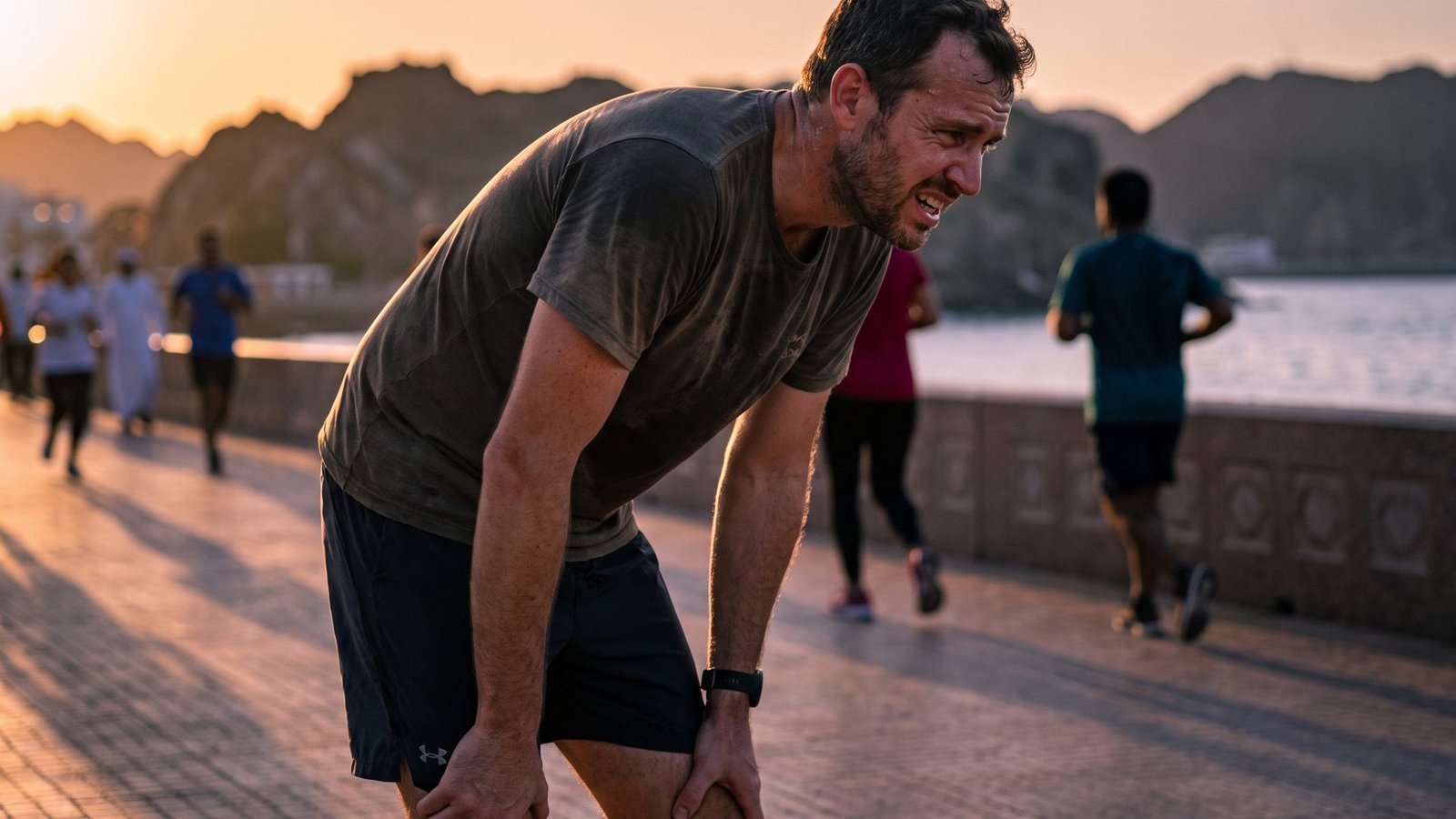
There is a week every year in Muscat when the mornings finally turn, and the corniche fills up again before sunrise. Gyms get busy. The football pitches come back to life. Padel courts stop being bookable at short notice.
And about three weeks after that, our appointment book fills with people who have hurt themselves doing something they have done safely for years.
The exercise is not the problem. The jump is.
Tissue adapts to whatever you ask of it, but different tissues adapt at very different speeds. Your heart and lungs respond within days — which is exactly the trap. Tendon, bone and cartilage remodel over weeks to months.
So a fortnight back into training, your breathing feels fine, your legs feel willing, and you conclude you are ready. Your cardiovascular system has recovered far faster than your structural tolerance, and it is telling you to go harder than your tendons can currently survive.
Almost every injury in this article comes from that gap.
Why it happens all at once here
In most climates the training year tapers. In Oman it stops. From roughly May onward, outdoor work becomes unpleasant and then genuinely unwise, so people either move indoors, cut back hard, or quietly stop.
Then the weather breaks and everyone returns in the same fortnight — and almost everyone returns to the volume they finished at in spring rather than the volume they can currently tolerate. That single decision, repeated across a whole city, is why we can predict this caseload by the calendar.
The people who get hurt are rarely beginners, incidentally. Beginners start cautiously because they have no idea what they can do. It is the experienced ones, working from memory, who overshoot.
The five we see most in the first six weeks
1. Shin pain. An ache along the inner edge of the shin bone that starts late in a run and gradually starts earlier each session. Usually medial tibial stress syndrome — bone and its attaching tissue loaded faster than they can rebuild. It is the single most volume-sensitive injury on this list.
2. Pain at the front of the knee. Typically felt on stairs, on downhill sections, and after long periods sitting. It tends to arrive when running volume rises before the hip and thigh muscles have caught up, so the kneecap is not being controlled as well as it was.
3. Heel pain in the morning. Sharp pain under the heel on the first steps out of bed that eases after a few minutes, then returns after sitting. Plantar fascia irritation, and one of the most commonly ignored injuries we see — people give it months before asking anyone.
4. Achilles pain. Stiffness and tenderness in the tendon above the heel, worst first thing and at the start of activity. Strongly associated with sudden increases in hills, speed work, or a change in shoe drop — all three of which people tend to reintroduce at once.
5. Low back pain after returning to lifting. Almost always a load error rather than a technique failure. The pattern is someone resuming at their pre-summer weights on day one, with months of deconditioning in the trunk and hips that they cannot feel until the bar is loaded.
Soreness, or an injury?
This is the question we are asked most, and the distinction is usually clearer than people expect.
Normal training soreness is spread across a muscle rather than sitting at one point. It affects both sides fairly evenly. It peaks around a day or two afterwards, eases once you warm up, and — most tellingly — gets dramatically smaller after the first two or three sessions.
An injury sits at a point you can locate with one finger. It is often one-sided. It hurts during the activity, not just the following morning. It does not diminish session by session, and it may wake you at night or ache when you have done nothing at all.
If you are still asking yourself the question after two weeks of reduced load, that is your answer.
Autumn here is still hot
Cooler than August is not the same as cool. Early autumn in Muscat remains hot by any international standard, and coastal humidity often makes the effort feel heavier than the temperature alone would explain.
Heat acclimatisation is also perishable. Months spent moving between air-conditioned spaces means most of that adaptation is gone, and rebuilding it takes most people something like one to two weeks of consistent exposure.
The injury link is indirect but reliable: heat brings fatigue forward, fatigue degrades movement quality, and degraded movement is where the tissue actually fails. Train early morning or after dark for the first few weeks, take fluid more seriously than you did in spring, and accept that the same session will feel harder than the number on your watch says it should. Our post on how heat affects the spine covers the broader picture.
The shoes you last wore in May
Footwear is the most overlooked variable in a comeback, partly because a shoe that looks fine can be finished.
Midsole foam compresses with use and never fully recovers, so cushioning degrades long before the upper shows it. A shoe left in a hot cupboard or car boot over an Omani summer can also stiffen or distort. The 500-to-800-kilometre figure often quoted is a rough guide rather than a measurement, and it assumes you were counting.
What is more useful than mileage: stand the pair on a flat surface and look from directly behind for tilting inward or outward, press the midsole under the heel and forefoot for deep creasing or a dead, unresponsive feel, and check whether the outsole tread has worn through unevenly. Any of those, and they are changing how your foot loads — which matters all the way up. We go into that chain in more depth in our piece on foot pain and custom orthotics, and on our flat feet page.
Padel deserves its own paragraph
Padel has grown quickly in Oman, and it produces a noticeably different injury list from running or the gym — largely because of who plays it and how.
It is social, often played at night, frequently by people who do not otherwise train, and it involves repeated overhead hitting, rapid direction changes in a very confined space, and a lot of reaching for balls off the back glass. The complaints we see are concentrated at the outer elbow, the shoulder, the ankle, and the low back — the last of those usually from repeated overhead shots played with the back arched rather than the trunk turned.
None of that is an argument against playing. It is an argument against playing three times a week in your first week back, which is the pattern that brings people in.
How to come back without getting hurt
- Start at about half the volume you were doing when you stopped — not what you remember being capable of at your best
- Change one variable at a time. Distance, or pace, or surface, or a new activity. Not two, and never all four
- Leave a day between sessions for the first few weeks. Tissue adaptation happens on the rest day, not during the session
- Give it two easy weeks before any intensity. Intervals, hills and heavy lifting are what convert a tolerable load into an injury
- Treat a new sport as a new sport. Being fit from running does not make your elbow ready for padel
- Do not add volume in a week you have slept badly or travelled. Recovery capacity is part of the equation, not separate from it
The unglamorous truth is that almost nobody is injured by the session they did. They are injured by how quickly that session arrived after the last four months.
How we assess a training injury
At CBP Precision Spine Center in Azaiba, the first thing we want is your load history — what you were doing, when you stopped, what you came back to and how fast. That conversation frequently identifies the cause before the examination begins.
From there:
- Examination of the painful structure itself, to establish what is actually irritated rather than treating a general region
- Assessment of how you move and load — foot, ankle, hip and trunk — because the tissue that hurts is often the one absorbing what something else stopped doing
- A look at the spine and pelvis, since months of reduced activity rarely leave them unaffected
Treatment is matched to the tissue. Tendon problems respond to loading programmes and, in stubborn cases, to shockwave therapy. Irritated soft tissue often does well with Class IV laser therapy. Where foot mechanics are driving it, custom orthotics address the cause rather than the symptom. And where the problem is simply that you came back too fast, the most valuable thing we do is give you a graded plan and stop you repeating it in January.
You can read more on our sports injuries page.
Signs it needs assessing, not resting
- Pain that is worse during the activity than afterwards
- A tender spot on bone you can cover with a single fingertip
- Pain that wakes you at night or aches at rest
- Any limp, or any swelling
- Anything that has not settled after two weeks of genuinely reduced load
Seek prompt medical assessment instead if you felt a sudden snap or pop with immediate loss of function, cannot bear weight on the limb, or have numbness, pins and needles or weakness rather than pain.
Frequently asked questions
How much should I increase my training each week after a long break?
Start at roughly half the volume you were doing when you stopped, not at the volume you remember being able to handle. From there, the commonly quoted guide is to add no more than about ten per cent per week. The evidence behind that exact figure is weaker than its popularity suggests, so treat it as a principle rather than a rule: small, gradual, and changing one variable at a time. Adding distance and pace and a new surface in the same week is what causes the problem, whatever the percentage says.
Is it normal to still be sore three days after restarting exercise?
Yes. Delayed onset muscle soreness typically peaks somewhere between 24 and 72 hours and settles within about a week, and it is at its worst after the first few sessions before diminishing sharply. The useful features are that it is spread across a muscle rather than sitting at one point, it usually affects both sides fairly evenly, and it eases as you warm up. Pain that is sharp, one-sided, worse during activity than after it, or not diminishing session by session is a different thing.
Why do my shins hurt when I start running again?
Shin pain along the inner edge of the bone after a jump in running volume is usually medial tibial stress syndrome. The bone and the tissue attaching to it are being loaded faster than they can remodel, and that remodelling takes weeks to months while your cardiovascular fitness returns in days. Reduce volume rather than stopping entirely, and look at surface and footwear. If the pain narrows to a spot you can cover with one fingertip, hurts when you are not running, or wakes you at night, it needs assessing for a stress fracture instead.
Is it still too hot to train outdoors in Muscat in autumn?
Early autumn here is cooler than August but still hot by any other standard, and humidity near the coast can make it feel worse than the thermometer suggests. Re-acclimatising to training in heat takes most people somewhere around one to two weeks, and that process restarts if you have spent months in air conditioning. Train early morning or after dark for the first few weeks, drink more than you think you need, and expect the same effort to feel harder. Heat brings fatigue on sooner, fatigue breaks down technique, and poor technique is where most restart injuries actually happen.
Do I need new shoes after a few months without training?
Check them rather than assuming either way. Midsole foam compresses with use and does not fully recover, and a shoe stored in a hot car or cupboard over the summer can stiffen or distort. The 500 to 800 kilometre lifespan often quoted is a rough guide, not a measurement. More useful: stand them on a flat surface and look from behind for tilting, press the midsole for deep creasing or a dead feel, and look at whether the tread has worn through unevenly. If you cannot remember how far they have done, they are probably due.
Why does my heel hurt most in the first steps of the morning?
That specific pattern — sharp pain under the heel on the first few steps out of bed, easing after a few minutes of walking, then returning after sitting — is the classic presentation of plantar fascia irritation. The tissue shortens overnight and is loaded abruptly the moment you stand. It is among the injuries we pick up most often once someone restarts running or spends longer on their feet, and it responds far better to early treatment than to the months of waiting most people give it.
Picked up something on your way back into training? Book an assessment at CBP Precision Spine Center — 336 18th November Street, Azaiba. Call 7277 7796 or book online.
ثمّة أسبوعٌ في كلّ عام بمسقط تنقلب فيه الصباحات أخيراً، فتمتلئ الكورنيش من جديد قبل الشروق. وتزدحم الصالات الرياضية. وتعود ملاعب كرة القدم إلى الحياة. ويصبح حجز ملعب بادل قبل موعده بقليل أمراً متعذّراً.
وبعد نحو ثلاثة أسابيع من ذلك، يمتلئ جدول مواعيدنا بأشخاصٍ أصابوا أنفسهم وهم يفعلون شيئاً ظلّوا يفعلونه بأمانٍ سنوات.
المشكلة ليست في التمرين، بل في القفزة
الأنسجة تتكيّف مع ما تطلبه منها، لكنّ أنسجةً مختلفة تتكيّف بسرعاتٍ مختلفة جداً. فقلبك ورئتاك يستجيبان خلال أيام — وهذا هو الفخّ بالضبط. أمّا الأوتار والعظام والغضاريف فتُعيد تشكّلها عبر أسابيع إلى أشهر.
فبعد أسبوعين من العودة، يبدو تنفّسك جيداً، وتبدو ساقاك راغبتين، فتستنتج أنّك جاهز. الحقيقة أنّ جهازك القلبي التنفّسي تعافى أسرع بكثير من احتمالك البنيوي، وهو يدفعك إلى جهدٍ أشدّ ممّا تستطيع أوتارك احتماله حالياً.
وكلّ إصابةٍ في هذا المقال تقريباً تنشأ من تلك الفجوة.
لماذا يحدث هذا دفعةً واحدة هنا
في معظم المناخات يتناقص العام التدريبي تدريجياً. أمّا في عُمان فهو يتوقّف. فمن مايو تقريباً يصبح النشاط في الخارج مزعجاً ثمّ غير حكيمٍ فعلاً، فينتقل الناس إلى الداخل، أو يقلّلون بشدّة، أو يتوقّفون بهدوء.
ثمّ ينكسر الحرّ فيعود الجميع في الأسبوعين نفسيهما — ويعود كلّهم تقريباً إلى الحجم الذي انتهوا عنده في الربيع لا إلى الحجم الذي يحتملونه الآن. وهذا القرار الواحد، مكرّراً عبر مدينةٍ بأكملها، هو سبب قدرتنا على التنبّؤ بهذه الحالات بالتقويم.
ومن يتأذّى نادراً ما يكون مبتدئاً، بالمناسبة. فالمبتدئون يبدأون بحذرٍ لأنّهم لا يعرفون ما يستطيعون. إنّما أصحاب الخبرة، العاملون بالذاكرة، هم من يتجاوزون الحدّ.
الخمس التي نراها أكثر في الأسابيع الستة الأولى
١. ألم الساق الأمامي. وجعٌ على امتداد الحافّة الداخلية لعظم الظنبوب يبدأ متأخّراً في الجري ثمّ يبدأ أبكر تدريجياً في كلّ جلسة. وهو عادةً متلازمة إجهاد الظنبوب الإنسي — عظمٌ ونسيجٌ متّصل به يُحمَّلان أسرع ممّا يستطيعان إعادة البناء. وهي أشدّ إصابات هذه القائمة حساسيةً لحجم التدريب.
٢. ألم مقدّمة الركبة. يُحسّ عادةً على الدرج، وفي المنحدرات النازلة، وبعد فتراتٍ طويلة من الجلوس. وهو يميل إلى الظهور حين يرتفع حجم الجري قبل أن تلحق به عضلات الورك والفخذ، فلا تعود الرضفة مضبوطةً كما كانت.
٣. ألم الكعب الصباحي. ألمٌ حادّ تحت الكعب في أوّل خطواتٍ بعد النهوض، يخفّ بعد دقائق، ثمّ يعود بعد الجلوس. إنّه تهيّج اللفافة الأخمصية، وأحد أكثر الإصابات التي نراها تجاهلاً — إذ يمنحه الناس أشهراً قبل أن يسألوا أحداً.
٤. ألم وتر العرقوب. تيبّسٌ وإيلامٌ في الوتر فوق الكعب، أشدّ ما يكون أوّل النهار وبداية النشاط. ويرتبط بقوّةٍ بزياداتٍ مفاجئة في المرتفعات أو تدريب السرعة أو تغيير انحدار الحذاء — وهي ثلاثة يميل الناس إلى إعادتها كلّها دفعةً واحدة.
٥. ألم أسفل الظهر بعد العودة لرفع الأثقال. وهو في الغالب خطأ في الحِمل لا فشلٌ في الأداء الحركي. والنمط أن يستأنف أحدهم بأوزان ما قبل الصيف من اليوم الأول، وفي جذعه ووركيه أشهرٌ من فقدان التكيّف لا يشعر بها حتى يُحمَّل القضيب.
وجع عضلات أم إصابة؟
هذا أكثر سؤالٍ يُطرح علينا، والتمييز عادةً أوضح ممّا يتوقّع الناس.
وجع التمرين الطبيعي منتشر على امتداد العضلة لا مُتمركز في نقطة. ويُصيب الجهتين بالتساوي تقريباً. ويبلغ ذروته بعد يومٍ أو يومين، ويخفّ حين تُحمّي، والأهمّ من ذلك كلّه أنّه يصغر بشكلٍ حادّ بعد الجلستين أو الثلاث الأولى.
أمّا الإصابة فتجلس في نقطةٍ تستطيع تحديدها بإصبعٍ واحد. وغالباً ما تقتصر على جهة. وتؤلم أثناء النشاط لا في صباح اليوم التالي فحسب. ولا تتراجع جلسةً بعد أخرى، وقد توقظك ليلاً أو توجعك وأنت لم تفعل شيئاً إطلاقاً.
وإن كنت ما زلت تسأل نفسك هذا السؤال بعد أسبوعين من تقليل الحِمل، فهذه هي إجابتك.
الخريف هنا ما زال حارّاً
أبرد من أغسطس لا يعني بارداً. فأوّل الخريف في مسقط يبقى حارّاً بأيّ مقياسٍ دولي، ورطوبة الساحل كثيراً ما تجعل المجهود يبدو أثقل ممّا تفسّره الحرارة وحدها.
كما أنّ التأقلم مع الحرّ قابلٌ للزوال. فأشهرٌ من التنقّل بين أماكن مكيّفة تعني أنّ معظم ذلك التكيّف قد ذهب، وإعادة بنائه تستغرق لدى معظم الناس نحو أسبوع إلى أسبوعين من التعرّض المنتظم.
وصلته بالإصابة غير مباشرة لكنّها موثوقة: الحرّ يُقدّم التعب، والتعب يُفسد جودة الحركة، والحركة الفاسدة هي حيث يفشل النسيج فعلاً. تمرّن في الصباح الباكر أو بعد المغيب في الأسابيع الأولى، وخذ السوائل بجدّيةٍ أكبر ممّا فعلت في الربيع، واقبل أن تبدو الجلسة نفسها أصعب ممّا يقول الرقم على ساعتك. ومقالنا عن أثر الحرّ في العمود الفقري يغطّي الصورة الأوسع.
الحذاء الذي آخر مرّة لبسته كانت في مايو
الحذاء هو أكثر العوامل إغفالاً في العودة، ويعود ذلك جزئياً إلى أنّ حذاءً يبدو سليماً قد يكون منتهياً.
فرغوة النعل الوسطى تنضغط مع الاستعمال ولا تستعيد حالتها كاملةً أبداً، فيتدهور التوسيد قبل أن يُظهر الجزء العلوي شيئاً بوقتٍ طويل. والحذاء المتروك في خزانةٍ حارّة أو صندوق سيارة طوال صيفٍ عُماني قد يتصلّب أو يتشوّه. ورقم الخمسمئة إلى الثمانمئة كيلومتر المتداول هو دليلٌ تقريبي لا قياس، وهو يفترض أنّك كنت تعدّ.
وما هو أنفع من المسافة: ضع الفردتين على سطحٍ مستوٍ وانظر إليهما من الخلف مباشرةً بحثاً عن ميلانٍ إلى الداخل أو الخارج، واضغط النعل الوسطى تحت الكعب ومشط القدم بحثاً عن تجعّدٍ عميق أو إحساسٍ ميتٍ لا يستجيب، وتحقّق ممّا إذا كان النعل الخارجي قد تآكل بشكلٍ غير متساوٍ. وأيٌّ من هذه يعني أنّهما يُغيّران طريقة تحميل قدمك — وهذا يهمّ صعوداً إلى أعلى. وقد تناولنا هذه السلسلة بتفصيلٍ أكبر في مقالنا عن آلام القدم والتقويمات المخصّصة، وفي صفحة القدم المسطّحة.
البادل يستحقّ فقرةً خاصة
نمت رياضة البادل بسرعةٍ في عُمان، وهي تُنتج قائمة إصاباتٍ مختلفة بوضوح عن الجري أو الصالة — ويعود ذلك في معظمه إلى من يلعبها وكيف.
فهي رياضةٌ اجتماعية، تُلعب غالباً ليلاً، وكثيراً ما يلعبها أشخاص لا يتمرّنون أصلاً، وتتضمّن ضرباً متكرّراً فوق الرأس، وتغييراتٍ سريعة في الاتجاه داخل مساحةٍ ضيّقة جداً، وكثيراً من التمدّد لالتقاط كراتٍ مرتدّة عن الزجاج الخلفي. والشكاوى التي نراها تتركّز في الجهة الخارجية للمرفق، والكتف، والكاحل، وأسفل الظهر — وهذا الأخير عادةً من ضرباتٍ فوق الرأس متكرّرة تُلعب وقد تقوّس الظهر بدل أن يدور الجذع.
ولا شيء من ذلك حجّةٌ ضدّ اللعب. بل هو حجّةٌ ضدّ اللعب ثلاث مرّاتٍ أسبوعياً في أسبوعك الأول بعد العودة، وهو النمط الذي يجلب الناس إلينا.
كيف تعود دون أن تتأذّى
- ابدأ بنحو النصف من الحجم الذي كنت عليه حين توقّفت — لا بما تتذكّر أنّك كنت قادراً عليه في أفضل أيامك
- غيّر عاملاً واحداً في كلّ مرّة. المسافة، أو السرعة، أو السطح، أو نشاطاً جديداً. لا اثنين، ولا الأربعة أبداً
- اترك يوماً بين الجلسات في الأسابيع الأولى. فتكيّف النسيج يحدث في يوم الراحة لا أثناء الجلسة
- امنح نفسك أسبوعين هادئين قبل أيّ شدّة. فالتدريب المتقطّع والمرتفعات والأوزان الثقيلة هي ما يحوّل حِملاً محتملاً إلى إصابة
- عامل الرياضة الجديدة كرياضةٍ جديدة. فلياقتك من الجري لا تجعل مرفقك جاهزاً للبادل
- لا تزد الحجم في أسبوعٍ نمت فيه سيّئاً أو سافرت. فقدرة التعافي جزءٌ من المعادلة لا شيءٌ منفصل عنها
والحقيقة غير البرّاقة أنّ أحداً تقريباً لا يُصاب بسبب الجلسة التي أدّاها. بل يُصاب بسبب سرعة وصول تلك الجلسة بعد الأشهر الأربعة الماضية.
كيف نُقيّم إصابة التدريب
في مركز CBP للدقة في العمود الفقري بالعذيبة، أوّل ما نريده هو تاريخ حِملك — ماذا كنت تفعل، ومتى توقّفت، وإلى ماذا عدت وبأيّ سرعة. وهذا الحديث كثيراً ما يُحدّد السبب قبل أن يبدأ الفحص.
ومن هناك:
- فحص البنية المؤلمة نفسها، لتحديد ما هو متهيّج فعلاً بدل معالجة منطقةٍ عامة
- تقييم كيفية حركتك وتحميلك — القدم والكاحل والورك والجذع — لأنّ النسيج المؤلم غالباً هو من يمتصّ ما توقّف غيره عن أدائه
- نظرةٌ على العمود الفقري والحوض، إذ نادراً ما تتركهما أشهرٌ من قلّة النشاط دون تأثّر
والعلاج مُفصَّل على النسيج. فمشكلات الأوتار تستجيب لبرامج التحميل، وفي الحالات العنيدة للعلاج بالموجات التصادمية. والأنسجة الرخوة المتهيّجة كثيراً ما تستجيب جيداً للعلاج بالليزر من الفئة الرابعة. وحين تكون ميكانيكا القدم هي المحرّك، تعالج التقويمات المخصّصة السبب لا العَرَض. وحين تكون المشكلة ببساطة أنّك عدت بسرعةٍ مفرطة، فأثمن ما نفعله هو أن نمنحك خطةً متدرّجة ونمنعك من تكرارها في يناير.
ويمكنك قراءة المزيد في صفحة الإصابات الرياضية.
علاماتٌ تستدعي التقييم لا مزيداً من الراحة
- ألمٌ يزداد أثناء النشاط أكثر ممّا بعده
- نقطة إيلامٍ على العظم تستطيع تغطيتها بطرف إصبعٍ واحد
- ألمٌ يوقظك ليلاً أو يوجعك في الراحة
- أيّ عرج، أو أيّ تورّم
- أيّ شيءٍ لم يهدأ بعد أسبوعين من تقليلٍ حقيقي للحِمل
واطلب تقييماً طبياً عاجلاً بدلاً من ذلك إن شعرت بطقطقةٍ أو فرقعةٍ مفاجئة تبعها فقدانٌ فوري للوظيفة، أو إن كنت لا تستطيع تحميل وزنك على الطرف، أو إن كان لديك خدر أو وخز أو ضعف بدل الألم.
الأسئلة الشائعة
كم ينبغي أن أزيد تمريني أسبوعياً بعد انقطاعٍ طويل؟
ابدأ بنحو نصف الحجم الذي كنت عليه حين توقّفت، لا بالحجم الذي تتذكّر أنّك كنت تحتمله. ومن هناك، الدليل الشائع هو ألّا تزيد أكثر من عشرة في المئة تقريباً أسبوعياً. والأدلّة خلف هذا الرقم بالذات أضعف ممّا توحي به شهرته، فتعامل معه كمبدأ لا كقاعدة: زيادة صغيرة، متدرّجة، وتغيير عاملٍ واحد في كلّ مرّة. فإضافة المسافة والسرعة وسطحٍ جديد في الأسبوع نفسه هي ما يُسبّب المشكلة، أياً كانت النسبة.
هل من الطبيعي أن يستمرّ الوجع ثلاثة أيام بعد استئناف التمرين؟
نعم. فوجع العضلات المتأخّر يبلغ ذروته عادةً بين أربعٍ وعشرين واثنتين وسبعين ساعة، ويزول خلال نحو أسبوع، ويكون في أشدّه بعد الجلسات الأولى ثمّ يتراجع بوضوح. وأنفع سماته أنّه منتشر على امتداد العضلة لا مُتمركز في نقطة، وأنّه يُصيب الجهتين بالتساوي تقريباً، وأنّه يخفّ مع الإحماء. أمّا الألم الحادّ، أو الذي يقتصر على جهةٍ واحدة، أو الذي يزداد أثناء النشاط لا بعده، أو الذي لا يتراجع جلسةً بعد أخرى، فهو شيءٌ مختلف.
لماذا تؤلمني ساقاي من الأمام عند العودة إلى الجري؟
ألم الساق على الحافّة الداخلية للعظم بعد قفزةٍ في حجم الجري هو عادةً متلازمة إجهاد الظنبوب الإنسي. فالعظم والنسيج المتّصل به يُحمَّلان أسرع ممّا يستطيعان إعادة التشكّل، وإعادة التشكّل تلك تستغرق أسابيع إلى أشهر بينما تعود لياقتك القلبية في أيام. قلّل الحجم بدل التوقّف تماماً، وانظر في السطح والحذاء. فإن تضيّق الألم إلى بقعةٍ تغطّيها بطرف إصبعٍ واحد، أو آلمك وأنت لا تجري، أو أيقظك ليلاً، فيلزم تقييمه بحثاً عن كسر إجهاد.
هل ما زال الجوّ حارّاً جداً للتمرين في الهواء الطلق في مسقط خريفاً؟
أوّل الخريف هنا أبرد من أغسطس، لكنّه يبقى حارّاً بأيّ مقياسٍ آخر، والرطوبة قرب الساحل قد تجعله يبدو أسوأ ممّا يُظهر مقياس الحرارة. وإعادة التأقلم مع التمرين في الحرّ تستغرق لدى معظم الناس نحو أسبوع إلى أسبوعين، وتلك العملية تبدأ من جديد إن قضيت أشهراً في التكييف. تمرّن في الصباح الباكر أو بعد المغيب في الأسابيع الأولى، واشرب أكثر ممّا تظنّ أنّك تحتاج، وتوقّع أن يبدو المجهود نفسه أصعب. فالحرّ يُقدّم التعب، والتعب يُفكّك الأداء الحركي، وضعف الأداء الحركي هو حيث تحدث فعلاً معظم إصابات العودة.
هل أحتاج إلى حذاءٍ جديد بعد أشهرٍ من الانقطاع؟
افحصه بدل الافتراض في أيّ من الاتجاهين. فرغوة النعل الوسطى تنضغط مع الاستعمال ولا تستعيد حالتها كاملةً، والحذاء المخزَّن في سيارةٍ حارّة أو خزانةٍ طوال الصيف قد يتصلّب أو يتشوّه. وعمر الخمسمئة إلى الثمانمئة كيلومتر الذي يُتداول كثيراً هو دليلٌ تقريبي لا قياس. والأنفع: ضعهما على سطحٍ مستوٍ وانظر إليهما من الخلف بحثاً عن ميلان، واضغط النعل الوسطى بحثاً عن تجعّدٍ عميق أو إحساسٍ ميت، وانظر هل تآكل النعل الخارجي بشكلٍ غير متساوٍ. وإن كنت لا تتذكّر كم قطعا، فالأرجح أنّ موعدهما حان.
لماذا يؤلمني كعبي أكثر في أوّل خطوات الصباح؟
هذا النمط بالذات — ألمٌ حادّ تحت الكعب في أوّل خطواتٍ بعد النهوض من السرير، يخفّ بعد دقائق من المشي، ثمّ يعود بعد الجلوس — هو العرض الكلاسيكي لتهيّج اللفافة الأخمصية. فالنسيج يقصُر أثناء الليل ثمّ يُحمَّل فجأةً لحظة وقوفك. وهو من أكثر الشكاوى التي نراها بعد استئناف الجري أو بعد قضاء وقتٍ أطول على القدمين، ويستجيب للعلاج المبكّر أفضل بكثير من استجابته لأشهر الانتظار التي يمنحها له معظم الناس.
هل التقطت شيئاً في طريق عودتك إلى التمرين؟ احجز تقييماً في مركز CBP للدقة في العمود الفقري — 336 شارع 18 نوفمبر، العذيبة. اتصل على 7277 7796 أو احجز عبر الإنترنت.