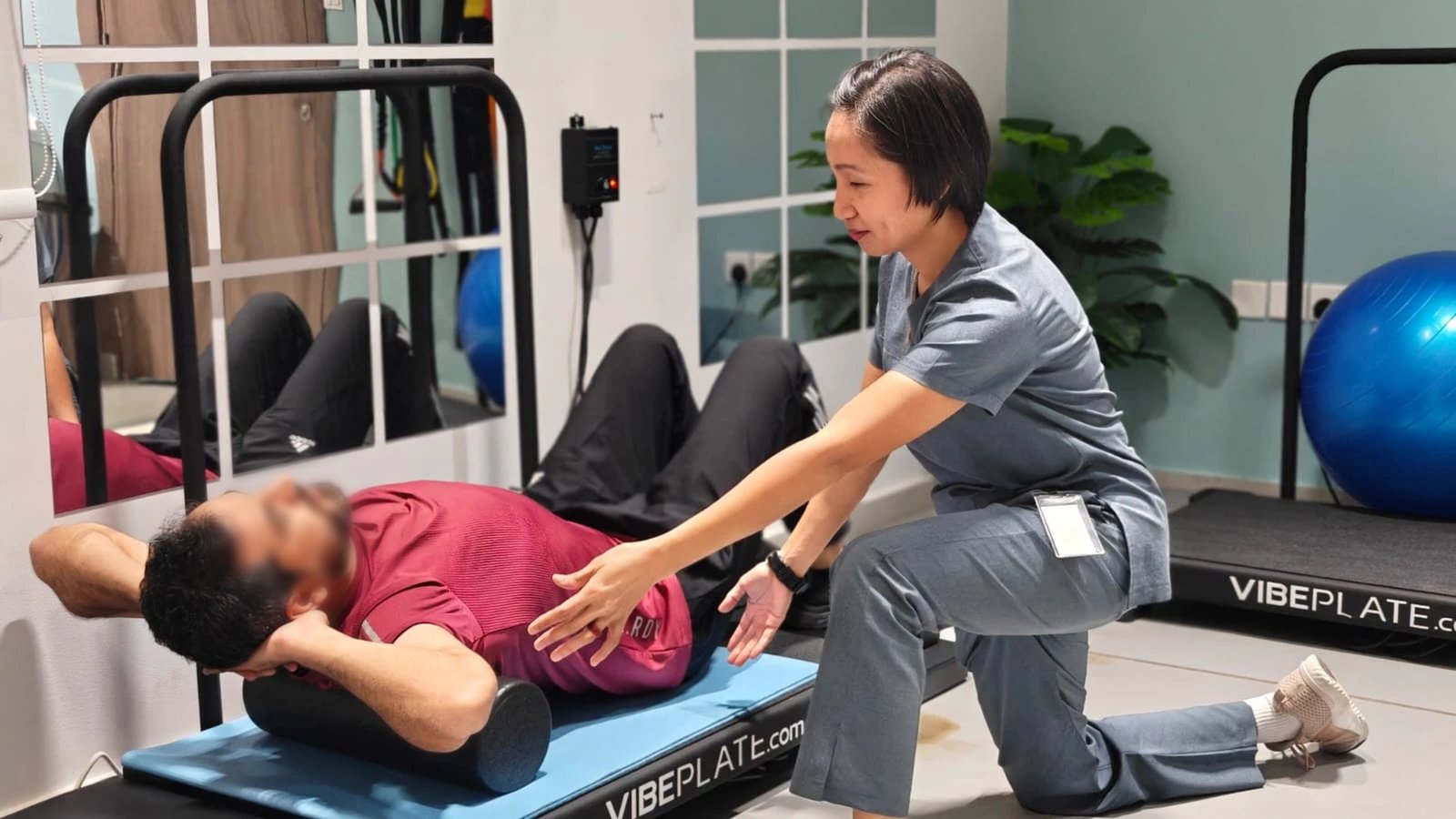
Search for back rehab exercises and you will find thousands of videos, each one sure that its five moves are the ones you need. Some of them are good exercises. The problem is not the exercises. It is that a list is not a plan, and the same list cannot be right for everyone who types "back pain" into a search box.
This guide explains how spinal rehabilitation exercises are chosen, what a good plan contains, how to start at the right level, how to tell normal effort from a warning sign, and how to know whether the exercises are doing anything. We wrote last week about what spinal rehabilitation involves as a whole; this article is about the exercise part.
Why the same back pain can need different exercises
Two people can describe the same lower back pain and need opposite things. One has a stiff, flattened lower back that eases when it moves; the other has a segment that moves too much and calms down when the muscles around it learn to hold still. An exercise that helps the first can irritate the second. The same is true of neck pain and of pain that travels into the leg, where the direction of a movement matters as much as the movement itself.
That is why the exercises come after the examination, not before it. At your first visit we look at how you stand and move, measure your posture, test the range of each movement and note which one brings on your pain, check strength and control, and test the nerves if pain travels into an arm or leg. Imaging is arranged only when the examination raises a question a film would answer. We do not take X-rays at the clinic: when standing films are needed we refer you for them and analyse them here. We have explained the reasoning in Examine first, image second.
The exercises you leave with are chosen from those findings. If a programme is handed over before anyone has examined you, it is a list.
See a doctor first if you have these warning signs
Some symptoms need a medical assessment before any exercise programme, however gentle. Go to an emergency department the same day if you develop:
- new difficulty controlling your bladder or bowels;
- numbness around the groin, buttocks or inner thighs (the "saddle" area);
- weakness in one or both legs that is getting worse quickly.
These are among the signs the NHS lists as reasons to go to A&E with back pain, because they can mean pressure on the nerves at the base of the spine. See your doctor promptly, too, if back pain comes with a fever, unexplained weight loss, a history of cancer, or follows a serious fall or accident. After spinal surgery, exercise always works within the limits your surgeon has set: bring your discharge notes, and do not add exercises on your own.
The three things a good exercise plan has
Whoever gives you your exercises, in our clinic or anywhere else, the plan should have three things. If one is missing, ask for it.
- It is built on your findings. Each exercise should connect to something that was found at your assessment: a movement that is restricted, a muscle group that cannot hold a position, a posture that loads one part of the spine. You should be able to ask "what is this one for?" and get a plain answer.
- It has a dose. How many repetitions, how many times a day, how hard, and for how long before it is reviewed. "Do some stretches" is not a plan. A dose can be written down, and when it is, both of you can tell whether you did it.
- It changes as you improve, and someone checks. An exercise that was right in week one is usually too easy by week four. A good plan is progressed, one change at a time, and re-checked against the measurements taken at the start.
In our plans the exercises are taught in the clinic, practised at home between visits, and reviewed at each follow-up. Home practice does much of the work; the visits are where it is checked and progressed. Physiotherapy and corrective exercise train the muscles and posture to hold a change, while adjustments restore motion. The two are not an either-or choice.
The kinds of spinal rehabilitation exercise a plan can include
Most spinal rehabilitation exercises fall into three groups. Which of them your plan leans on, and in what order, depends on your assessment.
| Type of exercise | What it is for | How we judge whether it suits you |
|---|---|---|
| Mobility | Moving a stiff region through a comfortable range, so that everyday bending, turning and reaching feel less restricted | You should feel looser or unchanged afterwards, not more irritated. More range is not always the goal. |
| Strength and control | Teaching the trunk and hips to hold a position and to move under load, so that sitting, standing and lifting stop provoking pain | Effort in the muscles is expected; pain that sharpens or spreads is not. |
| Balance and coordination | Practising the turning, stepping and reaching that daily life asks for, with the spine kept steady | You should stay in control of the movement throughout. Unsteadiness means the level is too high. |
For a postural problem, the exercises may also be chosen to mirror the posture we measured, so that a forward head or a flattened curve is loaded in the opposite direction. That is part of how we approach posture correction, and the same idea runs through exercise for scoliosis, where the direction of the curve decides the direction of the exercise.
Starting at the right level
The right starting level is one you can do with control, repeat tomorrow, and recover from by the next day. It is almost always lower than people expect. A short session you can repeat beats a demanding one that costs you three days.
Some practical habits help:
- Do the exercises when you are not rushed, on a stable surface, with a wall or chair to hand if balance is part of the work.
- Keep to the range and the number of repetitions you were given. The dose is the plan.
- Leave enough time after a session to notice how you feel later that day and the next morning.
- If you miss a day, start again at the same level. Do not try to make it up with a double session.
Hot weather, long drives and long days at a desk all shape when exercise is realistic. If your working day is spent sitting or driving, ask how to fit movement into the breaks you already take rather than adding another task to the evening. We have written about office back pain and about returning to training after the summer for exactly these situations.
Effort or warning sign? How to tell
Exercise should feel like work. Muscle effort, a little stiffness afterwards and a feeling of "awareness" in the area you are training are all expected, and they should settle within a day. Pain is not proof that an exercise is working, and pushing through it is not a sign of commitment.
Stop the exercise and tell us before you do it again if:
- the pain becomes sharp, or climbs during the set and keeps climbing afterwards;
- the pain spreads, especially down an arm or a leg;
- you notice new numbness, tingling or weakness;
- you feel faint or unsafe during balance work.
Make a note of which exercise it was, how far into the set, and how you felt that evening. That note is the most useful thing you can bring to a follow-up, because it lets us adjust the right exercise rather than guess. If any of the emergency signs above appear, exercise stops and you seek urgent care.
How to tell your back rehab exercises are working
Pain on a given day is a poor measure. It goes up and down with sleep, stress, a long drive or a bad chair. Function is a better one. Pick two or three things you want back, in your own words: sitting through a meeting, carrying your daughter to the car, finishing a game of football. Then watch those over weeks, comparing like with like, rather than judging the plan by one good or bad day.
In the clinic we add the measurements from your first visit, repeated the same way at set points: posture, range of movement, strength and control. If the numbers and the function are moving, the plan is working. If neither has changed at a review, the plan should change, not simply continue. A stall is information, not failure: the level, the technique, the choice of exercise or something else in your health may need another look.
What the evidence does and does not say: exercise is one of the best-supported treatments for persistent low back pain, and NICE recommends it ahead of hands-on treatment on its own. But research comparing one type of exercise with another has not found a clear winner, and the gains measured in studies are moderate rather than dramatic. We read that as a reason to match the exercise to the person and to measure, rather than to promise a result.
Frequently asked questions
Can spinal rehabilitation exercises help with back pain?
They can, for many people. Exercise is one of the best-supported treatments for persistent low back pain in clinical guidelines. How much it helps depends on the cause of the pain, how well the exercises match it and whether you do them, which is why we choose them from an examination and re-measure.
Should I exercise if my back feels stiff?
Gentle movement is usually appropriate for stiffness, as long as it leaves you feeling looser or unchanged rather than more irritated. Do not force a stretch. If the stiffness came with an injury, a fever, or new numbness or weakness, see a doctor before you exercise.
How often should I do rehabilitation exercises?
As often as your plan says, which is usually a short home session every day with the dose written down. Repetitions, frequency and effort are set from your assessment and changed at reviews. If you are unsure whether to do more, ask before increasing it.
How do I tell normal effort from a warning sign?
Muscle effort, mild stiffness and a sense of "awareness" that settle within a day are expected. Sharp pain, pain that keeps climbing or spreads down a limb, new numbness or weakness, or feeling faint are warning signs: stop, note what you were doing, and tell us before you repeat the exercise.
Do I need an X-ray before I start exercises?
Not usually. The exercises are chosen from your examination. Imaging is arranged when the examination raises a question that a film would answer. We do not take X-rays at the clinic; when standing films are needed we refer you for them and read them here.
How long before rehabilitation exercises make a difference?
Some people feel easier within a couple of weeks; measurable change in posture, range or strength usually takes longer and is checked at set review points. Judge progress over weeks by what you can do, not by a single day's pain. If nothing has changed at a review, the plan should change.
If you would like your exercises chosen from an examination rather than a search result, book an assessment at CBP Precision Spine Center, 336 18th November Street, Azaiba. Call 7277 7796 or book online.
ابحث عن «تمارين الظهر» وستجد آلاف المقاطع، وكلّ واحد منها متأكّد أنّ حركاته الخمس هي ما تحتاج إليه. بعضها تمارين جيّدة فعلاً. لكنّ المشكلة ليست في التمارين، بل في أنّ القائمة ليست خطة، وأنّ القائمة نفسها لا يمكن أن تكون صحيحة لكلّ من كتب «ألم الظهر» في خانة البحث.
يشرح هذا الدليل كيف تُختار تمارين إعادة تأهيل العمود الفقري، وما الذي تحتويه الخطة الجيّدة، وكيف تبدأ من المستوى الصحيح، وكيف تميّز الجهد الطبيعي من علامة التحذير، وكيف تعرف هل التمارين تفعل شيئاً. وقد كتبنا الأسبوع الماضي عن ما تتضمّنه إعادة تأهيل العمود الفقري بوجه عام؛ أمّا هذا المقال فعن التمارين تحديداً.
لماذا قد يحتاج ألم الظهر نفسه إلى تمارين مختلفة؟
قد يصف شخصان ألم أسفل الظهر نفسه ويحتاجان إلى شيئين متعاكسين. أحدهما لديه أسفل ظهر متيبّس مسطّح يرتاح حين يتحرّك، والآخر لديه جزء يتحرّك أكثر من اللازم ويهدأ حين تتعلّم العضلات حوله أن تثبّته. فالتمرين الذي يفيد الأول قد يُهيّج الثاني. وينطبق الأمر نفسه على آلام الرقبة وعلى الألم الذي يمتدّ إلى الساق، حيث يهمّ اتجاه الحركة بقدر ما تهمّ الحركة نفسها.
ولهذا تأتي التمارين بعد الفحص لا قبله. في زيارتك الأولى ننظر في طريقة وقوفك وحركتك، ونقيس قوامك، ونختبر مدى كلّ حركة ونسجّل أيّها يُثير ألمك، ونفحص القوة والتحكّم، ونختبر الأعصاب إذا امتدّ الألم إلى ذراع أو ساق. ولا يُرتَّب التصوير إلا حين يطرح الفحص سؤالاً تجيب عنه الصورة. نحن لا نلتقط صور الأشعة في المركز: حين تلزم صور واقفاً نحوّلك لإجرائها ثم نحلّلها هنا. وقد شرحنا السبب في مقال الفحص أولاً والتصوير ثانياً.
التمارين التي تغادر بها تُختار من هذه النتائج. أمّا البرنامج الذي يُسلَّم إليك قبل أن يفحصك أحد، فهو قائمة.
راجع الطبيب أولاً إذا كانت لديك هذه العلامات التحذيرية
بعض الأعراض تحتاج إلى تقييم طبي قبل أيّ برنامج تمارين، مهما كان لطيفاً. توجّه إلى قسم الطوارئ في اليوم نفسه إذا ظهر لديك:
- صعوبة جديدة في التحكّم بالمثانة أو الأمعاء؛
- خدر حول منطقة الأعضاء التناسلية أو الأرداف أو باطن الفخذين (منطقة «السَّرج»)؛
- ضعف في إحدى الساقين أو كلتيهما يزداد بسرعة.
فهذه من العلامات التي تعدّها هيئة الخدمات الصحية البريطانية (NHS) سبباً للتوجّه إلى الطوارئ مع ألم الظهر، لأنها قد تعني ضغطاً على الأعصاب في أسفل العمود الفقري. وراجع طبيبك سريعاً كذلك إذا صاحب ألمَ الظهر حمّى، أو نقص في الوزن بلا سبب، أو تاريخ إصابة بالسرطان، أو جاء بعد سقوط أو حادث شديد. وبعد جراحة العمود الفقري تبقى التمارين دائماً ضمن الحدود التي وضعها جرّاحك: أحضر تقرير الخروج، ولا تُضِف تمارين من عندك.
الأشياء الثلاثة في خطة التمارين الجيّدة
أيّاً كان من يعطيك تمارينك، في مركزنا أو في أيّ مكان آخر، ينبغي أن تكون في الخطة ثلاثة أشياء. وإذا غاب أحدها، فاطلبه.
- مبنية على نتائج تقييمك أنت. ينبغي أن يرتبط كلّ تمرين بشيء وُجد في تقييمك: حركة مقيّدة، أو مجموعة عضلية لا تستطيع تثبيت وضعية، أو قوام يُحمّل جزءاً من العمود الفقري. ويجب أن تستطيع أن تسأل «لماذا هذا التمرين؟» وتحصل على إجابة واضحة.
- لها جرعة. كم تكراراً، وكم مرة في اليوم، وبأيّ شدّة، ولكم من الوقت قبل أن تُراجَع. «قم ببعض الإطالات» ليست خطة. الجرعة تُكتب، وحين تُكتب يستطيع كلاكما أن يعرف هل أدّيتها.
- تتغيّر مع تحسّنك، وأحدٌ يتابعها. التمرين الذي كان مناسباً في الأسبوع الأول يصبح عادةً أسهل من اللازم في الأسبوع الرابع. الخطة الجيّدة تتطوّر، تغييراً واحداً في كلّ مرة، ويُعاد فحصها مقابل القياسات التي أُخذت في البداية.
في خططنا تُعلَّم التمارين في المركز، وتُمارَس في البيت بين الزيارات، وتُراجَع في كلّ زيارة متابعة. والممارسة في البيت تقوم بمعظم العمل؛ أمّا الزيارات فهي حيث تُفحَص الخطة وتتطوّر. يدرّب العلاج الطبيعي والتمارين التصحيحية العضلات والقوام على الحفاظ على التغيير، بينما يعيد التقويم الحركة. وليسا خيارين متعارضين.
أنواع تمارين إعادة التأهيل التي قد تتضمّنها الخطة
تقع معظم تمارين إعادة تأهيل العمود الفقري في ثلاث مجموعات. وأيّها تعتمد عليه خطتك، وبأيّ ترتيب، يقرّره تقييمك.
| نوع التمرين | ما الغرض منه | كيف نحكم هل يناسبك |
|---|---|---|
| الحركية | تحريك منطقة متيبّسة ضمن مدى مريح، حتى يصبح الانحناء والالتفات والوصول اليومي أقلّ تقييداً | ينبغي أن تشعر بعدها بارتخاء أو بلا تغيّر، لا بتهيّج أكثر. والمدى الأكبر ليس الهدف دائماً. |
| القوة والتحكّم | تعليم الجذع والوركين تثبيت الوضعية والحركة تحت الحمل، حتى يتوقّف الجلوس والوقوف والحمل عن إثارة الألم | الجهد في العضلات متوقَّع؛ أمّا الألم الذي يشتدّ أو ينتشر فلا. |
| التوازن والتناسق | التدرّب على الالتفات والخطو والوصول الذي تطلبه الحياة اليومية، مع إبقاء العمود الفقري ثابتاً | ينبغي أن تبقى متحكّماً في الحركة طوال الوقت. وعدم الثبات يعني أنّ المستوى أعلى من اللازم. |
وفي مشكلات القوام قد تُختار التمارين أيضاً بحيث تعكس الوضعية التي قسناها، فيُحمَّل الرأس المتقدّم أو الانحناء المسطّح في الاتجاه المعاكس. هذا جزء من طريقتنا في تصحيح القوام، والفكرة نفسها تسري في تمارين الجنف، حيث يقرّر اتجاه الانحناء اتجاه التمرين.
البدء من المستوى الصحيح
المستوى الصحيح للبداية هو ما تستطيع أداءه بتحكّم، وتكراره غداً، والتعافي منه قبل اليوم التالي. وهو أدنى ممّا يتوقّعه الناس في الغالب. فجلسة قصيرة تستطيع تكرارها أفضل من جلسة شاقّة تكلّفك ثلاثة أيام.
بعض العادات العملية تساعد:
- أدِّ التمارين حين لا تكون مستعجلاً، على سطح ثابت، وبقرب جدار أو كرسي إذا كان التوازن جزءاً من العمل.
- التزم بالمدى وعدد التكرارات اللذين أُعطيا لك. الجرعة هي الخطة.
- اترك وقتاً كافياً بعد الجلسة لتلاحظ كيف تشعر في ذلك اليوم وفي صباح اليوم التالي.
- إذا فاتك يوم، فابدأ من جديد عند المستوى نفسه. ولا تحاول تعويضه بجلسة مضاعفة.
الحرّ، والقيادة الطويلة، والأيام الطويلة على المكتب، كلّها تحدّد متى يكون التمرين واقعياً. وإذا كان يوم عملك جلوساً أو قيادة، فاسأل كيف تُدخل الحركة في فترات الراحة التي تأخذها أصلاً بدل أن تضيف مهمّة أخرى إلى المساء. وقد كتبنا عن آلام الظهر المكتبية وعن العودة إلى التمرين بعد الصيف لهذه الحالات تحديداً.
جهد أم علامة تحذير؟ كيف تميّز
ينبغي أن يبدو التمرين عملاً. فالجهد في العضلات، وقليل من التيبّس بعده، والإحساس «بالوعي» في المنطقة التي تدرّبها، كلّها متوقَّعة، وينبغي أن تهدأ في غضون يوم. أمّا الألم فليس دليلاً على أنّ التمرين ينجح، والمضيّ رغمه ليس علامة التزام.
توقّف عن التمرين وأخبرنا قبل أن تعيده إذا:
- صار الألم حادّاً، أو تصاعد أثناء المجموعة واستمرّ في التصاعد بعدها؛
- انتشر الألم، خاصةً إلى ذراع أو ساق؛
- لاحظت خدراً أو وخزاً أو ضعفاً جديداً؛
- شعرت بدوار أو بعدم أمان أثناء تمارين التوازن.
سجّل أيّ تمرين كان، وفي أيّ مرحلة من المجموعة، وكيف شعرت في ذلك المساء. فهذه الملاحظة أنفع ما تُحضره إلى زيارة المتابعة، لأنها تتيح لنا تعديل التمرين الصحيح بدل التخمين. وإذا ظهرت أيّ من علامات الطوارئ المذكورة أعلاه، فالتمارين تتوقّف وتطلب رعاية عاجلة.
كيف تعرف أنّ تمارين الظهر تنجح؟
الألم في يوم بعينه مقياس ضعيف؛ فهو يرتفع وينخفض مع النوم والتوتّر والقيادة الطويلة والكرسي السيّئ. أمّا الوظيفة فمقياس أفضل. اختر شيئين أو ثلاثة تريد استعادتها، بكلماتك أنت: أن تجلس اجتماعاً كاملاً، أو تحمل ابنتك إلى السيارة، أو تُكمل مباراة كرة قدم. ثم راقبها على مدى أسابيع، مقارناً المثل بالمثل، بدل أن تحكم على الخطة بيوم جيّد أو سيّئ.
وفي المركز نضيف قياسات زيارتك الأولى، مكرَّرة بالطريقة نفسها في نقاط محدّدة: القوام، ومدى الحركة، والقوة والتحكّم. فإذا كانت الأرقام والوظيفة تتحرّكان، فالخطة تنجح. وإذا لم يتغيّر أيّ منهما عند المراجعة، فينبغي أن تتغيّر الخطة، لا أن تستمرّ ببساطة. والتوقّف معلومة لا فشل: فقد يحتاج المستوى أو الأسلوب أو اختيار التمرين أو شيء آخر في صحتك إلى نظرة ثانية.
ما تقوله الأدلّة وما لا تقوله: التمارين من أفضل العلاجات المدعومة بالأدلّة لألم أسفل الظهر المستمرّ، ويوصي بها المعهد الوطني للصحة والرعاية المتميّزة في بريطانيا (NICE) قبل العلاج اليدوي وحده. لكنّ الدراسات التي قارنت نوعاً من التمارين بآخر لم تجد فائزاً واضحاً، والتحسّن المقاس فيها متوسّط لا مذهل. ونقرأ ذلك سبباً لمطابقة التمرين مع الشخص وللقياس، لا للوعد بنتيجة.
الأسئلة الشائعة
هل تساعد تمارين إعادة تأهيل العمود الفقري على ألم الظهر؟
نعم، عند كثيرين. فالتمارين من أفضل العلاجات المدعومة بالأدلّة لألم أسفل الظهر المستمرّ في الإرشادات السريرية. ويعتمد مقدار الفائدة على سبب الألم، ومدى مطابقة التمارين له، وهل تؤدّيها فعلاً؛ ولهذا نختارها من الفحص ونعيد القياس.
هل أتمرّن إذا كان ظهري متيبّساً؟
الحركة اللطيفة مناسبة عادةً للتيبّس، ما دامت تترك لك ارتخاءً أو لا تغيّر، لا تهيّجاً أكثر. ولا تُجبر الإطالة. وإذا جاء التيبّس مع إصابة أو حمّى أو خدر أو ضعف جديد، فراجع الطبيب قبل أن تتمرّن.
كم مرة أؤدّي تمارين إعادة التأهيل؟
بقدر ما تقوله خطتك، وهو عادةً جلسة منزلية قصيرة كلّ يوم بجرعة مكتوبة. يُحدَّد التكرار وعدد المرات والشدّة من تقييمك وتُغيَّر في المراجعات. وإذا لم تكن متأكّداً هل تزيد، فاسأل قبل أن تزيد.
كيف أميّز الجهد الطبيعي من علامة التحذير؟
الجهد في العضلات، والتيبّس الخفيف، و«الوعي» بالمنطقة الذي يهدأ في غضون يوم، كلّها متوقَّعة. أمّا الألم الحادّ، أو الذي يستمرّ في التصاعد أو ينتشر إلى طرف، أو الخدر أو الضعف الجديد، أو الدوار، فعلامات تحذير: توقّف، وسجّل ما كنت تفعله، وأخبرنا قبل أن تعيد التمرين.
هل أحتاج إلى صورة أشعة قبل أن أبدأ التمارين؟
ليس عادةً. فالتمارين تُختار من فحصك. ويُرتَّب التصوير حين يطرح الفحص سؤالاً تجيب عنه الصورة. ونحن لا نلتقط صور الأشعة في المركز؛ وحين تلزم صور واقفاً نحوّلك لإجرائها ونقرأها هنا.
بعد كم من الوقت تُحدث تمارين إعادة التأهيل فرقاً؟
يشعر بعض الناس بتحسّن في غضون أسبوعين تقريباً؛ أمّا التغيّر القابل للقياس في القوام أو مدى الحركة أو القوة فيستغرق عادةً وقتاً أطول ويُفحَص في نقاط مراجعة محدّدة. احكم على التقدّم على مدى أسابيع بما تستطيع فعله، لا بألم يوم واحد. وإذا لم يتغيّر شيء عند المراجعة، فينبغي أن تتغيّر الخطة.
إذا أردت أن تُختار تمارينك من فحص لا من نتيجة بحث، احجز تقييماً في مركز الدقة للعمود الفقري، 336 شارع 18 نوفمبر، العذيبة. اتصل على 7277 7796 أو احجز عبر الإنترنت.