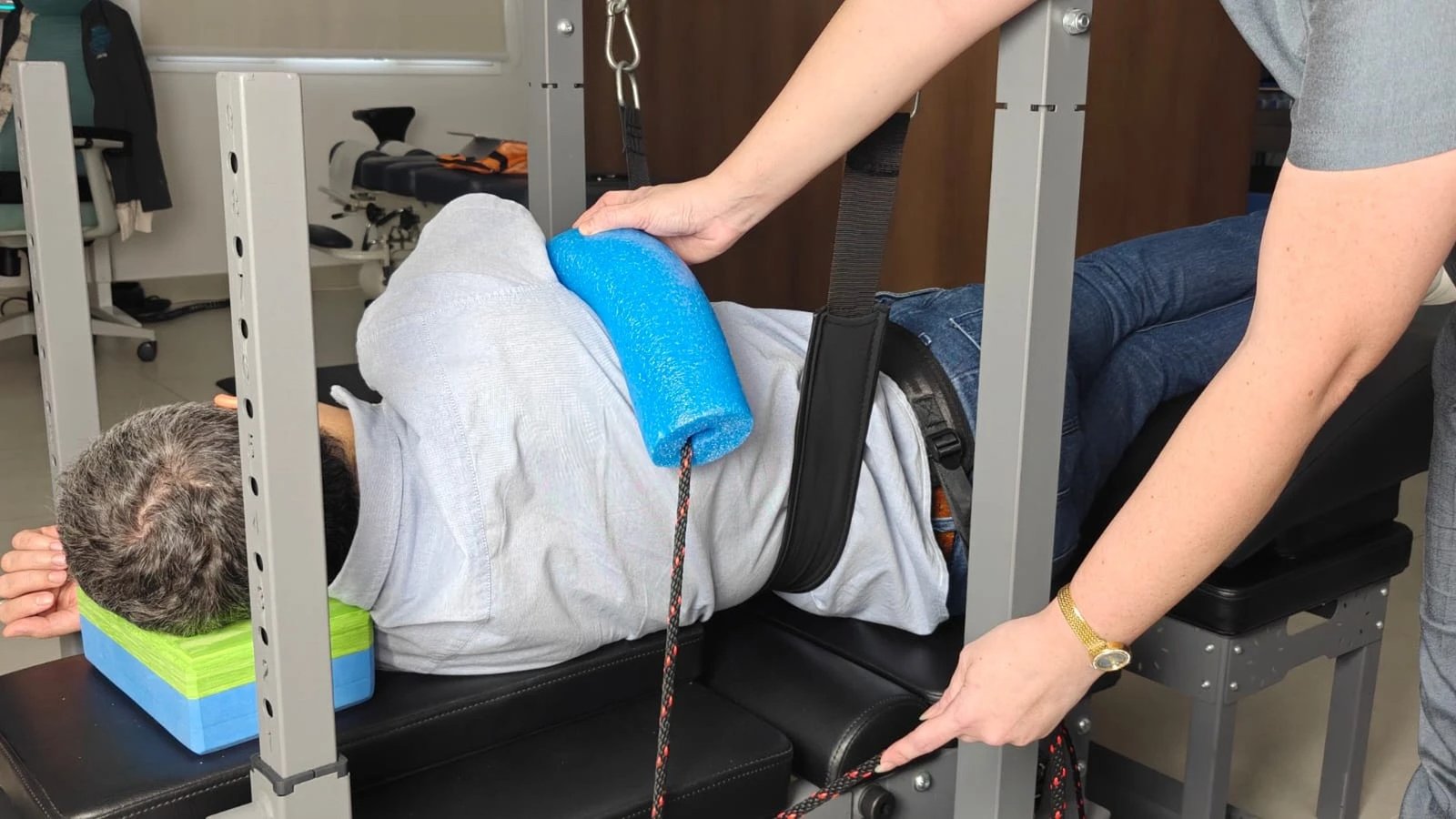
"Can traction straighten my curve?" and "Which exercises should I be doing?" are two of the first questions people ask us after hearing the word scoliosis. They are good questions, and they deserve straight answers rather than a sales pitch.
The short version: traction and exercise can both be part of scoliosis care, but neither is a plan on its own. What a plan is trying to achieve, and how you will know whether it is working, matter more than any single tool.
First, be clear about the goal
Scoliosis is a sideways curve of the spine with a twist, or rotation, built in. Care can aim at different things, and it helps to know which one applies to you:
- Comfort: less pain, stiffness or fatigue, judged by how you feel over time.
- Function: moving, sitting, studying or working more easily, judged by examination and your daily activities.
- The curve itself: keeping it from getting worse in a growing child, or reducing it where that is realistic, judged only by standing X-rays measured the same way each time.
These are not the same outcome. Feeling better is real and worth having, but it does not show that the spine's shape has changed. Ask any clinician, us included, which goal they are aiming for and how they will measure it.
What traction is, and what it is not
Traction means applying a controlled, sustained pull or positioning force to the spine. In scoliosis care it is not the same as hanging from a bar or a general "stretch". In Chiropractic BioPhysics® (CBP®), the approach we use, traction is set up in the opposite, or "mirror-image", direction to your own curve, based on your X-ray measurements. It sits alongside Mirror Image® adjustments, specific exercises and, where it is indicated, a custom brace.
Traction is not for everyone, and it should not replace monitoring. A clinician should check that it suits you, explain what you will feel, and stop or change it if it is uncomfortable.
What the evidence says about traction
Here is the honest picture. Research on traction for scoliosis is limited: it comes mostly from small studies and case reports, many from clinicians who use the method, rather than large controlled trials. That does not mean it cannot help. It means nobody should promise you a particular number of degrees, and any change should be shown on your own films.
That is why, in our plans, traction is always measured. We record your curve before care and compare it on follow-up standing X-rays taken the same way. We do not take X-rays at the clinic: when they are needed, we refer you for standing films and analyse them here. Our guide to scoliosis X-rays in Muscat explains why the films are taken standing.
Exercise: specific beats generic
General fitness is good for everyone with scoliosis. Staying active, strong and confident in movement matters, and most people with a curve can keep doing the sports they enjoy. But general exercise, including yoga or Pilates, has not been shown to change a curve.
Scoliosis-specific exercise is different: movements and postures chosen for your curve pattern, taught and then checked. International scoliosis guidelines (SOSORT) recommend this kind of exercise, particularly in growing teenagers, often alongside bracing. The evidence is stronger than for traction but still mixed, so again: measure, don't guess.
A routine copied from a video may not suit your curve or your pain. If an exercise causes sharp pain, new symptoms or a feeling that you cannot control the movement, stop and ask. Our physiotherapy team teaches a home programme you can actually follow, and reviews it as you go.
How the pieces fit together at our clinic
A scoliosis plan at CBP Precision Spine Center usually runs like this:
- Examine: your history, posture and movement, and any previous reports.
- Measure: standing X-rays by referral, analysed here, plus posture measurements.
- Treat: Mirror Image® adjustments, corrective traction where it suits the curve, specific exercises, and a custom ScoliBrace® where bracing is indicated.
- Re-measure: follow-up films and measurements at set points decide the next phase.
What we offer depends on your age, curve, symptoms and goals. Some people need monitoring only. Some need more than we provide, and then we refer. For the wider picture, see our scoliosis assessment page.
Children and adults are different
In a child or teenager who is still growing, the main concern is whether the curve could get worse, so monitoring is closer and bracing may be discussed. In an adult, growth has finished; the goal is usually less pain and better function rather than a perfectly straight spine, and progress is judged on that.
Questions worth asking before you start
- What exactly is the goal: comfort, function or the curve itself?
- How will you measure progress, and when?
- Why traction or this exercise for my curve, and what are the alternatives?
- What would make you change or stop the plan?
A good clinician will be glad you asked. For more on judging any provider, see how to choose spine care in Muscat.
When to see a doctor first
Most scoliosis is not an emergency. But back pain that wakes you at night, pain with fever or weight loss, new numbness or weakness in the legs, or any change in bladder or bowel control needs a doctor promptly. Don't wait for a scoliosis appointment, and don't put it down to the curve.
Frequently asked questions
Can traction straighten a scoliosis curve?
Traction can be one part of a scoliosis plan, set up against your curve from your X-ray measurements. Research on it is limited, mostly small studies, so nobody should promise a set result. Any change should be shown on follow-up standing X-rays measured the same way.
Will exercises fix my scoliosis?
General exercise keeps you strong and active but has not been shown to change a curve. Scoliosis-specific exercise, chosen for your curve and checked by a clinician, is recommended by international guidelines, often alongside bracing in growing teenagers. Results vary from person to person.
Is traction safe?
For most people it is gentle, and it is set up and supervised in the clinic. It is not suitable for everyone, so we examine you first. Tell your clinician straight away if anything feels painful, and the set-up can be changed or stopped.
Do I need an X-ray before traction or exercise for scoliosis?
To plan care aimed at the curve itself, yes: standing X-rays show its size and direction. We do not take X-rays at the clinic; we refer you for standing films and analyse them here. Bring any X-rays you already have, as they may be enough.
Is scoliosis traction the same as hanging from a bar?
No. Hanging or a general stretch pulls the spine straight down. In CBP® care, traction is set up in the opposite, mirror-image direction to your own curve, using your X-ray measurements, and it is supervised in the clinic.
Can I keep playing sport if I have scoliosis?
Most people with scoliosis can stay active and keep doing the sports they enjoy, and staying strong is good for you. If a particular activity causes pain, ask your clinician whether it needs adjusting rather than stopping everything.
Where to start
If you'd like to know whether traction or specific exercise has a place in your own scoliosis plan, book an assessment at CBP Precision Spine Center, 336 18th November Street, Azaiba. Call 7277 7796 or book online.
Bring previous X-rays and reports if you have them, plus your questions.
«هل يستطيع الشدّ أن يقوّم انحناء ظهري؟» و«ما التمارين التي يجب أن أقوم بها؟» سؤالان من أوّل ما يسألنا عنه الناس بعد سماع كلمة «الجنف». وهما سؤالان في محلّهما، ويستحقّان إجابة صريحة لا كلاماً تسويقياً.
باختصار: يمكن أن يكون الشدّ والتمارين جزءاً من علاج الجنف، لكن لا أحد منهما خطة كاملة بمفرده. الأهمّ من أيّ أداة هو ما تهدف إليه الخطة، وكيف ستعرف إن كانت تنجح.
أولاً: حدّد الهدف بوضوح
الجنف، أو اعوجاج العمود الفقري، انحناء جانبي في العمود الفقري يصاحبه التواء أو دوران. ويمكن أن يهدف العلاج إلى أمور مختلفة، ومن المفيد أن تعرف أيّها يخصّك:
- الراحة: ألم أو تيبّس أو تعب أقل، ويُقاس بما تشعر به مع الوقت.
- الوظيفة: حركة وجلوس ودراسة أو عمل بسهولة أكبر، ويُقاس بالفحص وبأنشطتك اليومية.
- الانحناء نفسه: منعه من الزيادة عند طفل ما زال ينمو، أو تقليله حيث يكون ذلك واقعياً، ولا يُقاس إلا بصور أشعة واقفاً تُقاس بالطريقة نفسها في كلّ مرة.
هذه ليست نتيجة واحدة. الشعور بالتحسّن حقيقي ويستحقّ السعي إليه، لكنه لا يُثبت أنّ شكل العمود الفقري قد تغيّر. اسأل أيّ مختصّ، ونحن منهم، عن الهدف الذي يعمل عليه وكيف سيقيسه.
ما هو الشدّ، وما ليس هو
الشدّ قوة سحب أو وضعية مضبوطة ومستمرّة تُطبَّق على العمود الفقري. وفي علاج الجنف لا يعني التعلّق بعارضة أو «تمديداً» عامّاً. ففي تقنية البيوفيزياء الحيوية لتقويم العمود الفقري CBP® التي نعتمدها، يُضبط الشدّ في الاتجاه المعاكس لانحنائك، أي بأسلوب «الصورة المرآتية»، بناءً على قياسات صور الأشعة الخاصّة بك. ويأتي إلى جانب تعديلات Mirror Image® والتمارين المحدّدة، ودعامة مخصّصة عند الحاجة.
الشدّ لا يناسب الجميع، ولا يُغني عن المتابعة. على المختصّ أن يتأكّد من أنه مناسب لك، وأن يشرح لك ما ستشعر به، وأن يوقفه أو يعدّله إن سبّب لك انزعاجاً.
ماذا تقول الأدلة عن الشدّ
إليك الصورة بصدق: الأبحاث عن الشدّ في علاج الجنف محدودة، ومعظمها دراسات صغيرة وتقارير حالات، وكثير منها من مختصّين يستخدمون هذه الطريقة، لا تجارب كبيرة مضبوطة. هذا لا يعني أنه لا يمكن أن يساعد، بل يعني أنه لا ينبغي لأحد أن يعدك بعدد معيّن من الدرجات، وأنّ أيّ تغيّر يجب أن يظهر على صورك أنت.
لهذا يُقاس الشدّ دائماً في خططنا. نسجّل الانحناء قبل بدء العلاج، ونقارنه في صور أشعة متابعة واقفاً تُؤخذ بالطريقة نفسها. نحن لا نُجري الأشعة في المركز: حين تلزم، نحيلك لإجراء صور واقفاً ونحلّلها هنا. ويشرح دليلنا عن أشعة الجنف في مسقط لماذا تُؤخذ الصورة واقفاً.
التمارين: المحدّدة أفضل من العامّة
اللياقة العامّة مفيدة لكلّ من لديه جنف. فالبقاء نشيطاً وقوياً وواثقاً في الحركة أمر مهمّ، ويستطيع معظم المصابين بالانحناء الاستمرار في الرياضة التي يحبّونها. لكنّ التمارين العامّة، ومنها اليوغا والبيلاتس، لم يثبت أنها تغيّر الانحناء.
أمّا تمارين الجنف المحدّدة فمختلفة: حركات ووضعيات تُختار لنمط انحنائك، تتعلّمها ثمّ تُراجَع. وتوصي الإرشادات الدولية للجنف (SOSORT) بهذا النوع من التمارين، خصوصاً للمراهقين في مرحلة النمو، وغالباً إلى جانب الدعامة. والأدلة عليها أقوى منها على الشدّ، لكنها ما زالت متفاوتة، فالقاعدة مرّة أخرى: قِس ولا تخمّن.
قد لا يناسب برنامج منقول من فيديو انحناءك أو ألمك. إذا سبّب لك تمرين ألماً حادّاً أو أعراضاً جديدة أو شعوراً بأنك لا تتحكّم في الحركة، فتوقّف واسأل. ويعلّمك فريق العلاج الطبيعي لدينا برنامجاً منزلياً تستطيع الالتزام به فعلاً، ويراجعه معك أولاً بأوّل.
كيف تتكامل الأجزاء في مركزنا
تسير خطة علاج الجنف في مركز الدقة للعمود الفقري عادةً على هذا النحو:
- الفحص: تاريخك الصحي، ووضعيتك وحركتك، وأيّ تقارير سابقة.
- القياس: صور أشعة واقفاً بالإحالة نحلّلها هنا، إلى جانب قياسات الوضعية.
- العلاج: تعديلات Mirror Image®، والشدّ التصحيحي حين يناسب الانحناء، وتمارين محدّدة، ودعامة ScoliBrace® مخصّصة حين تكون الدعامة مطلوبة.
- إعادة القياس: صور وقياسات متابعة في مواعيد محدّدة تقرّر المرحلة التالية.
ما نقدّمه يعتمد على عمرك وانحنائك وأعراضك وأهدافك. بعض الناس يحتاجون إلى المتابعة فقط، وبعضهم يحتاج إلى أكثر ممّا نقدّمه، وعندها نحيلهم. وللصورة الأشمل، راجع صفحة تقييم الجنف.
الأطفال يختلفون عن البالغين
عند الطفل أو المراهق الذي ما زال ينمو، يكون القلق الأساسي هو احتمال زيادة الانحناء، لذلك تكون المتابعة أقرب وقد تُناقش الدعامة. أمّا عند البالغ فقد اكتمل النمو، ويكون الهدف عادةً ألماً أقل ووظيفة أفضل لا عموداً فقرياً مستقيماً تماماً، ويُقاس التقدّم على هذا الأساس.
أسئلة تستحقّ أن تطرحها قبل البدء
- ما الهدف بالضبط: الراحة، أم الوظيفة، أم الانحناء نفسه؟
- كيف ستقيس التقدّم، ومتى؟
- لماذا الشدّ أو هذا التمرين لانحنائي، وما البدائل؟
- ما الذي يجعلك تغيّر الخطة أو توقفها؟
المختصّ الجيّد سيسرّه أنك سألت. ولمعرفة المزيد عن تقييم أيّ مقدّم رعاية، اقرأ كيف تختار رعاية العمود الفقري في مسقط.
متى تراجع الطبيب أولاً
معظم حالات الجنف ليست طارئة. أمّا ألم الظهر الذي يوقظك من النوم، أو الألم المصحوب بحمّى أو نقص في الوزن، أو تنميل أو ضعف جديد في الساقين، أو أيّ تغيّر في التحكّم بالمثانة أو الأمعاء، فيحتاج إلى طبيب على وجه السرعة. لا تنتظر موعد الجنف، ولا تنسب الأمر إلى الانحناء.
الأسئلة الشائعة
هل يستطيع الشدّ أن يقوّم انحناء الجنف؟
يمكن أن يكون الشدّ جزءاً من خطة علاج الجنف، ويُضبط عكس انحنائك بناءً على قياسات صور الأشعة. والأبحاث عنه محدودة ومعظمها دراسات صغيرة، لذلك لا ينبغي لأحد أن يعدك بنتيجة محدّدة. وأيّ تغيّر يجب أن يظهر في صور متابعة واقفاً تُقاس بالطريقة نفسها.
هل تعالج التمارين الجنف؟
التمارين العامّة تُبقيك قوياً ونشيطاً، لكن لم يثبت أنها تغيّر الانحناء. أمّا تمارين الجنف المحدّدة، التي تُختار لانحنائك ويراجعها مختصّ، فتوصي بها الإرشادات الدولية، وغالباً إلى جانب الدعامة عند المراهقين في مرحلة النمو. والنتائج تختلف من شخص لآخر.
هل الشدّ آمن؟
هو لطيف عند معظم الناس، ويُضبط ويُشرف عليه داخل المركز. لكنه لا يناسب الجميع، لذلك نفحصك أولاً. أخبر المختصّ فوراً إن شعرت بأيّ ألم، فيمكن تعديل الوضعية أو إيقاف الشدّ.
هل أحتاج إلى أشعة قبل الشدّ أو تمارين الجنف؟
إذا كان العلاج يستهدف الانحناء نفسه، فنعم: صور الأشعة واقفاً تُظهر حجمه واتجاهه. نحن لا نُجري الأشعة في المركز، بل نحيلك لإجراء صور واقفاً ونحلّلها هنا. أحضر أيّ صور أشعة لديك، فقد تكون كافية.
هل الشدّ لعلاج الجنف هو نفسه التعلّق بعارضة؟
لا. التعلّق أو التمديد العامّ يسحب العمود الفقري إلى الأسفل بشكل مستقيم. أمّا في علاج CBP® فيُضبط الشدّ في الاتجاه المعاكس لانحنائك، أي بأسلوب الصورة المرآتية، باستخدام قياسات صور الأشعة الخاصّة بك، ويتمّ تحت الإشراف داخل المركز.
هل أستطيع الاستمرار في الرياضة إذا كان لديّ جنف؟
يستطيع معظم المصابين بالجنف البقاء نشيطين والاستمرار في الرياضة التي يحبّونها، والحفاظ على القوة مفيد لك. وإذا سبّب لك نشاط معيّن ألماً، فاسأل المختصّ إن كان يحتاج إلى تعديل بدل أن تتوقّف عن كلّ شيء.
من أين تبدأ
إذا أردت أن تعرف إن كان للشدّ أو التمارين المحدّدة مكان في خطة علاج الجنف الخاصّة بك، احجز تقييماً في مركز الدقة للعمود الفقري، 336 شارع 18 نوفمبر، العذيبة. اتصل على 7277 7796 أو احجز عبر الإنترنت.
أحضر صور الأشعة والتقارير السابقة إن وُجدت، وأسئلتك أيضاً.