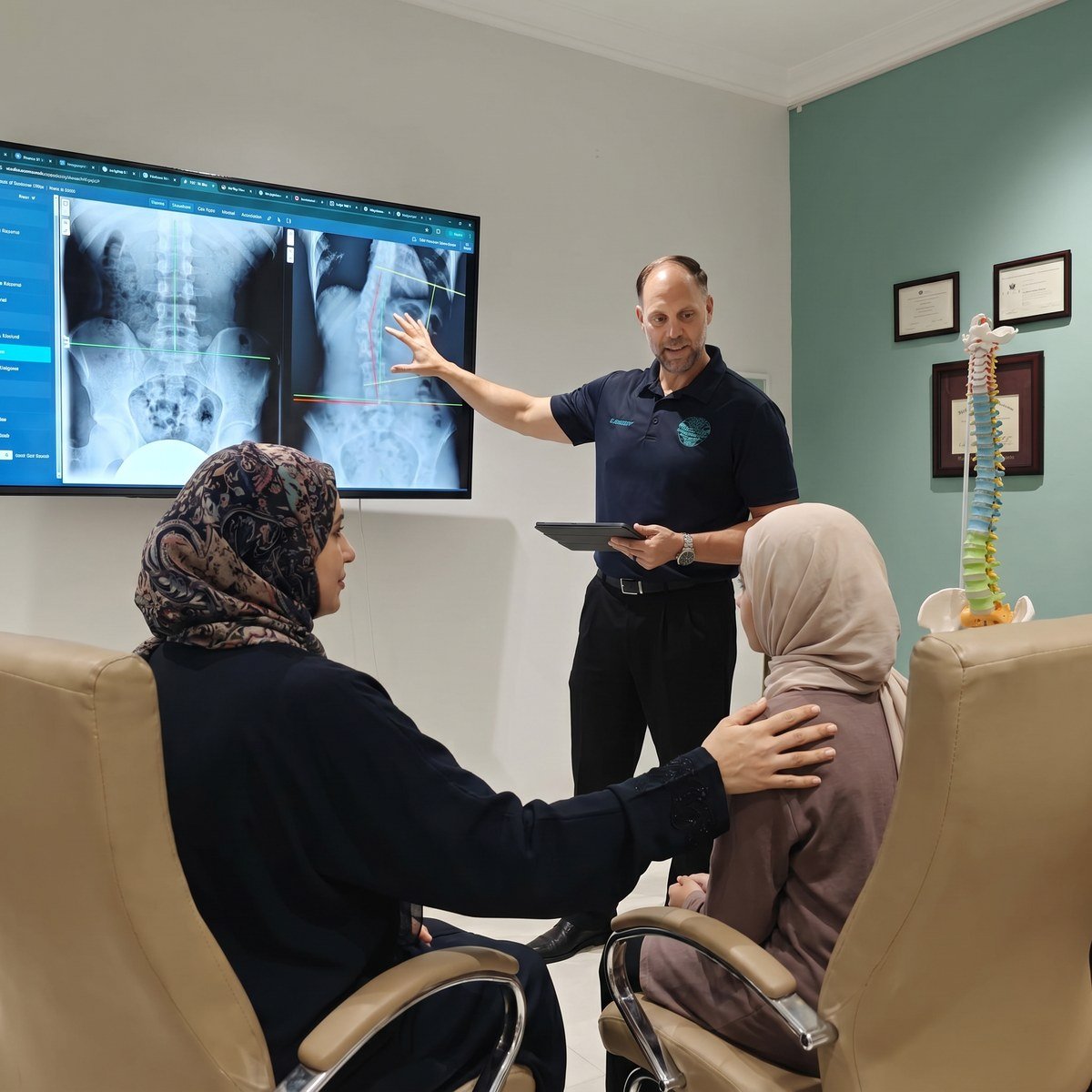
Non-surgical scoliosis care in Muscat — backed by evidence, measured in results.
Scoliosis affects an estimated 2–3% of the population — yet most cases are diagnosed too late, after the curve has already progressed significantly. In Oman and across the GCC, awareness of non-surgical scoliosis treatment options remains limited, and many families assume that surgery is the only path forward.
It isn't.
At مركز الدقة للعمود الفقري in Muscat, we specialise in evidence-based, non-surgical scoliosis care combining الكيروبراكتيك البيوفيزيائي (Chiropractic BioPhysics®) (CBP®) with the most advanced 3D scoliosis bracing system available today: ScoliBrace®. This guide answers the most common questions families ask us about scoliosis, explains how modern bracing actually works, and helps you understand when — and why — to seek a professional assessment.
What Is Scoliosis?
Scoliosis is a three-dimensional structural deformity of the spine, characterised by a sideways curvature combined with rotation of the vertebrae. To qualify as scoliosis, the curve must measure 10 degrees or more on an X-ray, using a measurement called the Cobb angle.
Unlike poor posture, scoliosis is not something a child can simply correct by "standing up straight." It is a structural condition that requires precise assessment and targeted treatment.
Types of Scoliosis
- Idiopathic scoliosis — the most common type (around 80% of cases), with no known cause. It typically develops during adolescent growth spurts.
- Congenital scoliosis — present at birth, caused by vertebral malformations.
- Neuromuscular scoliosis — associated with conditions like cerebral palsy or muscular dystrophy.
- Degenerative (adult) scoliosis — develops in adulthood, often due to age-related disc and joint degeneration.
Early Warning Signs Every Parent Should Know
Scoliosis often progresses silently. Most curves don't cause pain in the early stages, which is why visible postural changes are typically the first clue. Look for:
- One shoulder higher than the other
- Uneven hips or waistline
- One shoulder blade more prominent than the other
- Body leaning visibly to one side
- Clothes that don't hang evenly
- Persistent back fatigue, stiffness, or one-sided discomfort
- Asymmetry of the rib cage when the child bends forward (Adam's Forward Bend Test)
If you notice any of these signs, a professional scoliosis assessment is the next step. Early detection dramatically expands the range of non-surgical treatment options available.
Scoliosis FAQ: Your Most Common Questions, Answered
1. At what age does scoliosis usually develop?
Adolescent idiopathic scoliosis — the most common form — typically appears between ages 10 and 15, during periods of rapid growth. However, scoliosis can develop earlier (juvenile or infantile) or much later (adult degenerative scoliosis). This is why screening matters at every stage of life.
2. Will my child need surgery?
In most cases, no — particularly when scoliosis is detected early. Modern scoliosis care follows a clear treatment hierarchy:
- Observation for very mild curves (under 20°)
- Bracing combined with structural rehabilitation for curves between 20° and 40°
- Surgery is typically only considered when curves exceed 45°–50° and continue to progress
With early intervention using ScoliBrace® and Chiropractic BioPhysics® rehabilitation, many families avoid surgery altogether.
3. Is scoliosis painful?
Children and adolescents with scoliosis often experience no pain at all in the early stages. Adults with scoliosis, however, frequently develop chronic back pain, sciatica, and postural fatigue — often years or decades after the curve first formed. Pain is not a reliable indicator of scoliosis severity.
4. Can adults be treated for scoliosis?
Absolutely. Adult scoliosis responds well to non-surgical care, particularly for pain relief, postural correction, and slowing curve progression. While adult curves are typically less flexible than adolescent curves, the combination of CBP® rehabilitation and adult-specific bracing can produce meaningful improvements in quality of life.
5. What causes scoliosis?
Most cases (idiopathic) have no clear single cause, though genetic predisposition plays a role. Scoliosis is not caused by carrying heavy backpacks, poor posture, or sports participation — although these factors can exacerbate symptoms in someone who already has a curve.
6. How is scoliosis diagnosed?
Diagnosis combines a thorough physical assessment, digital postural analysis, and full-spine radiographic imaging. The defining measurement is the Cobb angle, taken from an X-ray, which determines both the severity of the curve and the appropriate treatment pathway.
7. Will exercise alone correct scoliosis?
Exercise alone — including yoga, Pilates, or generic physiotherapy — cannot structurally correct a scoliotic curve. While targeted, scoliosis-specific exercises (such as the Schroth method or CBP® mirror-image rehabilitation) play an important supporting role, they work best when combined with appropriate bracing for moderate curves.
8. How long does scoliosis treatment take?
Treatment duration depends on the patient's age, curve severity, skeletal maturity, and treatment goals. Bracing is typically worn through the remainder of skeletal growth (often 18–36 months for adolescents), with rehabilitation continuing alongside. Adult treatment is more open-ended and tailored to functional goals.
ScoliBrace®: The Next Generation of Scoliosis Bracing
For decades, the standard of scoliosis bracing was the Boston Brace — a rigid, compression-based design intended primarily to stop curves from worsening. While effective at preventing progression, traditional braces rarely reduced existing curves and were notoriously uncomfortable, contributing to poor patient compliance.
ScoliBrace® represents a fundamentally different approach.
What Makes ScoliBrace® Different?
- Custom-designed using 3D body scanning. Each ScoliBrace® is individually designed using a full 3D scan of the patient's body, combined with their specific X-ray measurements. There is no "off-the-shelf" version — every brace is unique to the patient's curve pattern.
- Over-correction principle. Unlike compression-based braces that simply push against the curve, ScoliBrace® uses an over-correction approach: the brace places the body into a mirror-image posture of the existing curve. This actively encourages structural curve reduction, not just stabilisation.
- Improved comfort and wearability. ScoliBrace® uses a lower-profile design with strategic openings and breathable materials, making it more comfortable and discreet under clothing. Better comfort means better compliance — and compliance is the single biggest predictor of bracing success.
- Designed for combined care. ScoliBrace® is built to integrate with structural rehabilitation protocols like Chiropractic BioPhysics® (CBP®), creating a synergistic treatment effect that bracing or rehabilitation alone cannot match.
Who Is ScoliBrace® Suitable For?
- Adolescents with idiopathic scoliosis (curves of 20°–40°)
- Children with juvenile or early-onset scoliosis
- Adults with progressive scoliosis seeking non-surgical management
- Patients with kyphosis (hunchback) — using the related KyphoBrace®
- Patients who have not responded to traditional bracing
The ScoliBrace® Process at مركز الدقة للعمود الفقري
- Comprehensive Assessment. Full clinical examination, digital postural analysis, and full-spine X-rays to measure your exact Cobb angle and curve pattern.
- 3D Body Scan. We capture a detailed 3D scan of your body, which is combined with your X-ray data and sent to the ScoliBrace® design team.
- Custom Brace Manufacture. Your individualised brace is manufactured and shipped to our clinic in Muscat.
- Fitting and Education. We professionally fit the brace, demonstrate how to wear and maintain it, and create a wearing schedule tailored to your case.
- Combined Rehabilitation. Your bracing is paired with Chiropractic BioPhysics® mirror-image exercises and structural adjustments — the combination that drives measurable curve reduction.
- Ongoing Monitoring. Regular follow-ups, repeat imaging at appropriate intervals, and brace adjustments as the curve responds to treatment.
Why CBP® + ScoliBrace® Works Better Than Bracing Alone
Chiropractic BioPhysics® is the only chiropractic technique with treatment protocols backed by over 366 peer-reviewed scientific studies. It uses precise measurement, mirror-image postural exercises, specific spinal adjustments, and structural traction to actively reduce spinal misalignments — including scoliotic curves.
When combined with ScoliBrace®, the two treatments reinforce one another:
- ScoliBrace® holds the corrected position during daily activities
- CBP® rehabilitation builds the muscular and structural support to maintain that correction
- Together, they produce measurable Cobb angle reduction — not just stabilisation
الدكتور ريتشارد مارشيتي، دكتور في العلاج بتقويم العمود الفقري is the first Advanced Certified CBP® practitioner in the Middle East, and one of just 98 worldwide. This level of certification is what makes the combined CBP® + ScoliBrace® protocol available at our clinic in Muscat.
When Should You Book a Scoliosis Assessment?
Book a professional scoliosis assessment if:
- Your child has any of the visible warning signs listed earlier
- There is a family history of scoliosis
- Your child is between ages 10–15 and has never been screened
- You have been diagnosed with scoliosis as an adult and have been told "there is nothing that can be done"
- You are currently using a traditional brace but want to explore a more effective option
- You are considering surgery and want a second opinion on non-surgical alternatives
Early assessment doesn't commit you to treatment — it simply gives you accurate information about your spine and the options available.
Book Your Scoliosis Assessment in Muscat
مركز الدقة للعمود الفقري is the leading non-surgical scoliosis care provider in Oman, combining international-grade ScoliBrace® bracing with Advanced CBP® structural rehabilitation. Book your scoliosis consultation today and take the first measurable step toward a stronger, healthier spine.
العناية غير الجراحية بالجنف في مسقط — قائمة على الأدلة، ومقاسة بالنتائج.
يصيب الجنف ما يُقدَّر بنحو 2–3٪ من السكان — ومع ذلك تُشخَّص معظم الحالات متأخرة، بعد أن يكون الانحناء قد تقدّم بدرجة كبيرة. في عُمان وعبر دول الخليج، لا يزال الوعي بخيارات علاج الجنف غير الجراحية محدوداً، ويفترض كثير من العائلات أنّ الجراحة هي السبيل الوحيد.
لكنّ الأمر ليس كذلك.
في مركز الدقة للعمود الفقري بمسقط، نتخصّص في رعاية الجنف غير الجراحية القائمة على الأدلة، بدمج تقنية Chiropractic BioPhysics® (CBP®) مع أحدث نظام تقويم ثلاثي الأبعاد للجنف متوفّر اليوم: ScoliBrace®. يجيب هذا الدليل عن أكثر الأسئلة التي تطرحها العائلات حول الجنف، ويشرح كيف يعمل التقويم الحديث فعلياً، ويساعدك على معرفة متى — ولماذا — ينبغي طلب تقييم متخصّص.
ما هو الجنف؟
الجنف تشوّه بنيوي ثلاثي الأبعاد في العمود الفقري، يتميّز بانحناء جانبي مصحوب بدوران في الفقرات. ولكي يُعدّ جنفاً، يجب أن يبلغ الانحناء 10 درجات أو أكثر على صورة الأشعة، باستخدام قياس يُعرف بزاوية كوب (Cobb).
وخلافاً للوضعية السيّئة، الجنف ليس شيئاً يمكن للطفل تصحيحه ببساطة عبر «الوقوف باستقامة». إنّه حالة بنيوية تتطلّب تقييماً دقيقاً وعلاجاً موجّهاً.
أنواع الجنف
- الجنف مجهول السبب (Idiopathic) — النوع الأكثر شيوعاً (نحو 80٪ من الحالات)، دون سبب معروف، ويظهر عادة خلال طفرات نمو المراهقة.
- الجنف الخِلقي (Congenital) — موجود منذ الولادة، ناتج عن تشوّهات في الفقرات.
- الجنف العصبي العضلي (Neuromuscular) — مرتبط بحالات مثل الشلل الدماغي أو الحثل العضلي.
- الجنف التنكّسي (لدى البالغين) — يتطوّر في مرحلة البلوغ، غالباً بسبب تنكّس الأقراص والمفاصل المرتبط بالتقدّم في العمر.
علامات الإنذار المبكرة التي ينبغي لكلّ والد معرفتها
غالباً ما يتقدّم الجنف بصمت. ومعظم الانحناءات لا تسبّب ألماً في المراحل المبكرة، ولهذا تكون التغيّرات الظاهرة في الوضعية أول دليل عادةً. انتبه إلى:
- كتف أعلى من الآخر
- تفاوت في الوركين أو الخصر
- بروز لوح كتف أكثر من الآخر
- ميل الجسم بوضوح إلى جهة واحدة
- ملابس لا تتدلّى بانتظام
- تعب مستمرّ في الظهر أو تيبّس أو انزعاج في جهة واحدة
- عدم تماثل القفص الصدري عند انحناء الطفل إلى الأمام (اختبار آدم للانحناء الأمامي)
إذا لاحظت أيّاً من هذه العلامات، فإنّ التقييم المتخصّص للجنف هو الخطوة التالية. والكشف المبكر يوسّع كثيراً نطاق خيارات العلاج غير الجراحي المتاحة.
أسئلة شائعة عن الجنف
1. في أيّ عمر يتطوّر الجنف عادةً؟
الجنف مجهول السبب لدى المراهقين — أكثر الأشكال شيوعاً — يظهر عادة بين سنّ 10 و15، خلال فترات النمو السريع. ومع ذلك قد يتطوّر أبكر (الطفولي أو الرضّعي) أو أكثر تأخّراً بكثير (التنكّسي لدى البالغين). ولهذا يبقى الفحص مهمّاً في كل مرحلة من مراحل العمر.
2. هل سيحتاج طفلي إلى جراحة؟
في معظم الحالات، لا — خصوصاً عند اكتشاف الجنف مبكراً. تتّبع رعاية الجنف الحديثة تسلسلاً علاجياً واضحاً:
- المراقبة للانحناءات الخفيفة جداً (أقل من 20°)
- التقويم مع إعادة التأهيل البنيوي للانحناءات بين 20° و40°
- لا يُلجأ إلى الجراحة عادةً إلّا حين تتجاوز الانحناءات 45°–50° وتستمرّ في التقدّم
ومع التدخّل المبكر باستخدام ScoliBrace® وإعادة التأهيل بتقنية Chiropractic BioPhysics®، تتجنّب عائلات كثيرة الجراحة تماماً.
3. هل الجنف مؤلم؟
غالباً لا يشعر الأطفال والمراهقون المصابون بالجنف بأيّ ألم في المراحل المبكرة. أمّا البالغون فكثيراً ما يعانون آلام ظهر مزمنة وعرق النسا وإرهاقاً في الوضعية — غالباً بعد سنوات أو عقود من تشكّل الانحناء. والألم ليس مؤشّراً موثوقاً على شدّة الجنف.
4. هل يمكن علاج البالغين من الجنف؟
بالتأكيد. يستجيب جنف البالغين جيّداً للرعاية غير الجراحية، خصوصاً لتخفيف الألم وتصحيح الوضعية وإبطاء تقدّم الانحناء. ومع أنّ انحناءات البالغين أقلّ مرونة عادةً، فإنّ الجمع بين إعادة التأهيل بتقنية CBP® والتقويم المخصّص للبالغين يمكن أن يحقّق تحسّناً ملموساً في جودة الحياة.
5. ما أسباب الجنف؟
معظم الحالات (مجهولة السبب) ليس لها سبب واحد واضح، وإن كان للاستعداد الوراثي دور. والجنف لا ينتج عن حمل الحقائب الثقيلة أو الوضعية السيّئة أو ممارسة الرياضة — وإن كانت هذه العوامل قد تفاقم الأعراض لدى من لديه انحناء أصلاً.
6. كيف يُشخَّص الجنف؟
يجمع التشخيص بين فحص بدني شامل وتحليل رقمي للوضعية وتصوير شعاعي للعمود الفقري بالكامل. والقياس الفاصل هو زاوية كوب (Cobb) المأخوذة من صورة الأشعة، والتي تحدّد شدّة الانحناء ومسار العلاج المناسب.
7. هل تصحّح التمارين وحدها الجنف؟
لا يمكن للتمارين وحدها — بما في ذلك اليوغا أو البيلاتس أو العلاج الطبيعي العام — أن تصحّح بنيوياً انحناء الجنف. ومع أنّ التمارين الموجّهة الخاصّة بالجنف (مثل طريقة شروت Schroth أو إعادة التأهيل بالصورة المرآتية في CBP®) تؤدّي دوراً داعماً مهمّاً، فإنّها تعمل على أفضل وجه عند دمجها مع التقويم المناسب للانحناءات المتوسّطة.
8. كم يستغرق علاج الجنف؟
تعتمد مدّة العلاج على عمر المريض وشدّة الانحناء ونضج الهيكل العظمي وأهداف العلاج. ويُرتدى التقويم عادةً طوال ما تبقّى من نمو الهيكل العظمي (غالباً 18–36 شهراً للمراهقين)، مع استمرار إعادة التأهيل بالتوازي. أمّا علاج البالغين فأكثر انفتاحاً ويُفصَّل وفق الأهداف الوظيفية.
ScoliBrace®: الجيل التالي من تقويم الجنف
لعقود، كان معيار تقويم الجنف هو دعامة بوسطن (Boston Brace) — تصميم صلب قائم على الضغط، يهدف أساساً إلى منع تفاقم الانحناءات. ومع فعاليته في منع التقدّم، نادراً ما كانت الدعامات التقليدية تقلّل الانحناءات القائمة، وكانت غير مريحة بشكل سيّئ السمعة، ما أسهم في ضعف التزام المرضى.
ويمثّل ScoliBrace® نهجاً مختلفاً جوهرياً.
ما الذي يميّز ScoliBrace®؟
- مصمّم خصيصاً باستخدام المسح ثلاثي الأبعاد للجسم. يُصمَّم كل ScoliBrace® بشكل فردي باستخدام مسح ثلاثي الأبعاد كامل لجسم المريض، مدموجاً مع قياسات الأشعة الخاصّة به. لا توجد نسخة «جاهزة» — كل دعامة فريدة لنمط انحناء المريض.
- مبدأ التصحيح الزائد. خلافاً للدعامات القائمة على الضغط التي تدفع الانحناء فحسب، يستخدم ScoliBrace® نهج التصحيح الزائد: تضع الدعامة الجسم في وضعية مرآتية معاكسة للانحناء القائم، ما يشجّع فعلياً على تقليل الانحناء بنيوياً لا مجرّد تثبيته.
- راحة وقابلية ارتداء محسّنة. يستخدم ScoliBrace® تصميماً أقلّ بروزاً بفتحات استراتيجية وموادّ قابلة للتهوية، ما يجعله أكثر راحة وأقلّ ظهوراً تحت الملابس. والراحة الأفضل تعني التزاماً أفضل — والالتزام هو أقوى مؤشّر منفرد على نجاح التقويم.
- مصمّم للرعاية المدمجة. بُني ScoliBrace® ليتكامل مع بروتوكولات إعادة التأهيل البنيوي مثل Chiropractic BioPhysics® (CBP®)، ما يحقّق أثراً علاجياً تآزرياً لا يبلغه التقويم أو إعادة التأهيل وحده.
لمن يُناسب ScoliBrace®؟
- المراهقون المصابون بالجنف مجهول السبب (انحناءات 20°–40°)
- الأطفال المصابون بالجنف الطفولي أو المبكر
- البالغون المصابون بجنف متقدّم ويرغبون في إدارة غير جراحية
- المرضى المصابون بالحُداب (تقوّس الظهر) — باستخدام KyphoBrace® المرتبط
- المرضى الذين لم يستجيبوا للتقويم التقليدي
مسار ScoliBrace® في مركز الدقة للعمود الفقري
- تقييم شامل. فحص سريري كامل وتحليل رقمي للوضعية وأشعة للعمود الفقري بالكامل لقياس زاوية كوب ونمط الانحناء بدقّة.
- مسح ثلاثي الأبعاد للجسم. نلتقط مسحاً ثلاثي الأبعاد مفصّلاً لجسمك، يُدمج مع بيانات الأشعة ويُرسَل إلى فريق تصميم ScoliBrace®.
- تصنيع الدعامة المخصّصة. تُصنَّع دعامتك الفردية وتُشحَن إلى عيادتنا في مسقط.
- التركيب والتثقيف. نركّب الدعامة باحتراف، ونوضّح كيفية ارتدائها والعناية بها، ونضع جدول ارتداء مخصّصاً لحالتك.
- إعادة التأهيل المدمجة. يُقرَن التقويم بتمارين الصورة المرآتية من Chiropractic BioPhysics® وتعديلات بنيوية — وهو الجمع الذي يقود إلى تقليل قابل للقياس في الانحناء.
- المتابعة المستمرّة. مراجعات منتظمة، وتصوير متكرّر على فترات مناسبة، وتعديلات للدعامة مع استجابة الانحناء للعلاج.
لماذا يتفوّق CBP® + ScoliBrace® على التقويم وحده
تقنية Chiropractic BioPhysics® هي تقنية تقويم العمود الفقري الوحيدة التي تستند بروتوكولاتها العلاجية إلى أكثر من 366 دراسة علمية محكّمة. وهي تستخدم القياس الدقيق وتمارين الوضعية المرآتية والتعديلات الفقرية المحدّدة والشدّ البنيوي لتقليل اختلالات العمود الفقري فعلياً — بما في ذلك انحناءات الجنف.
وعند الجمع بينها وبين ScoliBrace®، يعزّز العلاجان أحدهما الآخر:
- يثبّت ScoliBrace® الوضعية المصحّحة أثناء الأنشطة اليومية
- تبني إعادة التأهيل بـ CBP® الدعم العضلي والبنيوي للحفاظ على ذلك التصحيح
- ومعاً ينتجان تقليلاً قابلاً للقياس في زاوية كوب — لا مجرّد تثبيت
الدكتور ريتشارد مارشيتي (الدكتور ريتشارد مارشيتي، دكتور في العلاج بتقويم العمود الفقري) هو أول ممارس حاصل على الاعتماد المتقدّم في CBP® في الشرق الأوسط، وأحد 98 فقط على مستوى العالم. وهذا المستوى من الاعتماد هو ما يتيح بروتوكول CBP® + ScoliBrace® المدمج في عيادتنا بمسقط.
متى ينبغي أن تحجز تقييماً للجنف؟
احجز تقييماً متخصّصاً للجنف إذا:
- ظهرت على طفلك أيّ من علامات الإنذار المرئية المذكورة سابقاً
- كان هناك تاريخ عائلي للجنف
- كان طفلك بين 10 و15 عاماً ولم يُفحَص من قبل
- شُخِّصت بالجنف كبالغ وقيل لك «لا يوجد ما يمكن فعله»
- كنت تستخدم حالياً دعامة تقليدية وترغب في استكشاف خيار أكثر فعالية
- كنت تفكّر في الجراحة وتريد رأياً ثانياً في البدائل غير الجراحية
التقييم المبكر لا يلزمك بالعلاج — بل يمنحك ببساطة معلومات دقيقة عن عمودك الفقري والخيارات المتاحة.
احجز تقييم الجنف في مسقط
مركز الدقة للعمود الفقري هو المزوّد الرائد للرعاية غير الجراحية بالجنف في عُمان، بدمج تقويم ScoliBrace® ذي المستوى العالمي مع إعادة التأهيل البنيوي بتقنية CBP® المتقدّمة. احجز استشارة الجنف اليوم واتّخذ أوّل خطوة قابلة للقياس نحو عمود فقري أقوى وأكثر صحّة.