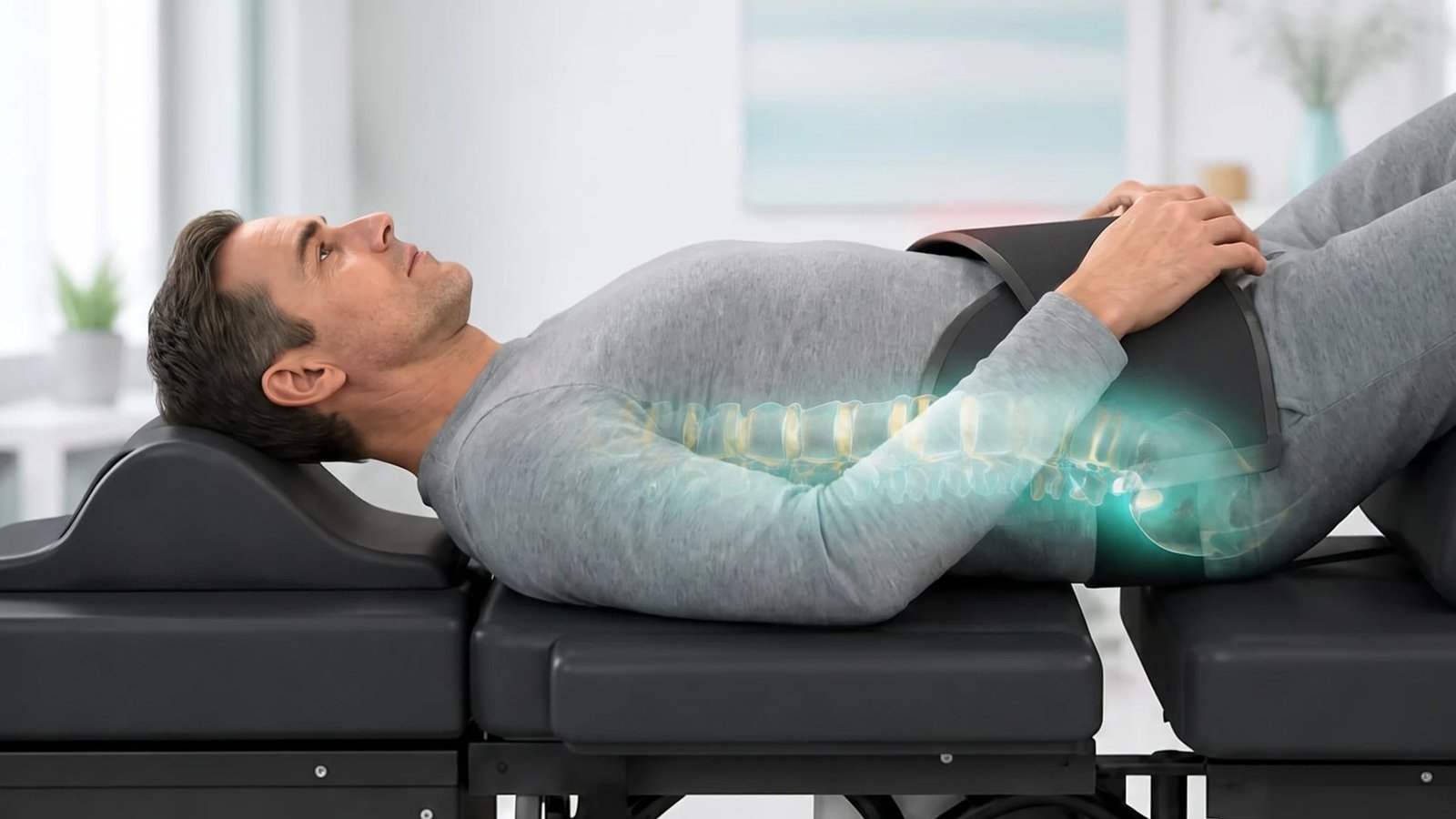
Search for spinal decompression and you will find two kinds of page. One promises a non-surgical miracle for every disc in the country. The other dismisses the whole thing as a dressed-up traction table.
Neither is right, and we would rather tell you where it actually sits — including the parts that are less flattering to a clinic that owns one of these machines.
The physics, in plain terms
A spinal disc sits between two vertebrae and spends your entire waking life under compression. Your own body weight, your muscle tone, and gravity all press down on it. That is normal and the disc is built for it.
The problem is that a disc has almost no blood supply of its own. It feeds by a slow exchange of fluid in and out of the surrounding tissue, driven largely by changes in pressure. So when a disc is damaged or irritated, the one thing that would help it — good circulation of nutrients — is the thing it is least able to do.
Decompression is an attempt to work on that directly. By applying controlled distraction along the spine, the aim is to lower the pressure inside the disc itself, which in principle does two things: it creates a little room where a nerve root is being crowded, and it encourages fluid to move back into a tissue that is struggling to feed itself.
Studies have measured pressure inside discs during distraction and found it does fall. That part is not in dispute.
Why the cycling matters more than the pulling
Here is the detail that separates a modern decompression table from the traction equipment of forty years ago, and it is a piece of physiology rather than engineering.
Pull steadily on a spine and the muscles around it do not simply allow it. They tighten, defensively, in a protective stretch reflex. The result is that a large part of the force you apply is absorbed by muscle that is actively resisting it, and comparatively little of it reaches the disc you were aiming at.
A decompression table varies the load continuously — building tension, easing off, building again, throughout a session of roughly twenty to thirty minutes. Keeping the force changing stops the guarding reflex from settling in, so more of what is applied arrives where it was intended.
That is a genuine mechanical improvement. Whether it reliably translates into a better clinical outcome is a separate question, and a less comfortable one.
What the evidence actually says
This is where honesty costs something, so let us be clear about it.
The research on decompression is weaker than the marketing around it suggests. Reviews of traction-based treatments for low back pain have generally concluded that, used on their own, they have little or no effect on pain or function compared with other care. The specific research on motorised decompression is thinner still: the trials are mostly small, several have design limitations, and a number have been conducted by people with a commercial interest in the result.
So the fair summary is this. The mechanism is real and has been measured. The claim that it reliably outperforms other good conservative care, for most people, is not well supported.
What does that mean practically? It means decompression is a reasonable component of a plan for selected patients — not a treatment to sell in twenty-session blocks to everybody who walks in with back pain. Most of the poor reputation it has in some quarters was earned exactly that way.
It also means it should never be the only thing happening. Passive treatments have a consistently poor record of producing lasting change on their own, whatever the passive treatment is.
Who tends to do well
In our experience, and consistent with what little good research exists, the people who respond share a pattern:
- Leg pain from a contained disc problem, rather than back pain alone with no clear mechanism
- Symptoms that change with position — better lying, worse sitting, for instance — which suggests the problem is still mechanically responsive
- A duration measured in weeks or months rather than many years
- No red flags, and no progressive neurological loss
- Willingness to do the active work alongside it, which is the part that holds the result
And the people who tend not to respond: those with longstanding, widespread pain and no positional pattern; those whose main problem turns out not to be the disc at all; and those for whom the course was started without anyone establishing a baseline worth re-measuring.
When it is the wrong answer entirely
There are situations where decompression is not merely unhelpful but contraindicated, and this is not a long tail of exotic cases:
- Fracture, tumour, or infection involving the spine
- Significant osteoporosis
- Abdominal aortic aneurysm
- Certain spinal implants and hardware
- Pregnancy
- Progressive neurological deficit or cauda equina features — these need urgent assessment, not a treatment course
Establishing which of these apply to you is not a form you tick at reception. It is what the examination is for, and it is the reason we will not put anybody on this table on a first visit before we have assessed them properly. If a clinic offers you a decompression package before examining you, that is worth questioning.
The decision point
The single most useful thing we do with decompression has nothing to do with the machine. It is agreeing, before we start, what would count as it working.
That means recording your own measurements at the outset — range of motion, neurological findings, what you can do, where the pain sits — and setting a defined point, usually a few weeks in, where we re-measure against those numbers rather than against a general impression of how things are going.
If the numbers have moved, we continue. If they have not, we stop and change the plan. Continuing a treatment that is not producing measurable change is not persistence; it is an expense with a schedule attached.
This is the same principle as the one in our post on why we examine before we image — a thing is worth doing when you can say in advance what result would change your decision.
Where it fits in a plan
When we do use decompression, it sits alongside the work that produces the durable part of the result: specific loading and rehabilitation, postural and alignment correction, and where appropriate laser therapy for irritated tissue around the area.
If you are dealing with a disc problem more broadly, our post on what a herniated disc actually means covers the wider picture, including what international guidelines recommend and when surgery is genuinely indicated. The practical detail of the treatment itself — what a session involves, how many are typical — is on our spinal decompression page.
Get it looked at sooner if
- Leg pain is worsening, or weakness is developing in the foot or leg
- You have numbness around the saddle area, or any change in bladder or bowel control — this needs same-day medical assessment
- Pain wakes you at night and will not settle in any position
- You have a history of cancer, unexplained weight loss, or fever alongside back pain
Frequently asked questions
Is spinal decompression the same thing as traction?
They share a principle but not a method. Traction applies a steady pull and holds it. Decompression is computer-controlled and cyclic — tension builds, eases, and repeats throughout the session. The reason that matters is the stretch reflex: pull steadily on a spine and the muscles around it tighten defensively, absorbing the force before it reaches the disc. Varying the load keeps those muscles from bracing. Whether that difference produces a better clinical result is less settled than equipment brochures imply, but the mechanical distinction is real.
Can I get the same effect from an inversion table at home?
No, and it is worth understanding why. Hanging inverted applies an uncontrolled pull driven by your own body weight, with no way to set the force, target a level, or vary the load through the session. It also raises blood pressure and eye pressure, which makes it a poor idea if you have hypertension, glaucoma, heart disease, or are pregnant. Some people find it eases their back briefly. That is not the same as a controlled treatment, and it is not a substitute for being assessed.
Does decompression help spinal stenosis as well as disc problems?
Sometimes, and the reasoning differs. With a disc problem the aim is to reduce pressure inside the disc itself. With stenosis the aim is simply to open the space the nerves pass through, so relief tends to be more temporary unless it is paired with work on posture, alignment and strength. Stenosis also has a wider range of severity, and some presentations need a surgical opinion rather than a course of anything. That decision comes from the examination.
What happens if it does not help me?
We stop, and we say so. We set a decision point before starting — usually a defined number of sessions with your own measurements recorded at the beginning — and we re-measure at that point. If the numbers have not moved and your symptoms have not changed, continuing is not a treatment plan, it is a sunk cost. Depending on what the re-examination shows, that means changing approach, investigating further, or referring you on.
Can I keep exercising during a course of decompression?
Usually yes, and in most cases you should. Decompression is a passive treatment, and passive treatments on their own have a poor record of producing lasting change. What tends to hold the result is what you do between sessions — specific loading, postural work, and keeping generally active. What we would ask you to pause is anything that clearly reproduces your symptoms, and heavy loaded flexion in particular, for the duration of the course.
How soon would I know whether it is working?
Most people who respond notice some change within the first two to three weeks — not necessarily less pain, but often a change in where the pain sits. Symptoms moving out of the leg and back toward the spine is an encouraging sign even when the overall intensity has not dropped yet. If nothing at all has shifted after three weeks of appropriate treatment, that is information too, and it should change the plan rather than extend it.
Wondering whether decompression is right for your back, or whether you have been sold a package you do not need? Book an assessment at CBP Precision Spine Center — 336 18th November Street, Azaiba. Call 7277 7796 or book online.
ابحث عن إزالة الضغط عن العمود الفقري وستجد نوعين من الصفحات. نوع يَعِد بمعجزة غير جراحية لكلّ غضروف في البلد. ونوع يصرف الأمر كلّه بوصفه طاولة شدٍّ متنكّرة.
ولا أحدهما صحيح، ونحن نفضّل أن نخبرك أين يقع الأمر فعلاً — بما في ذلك الأجزاء الأقلّ إطراءً لعيادةٍ تملك واحداً من هذه الأجهزة.
الفيزياء بعبارات بسيطة
يقع الغضروف بين فقرتين ويقضي حياتك اليقظة كلّها تحت ضغط. فوزن جسمك، وتوتّر عضلاتك، والجاذبية، كلّها تضغط عليه. وهذا طبيعي والغضروف مبنيّ له.
المشكلة أنّ الغضروف يكاد لا يملك إمداداً دموياً خاصاً به. فهو يتغذّى عبر تبادل بطيء للسوائل داخلاً وخارجاً من النسيج المحيط، تقوده إلى حدٍّ كبير تغيّرات الضغط. ولذلك حين يتضرّر الغضروف أو يتهيّج، يكون الشيء الوحيد الذي سيساعده — دوران جيّد للمغذّيات — هو أقلّ ما يقدر عليه.
وإزالة الضغط محاولة للعمل على ذلك مباشرةً. فبتطبيق تباعدٍ محكوم على امتداد العمود الفقري، يكون الهدف خفض الضغط داخل الغضروف نفسه، وهو ما يفعل مبدئياً أمرين: يفتح مساحةً صغيرة حيث يُزحم جذر عصب، ويشجّع السوائل على العودة إلى نسيجٍ يكافح ليُغذّي نفسه.
وقد قاست دراسات الضغط داخل الغضاريف أثناء التباعد فوجدت أنّه ينخفض فعلاً. وهذا الجزء ليس محلّ خلاف.
لماذا التناوب أهمّ من السحب
وهنا التفصيلة التي تفصل طاولة إزالة الضغط الحديثة عن أجهزة الشدّ قبل أربعين عاماً، وهي قطعة من علم وظائف الأعضاء لا من الهندسة.
فإن شددت العمود الفقري بثبات، لا تكتفي العضلات حوله بالسماح. بل تشدّ، دفاعياً، في منعكس تمدّدٍ وقائي. والنتيجة أنّ جزءاً كبيراً من القوّة التي تطبّقها تمتصّه عضلة تقاومه فعلياً، ويصل قليل منها نسبياً إلى الغضروف الذي كنت تستهدفه.
أمّا طاولة إزالة الضغط فتُنوّع الحِمل باستمرار — تبني الشدّ، ثمّ تخفّفه، ثمّ تبنيه من جديد، طوال جلسة تمتدّ نحو عشرين إلى ثلاثين دقيقة. وإبقاء القوّة متغيّرة يمنع منعكس التحفّظ من الاستقرار، فيصل قدر أكبر ممّا يُطبَّق إلى حيث قُصد.
وهذا تحسين ميكانيكي حقيقي. أمّا هل يُترجَم بشكل موثوق إلى نتيجة سريرية أفضل، فسؤال منفصل، وأقلّ راحة.
ما تقوله الأدلّة فعلاً
وهنا تكلّف الصراحة شيئاً، فلنكن واضحين بشأنها.
الأبحاث حول إزالة الضغط أضعف ممّا توحي به الدعاية المحيطة بها. فالمراجعات للعلاجات القائمة على الشدّ في ألم أسفل الظهر خلصت عموماً إلى أنّها، إن استُخدمت وحدها، قليلة الأثر أو عديمته على الألم أو الوظيفة مقارنةً برعاية أخرى. والأبحاث الخاصّة بإزالة الضغط الآلية أرقّ من ذلك: فالتجارب صغيرة في معظمها، ولعدّة منها قيود في التصميم، وأُجري عدد منها على يد أشخاص لهم مصلحة تجارية في النتيجة.
والخلاصة المنصفة إذن هي هذه. الآليّة حقيقية وقد قيست. أمّا الزعم بأنّها تتفوّق بشكل موثوق على رعاية محافظة جيّدة أخرى، لدى معظم الناس، فغير مدعوم جيداً.
وماذا يعني ذلك عملياً؟ يعني أنّ إزالة الضغط مكوّن معقول في خطّة لمرضى مُنتقَين — لا علاجاً يُباع في حزمٍ من عشرين جلسة لكلّ من يدخل بألم ظهر. ومعظم السمعة السيّئة التي لحقت بها في بعض الأوساط اكتُسبت بهذه الطريقة بالذات.
ويعني أيضاً أنّها ينبغي ألّا تكون الشيء الوحيد الجاري. فالعلاجات السلبية سجلّها ضعيف باستمرار في إحداث تغيير دائم بمفردها، أياً كان العلاج السلبي.
من يستجيب عادةً
في خبرتنا، وبما يتّسق مع القليل الجيّد من الأبحاث الموجودة، يتشارك من يستجيبون نمطاً:
- ألم ساق ناتج عن مشكلة غضروفية محتواة، لا ألم ظهر وحده دون آليّة واضحة
- أعراض تتغيّر مع الوضعية — أفضل عند الاستلقاء وأسوأ عند الجلوس مثلاً — ما يوحي بأنّ المشكلة ما زالت مستجيبة ميكانيكياً
- مدّة تُقاس بالأسابيع أو الأشهر لا بسنوات طويلة
- غياب العلامات التحذيرية، وغياب فقدان عصبي متفاقم
- استعداد للقيام بالعمل الفاعل إلى جانبها، وهو الجزء الذي يثبّت النتيجة
أمّا من لا يستجيبون عادةً: أصحاب الألم المزمن الواسع دون نمط وضعي؛ ومن تتبيّن أنّ مشكلتهم الأساسية ليست الغضروف أصلاً؛ ومن بُدئ لهم البرنامج دون أن يُثبّت أحد خطّ أساسٍ يستحقّ إعادة قياسه.
متى تكون الإجابة الخاطئة تماماً
ثمّة حالات لا تكون فيها إزالة الضغط غير مفيدة فحسب بل مُضادّ استطباب، وهذه ليست ذيلاً طويلاً من حالات نادرة:
- كسر أو ورم أو عدوى تطال العمود الفقري
- هشاشة عظام كبيرة
- أمّ دم أبهرية بطنية
- بعض الزرعات والعتاد في العمود الفقري
- الحمل
- عجز عصبي متفاقم أو ملامح ذنب الفرس — وهذه تحتاج تقييماً عاجلاً لا برنامج علاج
وتحديد أيٍّ من هذه ينطبق عليك ليس استمارة تؤشّر عليها في الاستقبال. بل هو وظيفة الفحص، وهو سبب أنّنا لن نضع أحداً على هذه الطاولة في زيارة أولى قبل أن نُقيّمه كما ينبغي. وإن عرضت عليك عيادة حزمة إزالة ضغط قبل أن تفحصك، فذلك يستحقّ التساؤل.
نقطة القرار
وأنفع شيء نفعله مع إزالة الضغط لا علاقة له بالجهاز. إنّه الاتّفاق، قبل أن نبدأ، على ما سيُعدّ نجاحاً.
ويعني ذلك تسجيل قياساتك أنت في البداية — المدى الحركي، والنتائج العصبية، وما تستطيع فعله، وأين يقع الألم — وتحديد نقطة معيّنة، عادةً بعد بضعة أسابيع، نُعيد عندها القياس مقارنةً بتلك الأرقام لا بانطباع عامّ عن سير الأمور.
فإن تحرّكت الأرقام، نواصل. وإن لم تتحرّك، نتوقّف ونُغيّر الخطّة. فمواصلة علاج لا يُنتج تغيّراً قابلاً للقياس ليست مثابرة، بل نفقة ذات جدول زمني.
وهذا هو المبدأ نفسه الوارد في مقالنا عن لماذا نفحص قبل أن نُصوّر — فالشيء يستحقّ الفعل حين تستطيع أن تقول مسبقاً أيّ نتيجة ستُغيّر قرارك.
أين تقع ضمن الخطّة
حين نستخدم إزالة الضغط فعلاً، تقع إلى جانب العمل الذي يُنتج الجزء الدائم من النتيجة: التحميل المحدّد وإعادة التأهيل، وتصحيح الوضعية والاصطفاف، وعند الاقتضاء العلاج بالليزر للأنسجة المتهيّجة حول المنطقة.
وإن كنت تتعامل مع مشكلة غضروفية بشكل أعمّ، فمقالنا عن ما يعنيه الانزلاق الغضروفي فعلاً يغطّي الصورة الأوسع، بما في ذلك ما توصي به الإرشادات الدولية ومتى تكون الجراحة مُستطَبّة حقاً. أمّا التفاصيل العملية للعلاج نفسه — ما تتضمّنه الجلسة، وكم عددها المعتاد — فعلى صفحة إزالة الضغط عن العمود الفقري.
اعرضها على مختصّ أبكر إذا
- كان ألم الساق يتفاقم، أو بدأ ضعف يتطوّر في القدم أو الساق
- كان لديك خدر في منطقة السَّرج، أو أيّ تغيّر في التحكّم بالمثانة أو الأمعاء — وهذا يحتاج تقييماً طبياً في اليوم نفسه
- كان الألم يوقظك ليلاً ولا يهدأ في أيّ وضعية
- كان لديك تاريخ إصابة بالسرطان، أو فقدان وزن غير مفسَّر، أو حمّى مع ألم الظهر
الأسئلة الشائعة
هل إزالة الضغط هي نفسها الشدّ (التراكشن)؟
تشتركان في المبدأ لا في الطريقة. فالشدّ يطبّق سحباً ثابتاً ويُبقيه. أمّا إزالة الضغط فمحوسبة ودوريّة — يتصاعد الشدّ، ثمّ يخفّ، ثمّ يتكرّر طوال الجلسة. وسبب أهمّية ذلك هو منعكس التمدّد: فإن شددت العمود الفقري بثبات، تشدّ العضلات حوله دفاعياً فتمتصّ القوّة قبل وصولها إلى الغضروف. أمّا تنويع الحِمل فيمنعها من التحفّظ. وهل يُنتج ذلك الفرق نتيجةً سريرية أفضل؟ هذا أقلّ حسماً ممّا توحي به كتيّبات الأجهزة، لكنّ التمييز الميكانيكي حقيقي.
هل أحصل على الأثر نفسه من طاولة التعليق المقلوب في المنزل؟
لا، ويستحقّ الأمر أن تفهم السبب. فالتعليق مقلوباً يطبّق سحباً غير محكوم يقوده وزن جسمك، دون وسيلة لضبط القوّة أو استهداف مستوى أو تنويع الحِمل خلال الجلسة. كما أنّه يرفع ضغط الدم وضغط العين، ما يجعله فكرةً سيّئة إن كان لديك ارتفاع ضغط أو ماء زرقاء أو مرض قلبي أو كنتِ حاملاً. وقد يجد بعض الناس أنّه يريح ظهورهم مؤقّتاً. وهذا ليس كعلاجٍ محكوم، وليس بديلاً عن أن تُفحَص.
هل تفيد إزالة الضغط في تضيّق القناة الشوكية كما تفيد في مشكلات الغضاريف؟
أحياناً، والمنطق مختلف. ففي مشكلة الغضروف يكون الهدف خفض الضغط داخل الغضروف نفسه. أمّا في التضيّق فالهدف ببساطة توسيع المساحة التي تمرّ منها الأعصاب، ولذلك يميل التحسّن إلى أن يكون مؤقّتاً أكثر ما لم يقترن بعملٍ على الوضعية والاصطفاف والقوّة. كما أنّ للتضيّق مدى أوسع من الشدّة، وبعض صوره تحتاج رأياً جراحياً لا برنامج علاجٍ من أيّ نوع. وذلك القرار يأتي من الفحص.
وماذا لو لم تنفعني؟
نتوقّف، ونقول ذلك. فنحن نحدّد نقطة قرار قبل البدء — عادةً عدداً محدّداً من الجلسات مع تسجيل قياساتك أنت في البداية — ونُعيد القياس عند تلك النقطة. فإن لم تتحرّك الأرقام ولم تتغيّر أعراضك، فالاستمرار ليس خطّة علاج بل كلفة غارقة. وبحسب ما يُظهره إعادة الفحص، يعني ذلك تغيير المنهج، أو التوسّع في الاستقصاء، أو إحالتك.
هل أستطيع مواصلة التمرين خلال برنامج إزالة الضغط؟
عادةً نعم، وفي معظم الحالات ينبغي ذلك. فإزالة الضغط علاج سلبي، والعلاجات السلبية وحدها سجلّها ضعيف في إحداث تغيير دائم. وما يميل إلى تثبيت النتيجة هو ما تفعله بين الجلسات — تحميل محدّد، وعمل على الوضعية، والبقاء نشطاً عموماً. وما نطلب منك إيقافه هو كلّ ما يُعيد إنتاج أعراضك بوضوح، وبخاصّة الانحناء الأمامي بأوزان ثقيلة، طوال مدّة البرنامج.
متى أعرف إن كانت تنجح؟
معظم من يستجيبون يلاحظون تغيّراً ما خلال الأسبوعين إلى الثلاثة الأولى — ليس بالضرورة ألماً أقلّ، بل غالباً تغيّراً في موضع الألم. فانتقال الأعراض من الساق عائدةً نحو العمود الفقري علامة مشجّعة حتى لو لم تنخفض الشدّة الإجمالية بعد. وإن لم يتغيّر شيء إطلاقاً بعد ثلاثة أسابيع من علاجٍ مناسب، فتلك معلومة أيضاً، وينبغي أن تُغيّر الخطّة لا أن تُمدّدها.
هل تتساءل إن كانت إزالة الضغط مناسبة لظهرك، أم أنّك بِعت لك حزمة لا تحتاجها؟ احجز تقييماً في مركز CBP للدقة في العمود الفقري — 336 شارع 18 نوفمبر، العذيبة. اتصل على 7277 7796 أو احجز عبر الإنترنت.