

Slipped Disc in Muscat? Read This Before You Consider Surgery
Diagnosed with a slipped disc in Muscat? International guidelines recommend conservative care first. Discover non-surgical disc treatment at CBP Precision Spine.
Dr. Richard Marchetti, DC
5/10/20269 min read
A Diagnosis That Doesn't Have to End in the Operating Room
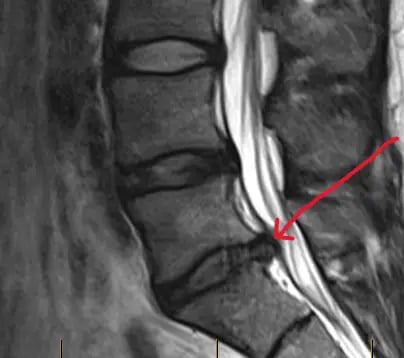
You've had the MRI. You've sat across from a doctor who pointed to a dark spot on the scan and said the words: herniated disc, or slipped disc, or prolapsed disc. Maybe they followed it with a referral to a spinal surgeon. Maybe they mentioned a discectomy or a fusion. Maybe you went home convinced surgery was inevitable.
If you're searching for answers right now — typing "slipped disc Muscat," "herniated disc treatment Oman," or "disc surgery alternatives" into Google late at night — you are not alone. And you may not have been told the most important fact about your diagnosis.
According to international clinical guidelines published by the World Federation of Neurosurgical Societies (WFNS) Spine Committee, conservative (non-surgical) care is the recommended first-line treatment for lumbar disc herniation in patients who do not have specific red-flag neurological deficits. This recommendation comes from neurosurgeons themselves. They are not anti-surgery. They are pro-evidence — and the evidence is clear.
The evidence is also striking in another way: more than 85% of patients with acute disc herniation and nerve pain will have their symptoms resolve over time with appropriate conservative care. And in over half of cases, the herniated disc material itself partially or fully reabsorbs into the body — meaning the visible bulge on your MRI can shrink on its own, given the right conditions.
This article explains what your slipped disc actually is, what international guidelines actually recommend, when surgery genuinely is necessary, and what conservative treatment looks like at our CBP Precision Spine Center clinic in Muscat.
What "Slipped Disc" Actually Means
The term "slipped disc" is a useful shorthand, but it's slightly misleading. Discs don't slip out of place. The intervertebral discs sitting between each pair of spinal vertebrae are firmly anchored. What actually happens is more specific — and understanding it changes how you think about treatment.
Each disc has two parts: a tough outer ring (the annulus fibrosus) and a soft, gel-like inner core (the nucleus pulposus). When the outer ring weakens or tears, the inner core can push outward through the weakened wall. Depending on how far it pushes, doctors describe this as:
Disc bulge — mild outward pressure on the disc wall
Disc protrusion — the inner material pushes against but does not break through the outer wall
Disc herniation — the inner material breaks through the outer wall
Disc extrusion or sequestration — material has separated and migrated away from the disc
When this displaced material presses on a nearby nerve root — most commonly in the lower back, irritating the sciatic nerve — the result is pain that radiates down the leg, often with tingling, numbness, or weakness. This combination of disc problem plus nerve irritation is what many people describe simply as "slipped disc pain," and clinically it's known as lumbar radiculopathy or, more familiarly, sciatica.
What International Guidelines Actually Recommend
This is the part most patients in Muscat are never properly told.
The World Federation of Neurosurgical Societies Spine Committee is one of the most authoritative international bodies on spinal care. Their official recommendation for lumbar disc herniation is direct: "Conservative treatment is recommended as the first-line treatment for LDH in patients who do not have neurologic deficits such as motor deficits or cauda equina syndrome."
The North American Spine Society (NASS) 2022 clinical guidelines echo the same position: surgery is indicated only for patients with significant or progressive neurological impairment, intractable pain that has not responded to conservative care, or specific structural abnormalities that require surgical correction.
The standard conservative trial period before surgery is even considered is 4 to 6 weeks, and in many guidelines, up to 8 weeks. During this period, the data shows that:
More than 85% of acute disc herniation cases with radiculopathy resolve over time with appropriate non-surgical care
Spontaneous reabsorption of the herniated disc material occurs in over half of symptomatic cases managed conservatively — meaning your body can, under the right conditions, reabsorb the disc material that's currently causing your pain
Surgery is not the default first option. It is the option reserved for cases where conservative care has been given a fair trial and has failed, or where specific red flags are present from the start
What this means in practical terms: if you have been recently diagnosed with a slipped disc and you do not have the specific red-flag symptoms listed below, the clinically appropriate first step — according to the surgeons' own international guidelines — is a structured course of conservative care. Not an immediate operation.
When Surgery Is Genuinely Necessary — The Red Flags You Cannot Ignore
This article is not anti-surgery. Surgery saves people. There are specific situations where surgical intervention is not only appropriate but urgent. If any of the following apply to you, stop reading and seek emergency medical evaluation immediately:
Cauda equina syndrome symptoms: loss of bladder or bowel control, numbness in the saddle/groin area, or sudden severe weakness in both legs
Progressive neurological deficit: worsening weakness in a leg or foot (foot drop, inability to lift the foot, severe muscle wasting)
Severe, intractable pain that is not responding at all to any conservative measure and is escalating rapidly
Sudden loss of reflexes or sensation in a clear pattern matching a specific nerve root
These are clear surgical indications, and any responsible clinician — including us — will refer you immediately to a spinal surgeon if these are present. The orthopedic surgeons and neurosurgeons at hospitals like Apollo, Muscat Private Hospital, and Royal Hospital are skilled professionals, and we work alongside their referral pathways when surgery is genuinely indicated.
What this article is about is the much larger group of slipped disc patients — perhaps 80 to 90 percent of all cases — who do not have these red flags, who have been told they "may need surgery," and who deserve to know that the international guidelines say conservative care should come first.
Why Many Disc Herniation Patients Reabsorb Without Surgery
The fact that a herniated disc can shrink and reabsorb on its own surprises most patients. It surprises some clinicians too. But it is well-documented in the medical literature.
When the inner disc material pushes through the outer wall, the body recognizes the displaced material as something that doesn't belong outside the disc capsule. Inflammatory cells move in and gradually break down the protruding material — a natural reabsorption process. Studies show this happens in more than half of symptomatic cases managed conservatively, with larger herniations actually showing higher rates of reabsorption than smaller ones in some research.
For reabsorption to occur, two conditions help significantly:
Reduced mechanical pressure on the affected disc — achieved through proper spinal alignment, decompression, and avoidance of postures that compress the herniation further
Reduced local inflammation around the nerve root — managed through inflammation control, targeted therapies, and progressive movement restoration
This is exactly what a properly designed conservative care program is engineered to provide. It is not passive waiting. It is active creation of the conditions in which your body's natural healing processes can succeed.
What Conservative Care Should Actually Include
Not all conservative care is equal. A patient who is told to "rest, take painkillers, and come back in a month" is not receiving evidence-based conservative treatment. They are being told to wait — which is different.
A proper conservative care program for slipped disc, based on international guidelines and clinical evidence, should include:
1. Objective diagnostic assessment. Detailed history, physical examination, neurological testing, and review of imaging. The goal is to identify exactly which disc level is involved, which nerve root is affected, and whether any red flags require immediate surgical referral.
2. Pain and inflammation management. Where appropriate, this can include short-term anti-inflammatory medication, ice/heat protocols, and targeted modalities. The goal is to reduce inflammation around the nerve root, not to mask pain indefinitely with painkillers.
3. Mechanical decompression. This is critical and often missing from generic physiotherapy. Properly applied lumbar traction and decompression can reduce pressure on the affected disc, creating the mechanical conditions that support natural reabsorption.
4. Postural and structural correction. A herniated disc rarely occurs on a perfectly aligned spine. The vast majority of disc patients have years of accumulated postural dysfunction — flattened lumbar curves, anterior pelvic tilt, weakened core, or compensatory shifts — that placed unequal load on the disc until it failed. Without correcting that underlying alignment, even a fully reabsorbed disc is at high risk of re-injury.
5. Targeted soft tissue and muscle therapy. Where chronic muscle spasm and fascial restriction are contributing to the pain pattern, extracorporeal shockwave therapy can be valuable. Shockwave therapy stimulates blood flow to chronic soft tissue regions and accelerates tissue repair — making it a useful addition for many slipped disc cases where surrounding musculature has become chronically tight or inflamed.
6. Progressive movement and rehabilitation. Carefully sequenced exercises designed to restore spinal stability without aggravating the disc. This is where generic YouTube exercises often fail patients — what helps one disc pattern can worsen another, and the progression must be guided.
7. Lifestyle and ergonomic adjustment. How you sit, sleep, lift, and move affects whether your disc heals or worsens. A complete care plan addresses these directly.
The CBP Method: Why Structural Correction Matters for Disc Patients
This is where the Chiropractic BioPhysics® (CBP) method offers something most conservative care programs in Muscat do not. CBP is the most heavily researched chiropractic technique in the world, supported by over 200 peer-reviewed studies. Its core principle is precise, measurable structural correction of the spine — and for slipped disc patients, this matters enormously.
Most disc herniations occur on spines that have lost their proper architecture over years. The lumbar curve has flattened. The pelvis has tilted. The vertebrae sit at angles they were never designed to sustain. Under that abnormal mechanical load, one disc eventually fails.
Generic conservative care can reduce inflammation and may even allow partial reabsorption — but if the underlying structural pattern that caused the disc to fail in the first place is not corrected, recurrence rates are high. Patients return to the same desk, the same posture, the same misalignment, and within months or years, the same level or an adjacent level fails again.
CBP treatment for slipped disc combines:
Digital X-ray imaging to measure exactly how the spine has shifted from ideal alignment
Mirror-image adjustments applied in the precise direction opposite to the patient's specific misalignment
Calibrated lumbar traction and decompression to reduce pressure on the affected disc and create reabsorption-favorable conditions
Targeted corrective exercises chosen specifically for the patient's structural pattern, not generic "back exercises"
Where appropriate, integrated modalities including shockwave therapy and Class 4 laser therapy for inflammation control
The goal is twofold: resolve the current disc episode through conservative means where possible, and correct the underlying structural pattern so the disc does not fail again.
What Recovery Realistically Looks Like
Patients deserve honest expectations. Slipped disc recovery is not a one-week process, and we do not pretend otherwise. Here is the realistic trajectory for most non-surgical disc cases at our clinic:
Weeks 1–2: Comprehensive assessment, imaging review, and acute symptom management. The first priority is reducing inflammation around the nerve root and identifying any red flags. Most patients begin to experience some reduction in pain intensity during this period, even before structural correction has begun.
Weeks 3–8: Active treatment phase. Two to three sessions per week combining decompression traction, mirror-image adjustments, targeted modalities, and beginning rehabilitation exercises. This is the period when most patients experience meaningful symptom resolution. Following the international guidelines' 4–6 week conservative trial framework, by the end of this phase, the great majority of non-red-flag patients are substantially improved.
Months 3–6: Stabilization and structural correction phase. Treatment frequency reduces. The focus shifts to correcting the underlying postural and structural pattern that allowed the disc to fail. Re-imaging where appropriate confirms structural change.
Ongoing maintenance: Periodic check-ins to preserve correction long-term and prevent recurrence at the same or adjacent levels.
If at any point during this timeline a patient is not progressing as expected, or if red flags emerge, we refer for surgical consultation. This is not failure of conservative care — it is the responsible application of clinical guidelines, which themselves recognize that some patients do require surgery.
When You Should Book a Consultation
You should consider a conservative-care assessment at our clinic if:
You have been recently diagnosed with a herniated disc, slipped disc, or prolapsed disc and are exploring options before surgery
You are within the 4–8 week window since symptom onset and have not yet had a structured conservative trial
You have leg pain, numbness, or tingling alongside lower back pain (lumbar radiculopathy / sciatica)
You have been told you "may need surgery" but want to understand whether conservative care is appropriate first
You have already had previous spinal surgery and want to prevent re-injury at adjacent disc levels
You want a measurable, imaging-based assessment of your spine, not just symptom management
You should not delay a surgical evaluation if any of the red flags listed earlier are present. We will refer you immediately if they are.
A Final Word on the Surgery Decision
The decision about whether to have spinal surgery is one of the most important medical decisions a person can make. It deserves to be made with complete information.
Surgery is the right choice for some slipped disc patients — particularly those with red flags, with confirmed neurological progression, or with cases that have failed an adequate conservative trial. For those patients, modern spinal surgery in Oman is excellent and can be life-changing.
But the international guidelines are unambiguous: surgery is not the right first step for most disc herniation patients. Conservative care is. And if you are reading this article because you have been told you may need surgery, you owe it to yourself — at minimum — to understand what a properly structured conservative care program could achieve for you first.
We are the only certified Chiropractic BioPhysics® (CBP) clinic in Oman, and we treat slipped disc cases regularly using internationally recognized conservative care principles. We work alongside surgical pathways when surgery is genuinely indicated, and we do not pretend conservative care is right for every case. We do, however, believe every disc patient deserves the chance to try conservative care first, the way the international guidelines recommend.
📍 Villa 336, 18 November Street, Azaiba, Muscat, Oman 📞 +968 7277 7796 ✉️ info@CBPSJ.com 🌐 www.cbpsj.com
Book your slipped disc consultation today — and find out whether your case is one that could resolve without ever entering an operating room.
CBP Precision Spine Center
Villa 336, 18th November St
Azaiba, Muscat
Oman, 130
Quick Links
Subscribe To Our News Letter!
info@CBPSJ.com
+968 7277 7796
© 2024. All rights reserved.