



Sleep & Spine in Muscat: How Your Pillow and Position Shape Your Health While You Rest
Sleep position affecting your spine health in Muscat? Discover how proper sleep ergonomics support CBP spinal correction and recovery at night.
Nasra AL Harthy
5/7/202610 min read
You Spend 8 Hours a Night in One Position — Is It Helping or Hurting Your Spine?
Every night, without thinking about it, you place your spine in a single position for roughly one-third of your life. For the average person in Muscat, that's around 2,920 hours per year — more time than you'll spend at your desk, in your car, or in any other single position.
Sleep is supposed to be recovery time. Your spine should be decompressing, your muscles relaxing, your nervous system resetting for the day ahead. But the wrong sleeping position can add 8 hours of sustained stress to an already compromised spine, undoing much of the progress made during the day.
If you've ever woken up in Muscat with a stiff neck, an aching lower back, or that peculiar sensation that you feel more tired than when you went to bed, your sleep position may be working against you. And if you're undergoing Chiropractic BioPhysics® (CBP) treatment for spinal correction, your sleep setup becomes even more critical — because structural healing requires consistent support 24 hours a day, not just during clinic visits.
This article explains what different sleep positions actually do to your spine, why the "best" position depends on your individual spinal pattern, and how to create a sleep environment that supports — rather than sabotages — your spinal health.
What Your Sleep Position Is Really Doing to Your Spine
Most people think of sleep as passive recovery. But from a biomechanical standpoint, your sleeping position is an 8-hour postural hold — and like any sustained posture, it can either support optimal spinal alignment or create problems over time.
Here's what the research shows about the three primary sleep positions:
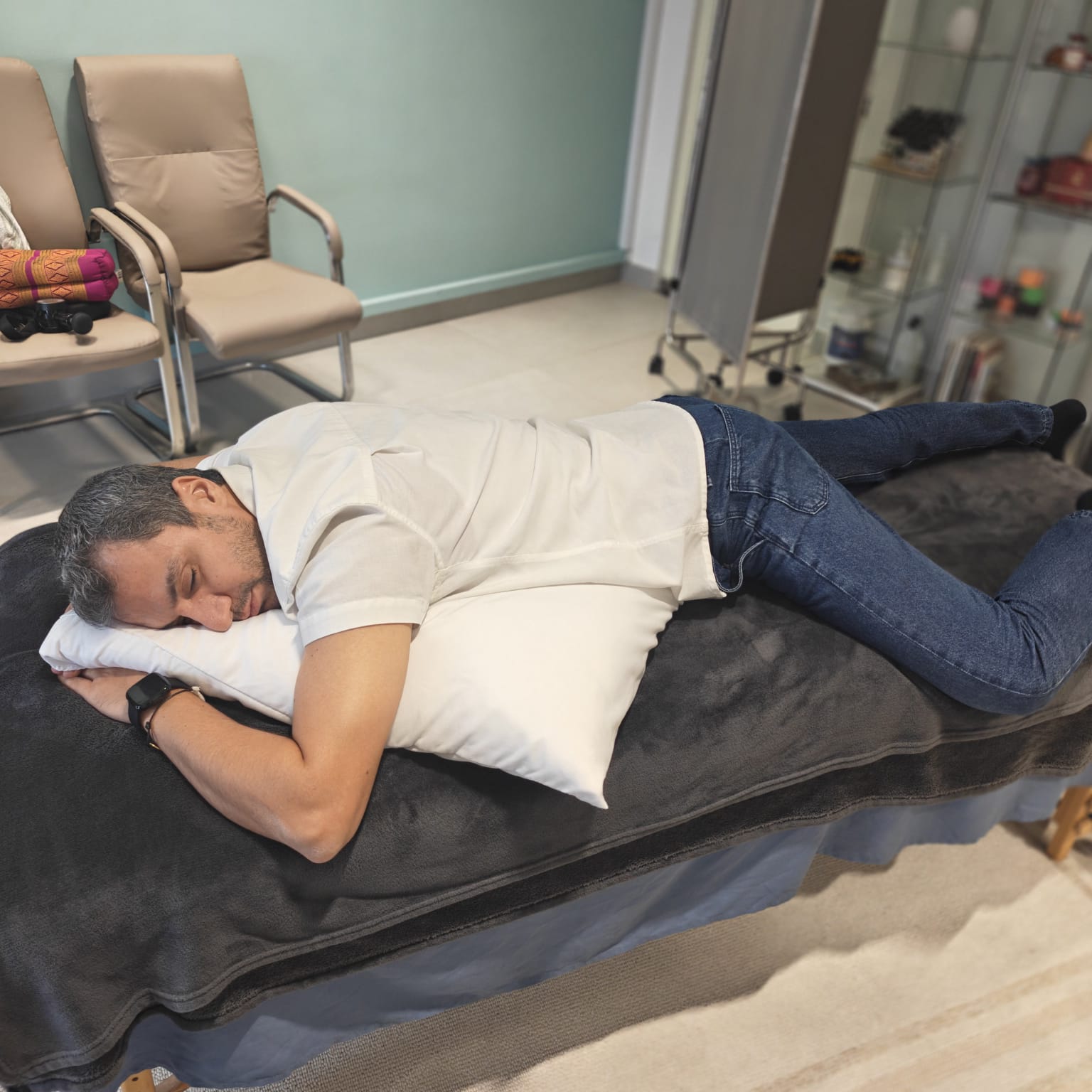
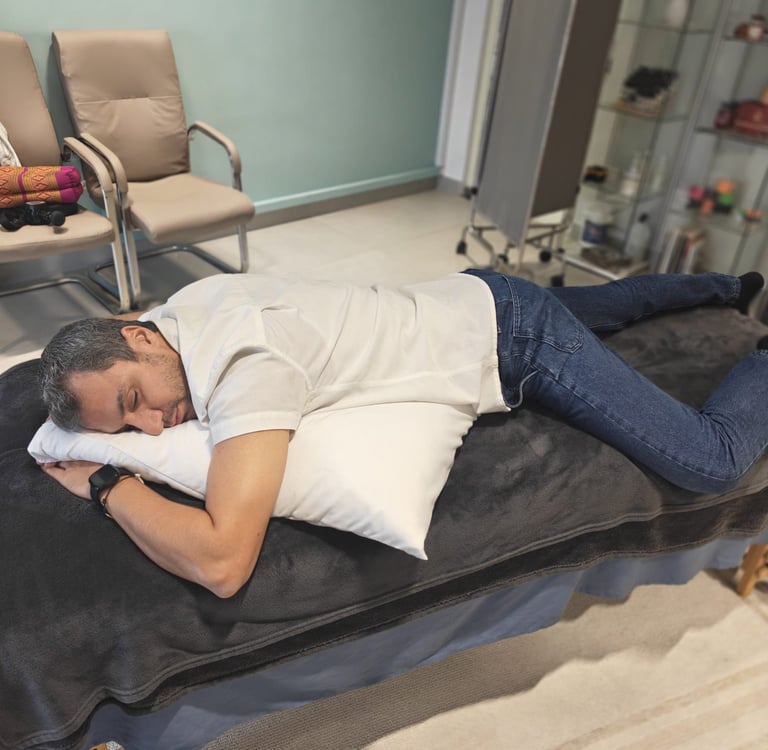
Stomach Sleeping — The Worst Choice for Most Spines
Sleeping on your stomach forces two problematic positions simultaneously:
Forced cervical rotation. To breathe while lying face-down, you must turn your head to one side for the entire night. This places your cervical spine in sustained rotation — often 45 to 90 degrees — for hours at a time. Over months and years, this asymmetrical stress can contribute to cervical disc problems, muscle imbalances, and postural asymmetry.
Flattened lumbar curve. Lying face-down tends to flatten the natural inward curve of your lower back (the lumbar lordosis), especially if you use a thick pillow that pushes your head up and forces your lower back into extension compensation. This position can increase pressure on the lumbar discs and strain the ligaments that maintain your spine's natural curves.
Exception: Some people with significant lumbar extension problems (excessive lower back arch) may find stomach sleeping temporarily comfortable because it reduces their lumbar curve. However, this is typically a short-term comfort that creates long-term cervical problems. If stomach sleeping is the only position where your back doesn't hurt, that's actually important information about your spinal alignment that should be evaluated professionally.
Side Sleeping — Good, But Only With Proper Support
Side sleeping can be excellent for spinal health — but only if your pillow and mattress are properly matched to your body dimensions and spinal pattern.
The pillow problem. If your pillow is too flat, your head drops toward the mattress and your cervical spine tilts laterally for the entire night. If it's too thick, your head is pushed up and your neck tilts the opposite direction. Either position can contribute to cervical misalignment, muscle tension, and morning stiffness.
The hip and shoulder issue. Side sleeping places your full body weight on one hip and shoulder for hours. If your mattress is too soft, these contact points sink in, creating spinal rotation. If it's too firm, pressure points can cause you to shift frequently during the night, disrupting sleep quality.
Hip alignment matters. Many side sleepers benefit from a pillow or support between their knees to keep the hips level and prevent the top leg from pulling the pelvis and lower spine out of alignment.
Which side is better? For most people, either side is fine as long as support is adequate. However, people with scoliosis or significant postural asymmetries may have one side that's more comfortable than the other. This preference often provides valuable diagnostic information about their spinal pattern.
Back Sleeping — Generally the Best for Spinal Alignment
Sleeping on your back allows gravity to work with your spine's natural curves rather than against them, provided your pillows and mattress support is appropriate.
Cervical support. A properly sized pillow should maintain the natural inward curve of your neck without pushing your head too far forward or allowing it to drop back. The ideal pillow height for back sleepers is usually lower than what side sleepers need.
Lumbar support. Many back sleepers benefit from a small pillow or rolled towel under their knees. This position allows the hip flexors to relax and helps maintain the natural lumbar curve without forcing excessive arch.
The snoring consideration. Back sleeping can worsen snoring or sleep apnea in some people. If your sleep partner reports that you snore significantly more on your back, or if you wake up feeling unrested despite adequate sleep hours, this may not be the right position for you regardless of its spinal benefits.
Why Sleep Position Matters More During Spinal Correction
If you're undergoing CBP treatment for postural correction, disc problems, or scoliosis management, your sleep position becomes critically important for a specific reason: structural change requires consistent mechanical input.
During CBP care, your daytime treatment sessions — mirror-image adjustments, cervical traction, corrective exercises — apply precise forces to move your spine toward its ideal alignment. But if you then spend 8 hours each night in a position that applies opposing forces, you're essentially fighting against your own treatment.
Think of it this way: if we're working to restore the natural inward curve to your neck during your clinic visits, but you're sleeping in a position that flattens or reverses that curve for 8 hours every night, the progress becomes unnecessarily slow and difficult.
This doesn't mean you need to sleep in an uncomfortable position. It means we need to find a sleep setup that works with your corrective care plan, not against it. And the "best" position may change as your spinal structure improves over the course of treatment.
The Pillow Prescription: How to Choose Support That Matches Your Spine
There is no universal "best pillow." The right pillow for you depends on your preferred sleep position, your current spinal alignment, and whether you're undergoing corrective care. Here's how to think about it:
For Back Sleepers
Goal: Maintain the natural inward curve of your neck without pushing your head forward.
Pillow characteristics: Medium height, medium firmness, with good shape retention. Memory foam that contours but doesn't sink too deep often works well.
Test: Lying on your back with the pillow, your neck should feel supported in its natural position. If someone were looking at you from the side, your ear should be roughly over your shoulder, not pushed forward toward your chest.
For Side Sleepers
Goal: Keep your cervical spine parallel to the mattress — neither tilted up nor down.
Pillow characteristics: Height that fills the space between your shoulder and your head. Broader shoulders require thicker pillows; narrower shoulders need thinner ones.
Test: Have someone check from behind while you're lying on your side. Your spine should form a straight line from your tailbone to the back of your head, with no lateral curves in your neck.
For Stomach Sleepers (If You Must)
Goal: Minimize cervical rotation and lumbar flattening.
Pillow characteristics: Very thin, or no pillow at all. Some stomach sleepers do better with a thin pillow under their pelvis to support lumbar curve.
Transition strategy: If you're a committed stomach sleeper but want to change, try transitioning gradually. Start by falling asleep on your side and don't worry if you wake up on your stomach. Over time, many people naturally adapt to a new position.
Special Cases: Cervical Traction Pillows
For patients with significant cervical curve loss or forward head posture, specialized cervical traction pillows can provide gentle corrective positioning during sleep. These pillows have a specific shape that encourages cervical extension (backward bending) to help restore the natural neck curve.
Important: These should only be used under professional guidance and as part of a comprehensive corrective program. The wrong traction pillow, or using one incorrectly, can actually worsen certain spinal conditions.
Mattress Matters: The Foundation of Good Sleep Posture
Your mattress is the foundation of your sleep posture, and a poor mattress can undermine even the best pillow setup. But "firmness" isn't the whole story — support is what matters.
The Goldilocks Principle
Too soft: Your spine sags into the mattress, especially at the heavier parts of your body (pelvis, shoulders). This creates spinal curves that aren't natural and can cause morning stiffness.
Too firm: Your spine can't follow its natural curves and instead forms a straight line with pressure points at the hips and shoulders. This often leads to tossing and turning during the night.
Just right: The mattress contours enough to support your spine's natural curves while providing enough resistance to prevent sagging.
Sleep Position and Mattress Choice
Side sleepers generally need a softer surface than back sleepers to allow the hips and shoulders to sink slightly while supporting the waist.
Back sleepers usually do well with medium to medium-firm mattresses that support the lumbar curve without creating pressure points.
Stomach sleepers typically need firmer support to prevent the pelvis from sinking and creating excessive lumbar arch.
When to Replace Your Mattress
If your mattress is more than 8 years old, shows visible sagging, or you consistently wake up more tired than when you went to bed, it may be time for replacement. A good mattress should support consistent, restorative sleep and maintain its shape over time.
Sleep Ergonomics for the GCC Climate
Life in Muscat and the broader GCC presents unique sleep challenges that can affect spinal health:
Air Conditioning and Muscle Tension
Many people in the region sleep with air conditioning set quite cold to combat the heat. While this can improve sleep quality, excessively cold temperatures can cause muscle tension and stiffness, especially in the neck and shoulders.
Tip: Use a light blanket or adjust your AC to maintain a cool but not cold environment. Your muscles should be relaxed during sleep, not contracted against the cold.
Dehydration and Sleep Quality
The dry air from air conditioning, combined with the region's naturally low humidity, can lead to dehydration that affects sleep quality and muscle function. Dehydration can cause muscle cramps, stiffness, and restless sleep.
Tip: Keep a water bottle by your bed and ensure you're well-hydrated before sleep. However, balance this with practical considerations — you don't want to wake up multiple times for bathroom trips.
Cultural and Social Sleep Patterns
Late social dinners, extended family gatherings, and cultural preferences for staying up late can create sleep schedules that don't align with optimal recovery. Insufficient sleep affects your body's ability to repair tissues and can increase inflammation, both of which can worsen spinal problems.
Tip: If social obligations often keep you up late, try to maintain consistency in your wake time and make up for lost sleep with a brief afternoon nap rather than sleeping in, which can disrupt your circadian rhythm.
Red Flags: When Your Sleep Position Is Making Things Worse
Sometimes your sleep position is actually contributing to your spinal problems. Watch for these warning signs:
Morning stiffness that takes more than 15 minutes to ease
Waking up with headaches, especially at the base of the skull
Numbness or tingling in your arms or hands upon waking
Lower back pain that's worse in the morning than at bedtime
Feeling more tired when you wake up than when you went to bed
Your sleep partner reports that you move restlessly throughout the night
If you experience any of these regularly, your sleep position may be working against your spinal health. This is especially important information if you're undergoing corrective spinal care.
Creating Your Personal Sleep Ergonomics Plan
At CBP Precision Spine Center, we include sleep ergonomics guidance as part of every patient's corrective care plan because we know that structural healing requires 24-hour support. Here's how we approach it:
Assessment: We evaluate your current sleep position, pillow support, and mattress setup as part of your comprehensive spinal examination.
Individual recommendation: Based on your specific spinal pattern — whether you have forward head posture, lumbar curve loss, scoliosis, or other structural issues — we provide specific guidance on optimal sleep position and support.
Progressive adjustment: As your spinal structure improves during CBP treatment, your ideal sleep setup may change. We reassess and adjust recommendations throughout your care.
Product guidance: When appropriate, we can recommend specific types of pillows, mattress firmness levels, or ergonomic sleep aids that support your particular needs.
The 30-Day Sleep Position Challenge
If you want to optimize your sleep position for spinal health, try this structured approach:
Week 1: Focus only on pillow adjustment. Experiment with pillow height and firmness in your current preferred position. Note how you feel each morning.
Week 2: If you're a stomach sleeper, begin transitioning to side sleeping. Use extra pillows for comfort and don't worry about perfection.
Week 3: If you're ready, try back sleeping for at least part of the night. Use a pillow under your knees for lumbar support.
Week 4: Evaluate which changes made the biggest difference in how you feel upon waking. Maintain what works and adjust what doesn't.
Remember: the best sleep position is one that allows you to wake up feeling rested and comfortable, supports your spinal health goals, and doesn't create new problems.
When to Seek Professional Guidance
If you've tried optimizing your sleep setup and still experience morning pain, stiffness, or fatigue, it may be time for professional spinal assessment. Here are specific situations where we'd recommend evaluation:
Chronic morning stiffness despite good sleep hygiene
Sleep position requirements that seem to be getting more restrictive over time (you can only sleep in one very specific position)
Sleep disruption from spine-related discomfort
Morning symptoms that seem to be getting worse despite addressing pillows and mattress
Sleep problems related to spinal alignment often improve significantly once the underlying structural issues are addressed through proper corrective care.
Your Spine Doesn't Sleep — It Recovers
Every night, as you settle into bed in Muscat, your spine enters what should be its most restorative period of the 24-hour cycle. Gravity's downward pull lessens. Muscle tension should release. The discs should rehydrate. The nervous system should reset.
But these recovery processes can only happen if your sleep position supports them rather than working against them.
Whether you're currently experiencing spinal problems or you want to prevent them, whether you're undergoing corrective care or simply want to optimize your health, your sleep setup is one of the most important — and most controllable — factors in your spinal wellbeing.
At CBP Precision Spine Center, we understand that true spinal correction requires attention to every aspect of how you live, move, and rest. Your sleep position is not a small detail — it's 8 hours of potential healing or harm, every single night.
📍 Villa 336, 18 November Street, Azaiba, Muscat, Oman 📞 +968 7277 7796 ✉️ info@CBPSJ.com 🌐 www.cbpsj.com
Ask us about optimizing your sleep setup during your next visit — because your spine's recovery happens 24 hours a day, not just during treatment sessions.
CBP Precision Spine Center
Villa 336, 18th November St
Azaiba, Muscat
Oman, 130
Quick Links
Subscribe To Our News Letter!
info@CBPSJ.com
+968 7277 7796
© 2024. All rights reserved.